21-Day Mediterranean Diet Plan To Feel Your Best (No Fancy Ingredients)
21-Day Mediterranean Diet Plan To Feel Your Best (No Fancy Ingredients)
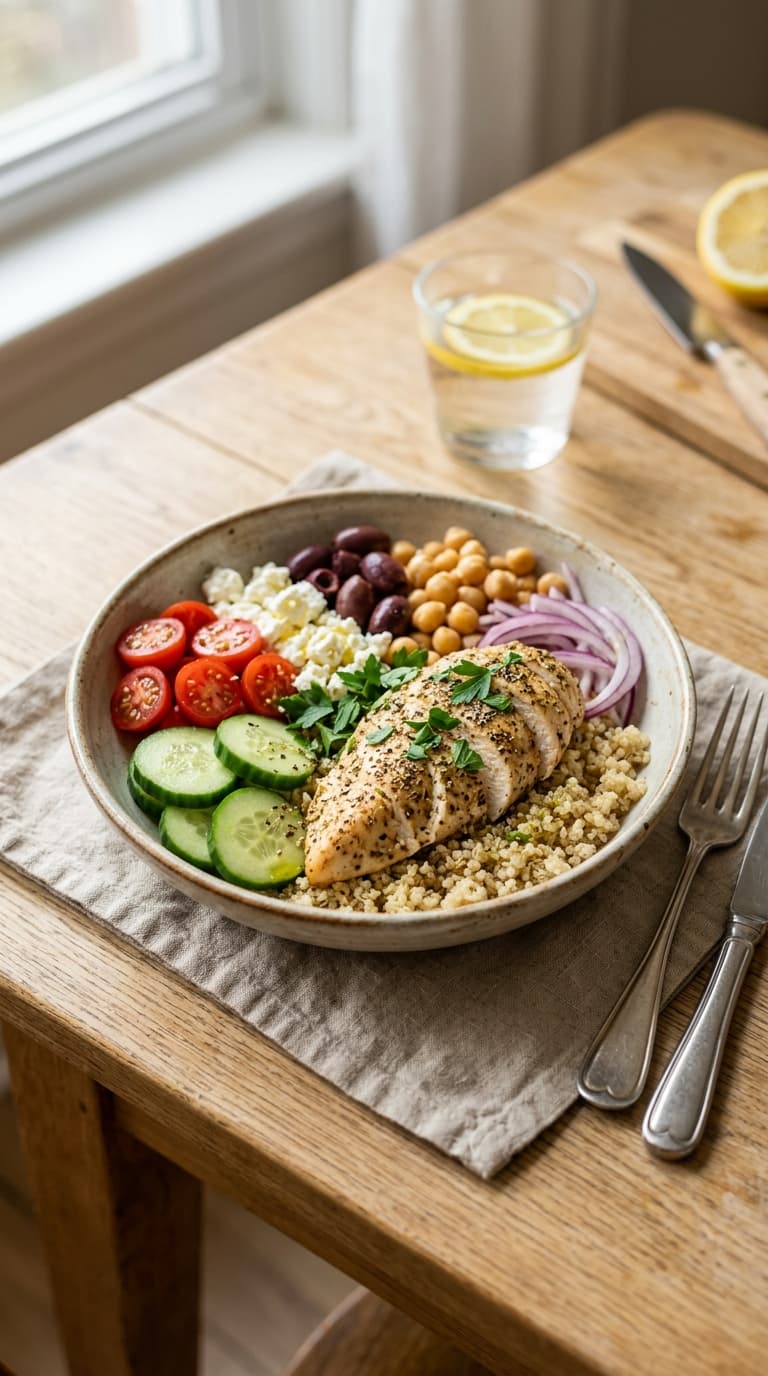
Let me be straight with you — I tried the Mediterranean diet expecting to miss my usual comfort food within three days. Instead, I found myself actually looking forward to meals. That’s not something I say lightly. This 21-day plan works because it doesn’t ask you to buy obscure ingredients or spend half your Sunday in the kitchen. Real food, real results, no drama.
What Is the Mediterranean Diet, Really?
People overcomplicate this all the time. The Mediterranean diet isn’t a strict rulebook — it’s more of a lifestyle that people in countries like Greece, Italy, and Spain have followed for centuries. It focuses on whole grains, vegetables, legumes, healthy fats, lean protein, and plenty of olive oil. Wine is technically part of it too, but let’s not use that as the main selling point 🙂
The best part? You’re not counting calories obsessively or cutting out entire food groups. You’re just eating real food in sensible amounts. That’s it. FYI, this is one of the most researched diets in the world, and the science consistently backs it up for heart health, brain function, and long-term weight management.
Why 21 Days?
Three weeks is long enough to build actual habits but short enough not to feel overwhelming. Research suggests it takes around 21 days to start forming new behavioral patterns. After three weeks on this plan, most people report better energy, clearer skin, less bloating, and improved mood. And no, you don’t need to eat hummus every single day (though honestly, you might want to).
If you’re already thinking about how this fits into your broader meal prep routine, a solid 21-day weight loss meal prep plan can make the whole process feel way less chaotic.
The Pantry Staples You Actually Need
Before the weekly breakdowns, let’s talk about what to stock. You do not need saffron, truffle oil, or anything that costs more than your rent.
Here’s what you’ll use repeatedly throughout the 21 days:
- Olive oil — your new best friend
- Canned chickpeas and lentils — cheap, filling, versatile
- Canned diced tomatoes — the unsung hero of Mediterranean cooking
- Whole grain pasta, brown rice, and farro
- Eggs — seriously, eggs solve everything
- Feta cheese — a little goes a long way
- Fresh garlic and onions
- Spinach, kale, and mixed greens
- Cucumber, bell peppers, cherry tomatoes
- Salmon, chicken breast, and canned tuna
- Greek yogurt (plain, full-fat)
- Lemons — you’ll use these constantly
- Dried oregano, cumin, paprika, and cinnamon
That’s your Mediterranean kitchen. Nothing exotic. Nothing that requires a passport to find.
Week 1: Getting Comfortable
The first week is about easing in. You’re not overhauling everything at once — you’re swapping, substituting, and getting used to the flavors. Think of it as a soft launch.
Breakfasts (Week 1)
- Day 1–3: Greek yogurt with honey, walnuts, and sliced banana
- Day 4–5: Two scrambled eggs with spinach and cherry tomatoes on whole grain toast
- Day 6–7: Overnight oats with olive oil (yes, really), cinnamon, and fresh berries
That overnight oats with olive oil thing sounds weird, I know. Try it once. You’ll understand.
Lunches (Week 1)
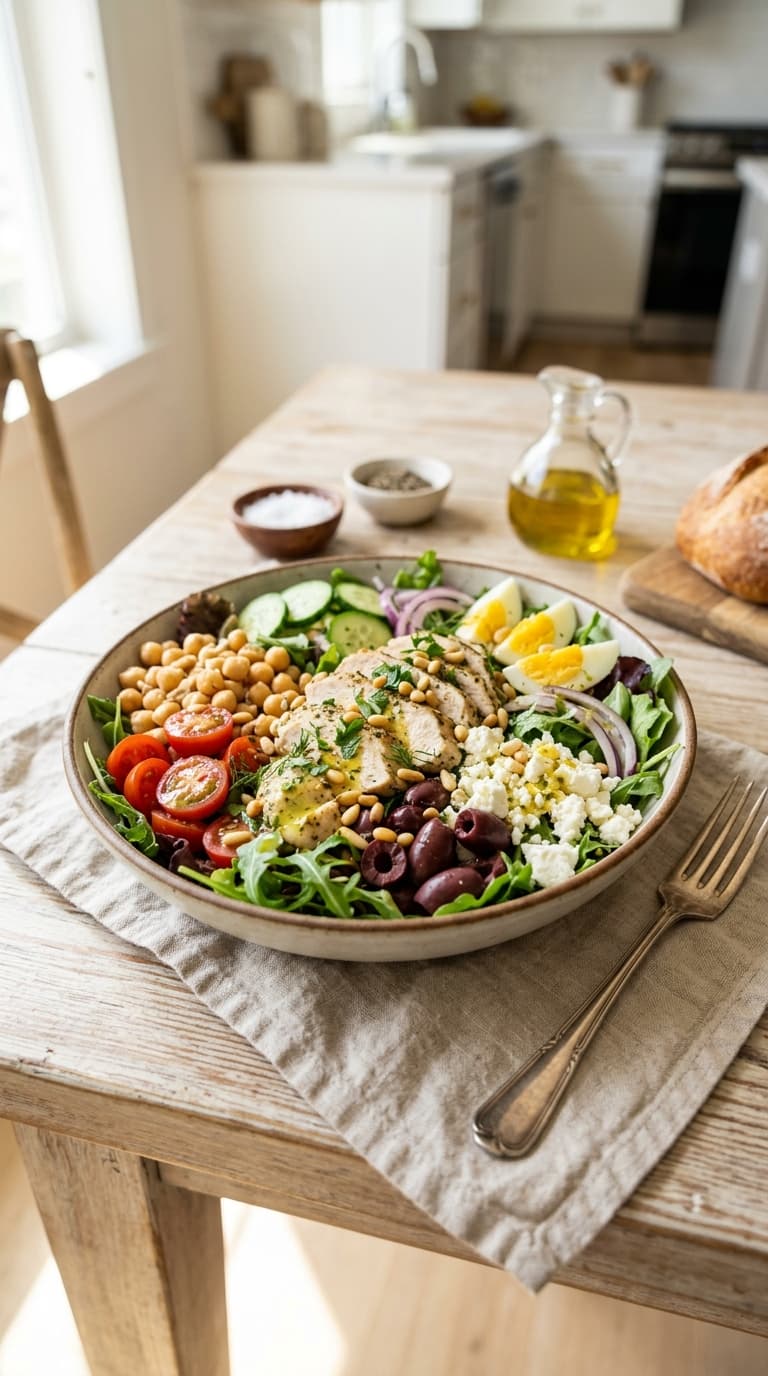
- Big salads with chickpeas, cucumber, feta, and lemon-olive oil dressing
- Whole grain pita with hummus, shredded chicken, and roasted peppers
- Lentil soup with crusty whole grain bread
If you’re packing these for work, check out these grab-and-go weight loss meals — a lot of them overlap beautifully with Mediterranean eating and take under ten minutes to assemble.
Dinners (Week 1)
- Day 1: Baked salmon with roasted zucchini and brown rice
- Day 2: Pasta with tomato-lentil sauce and a side salad
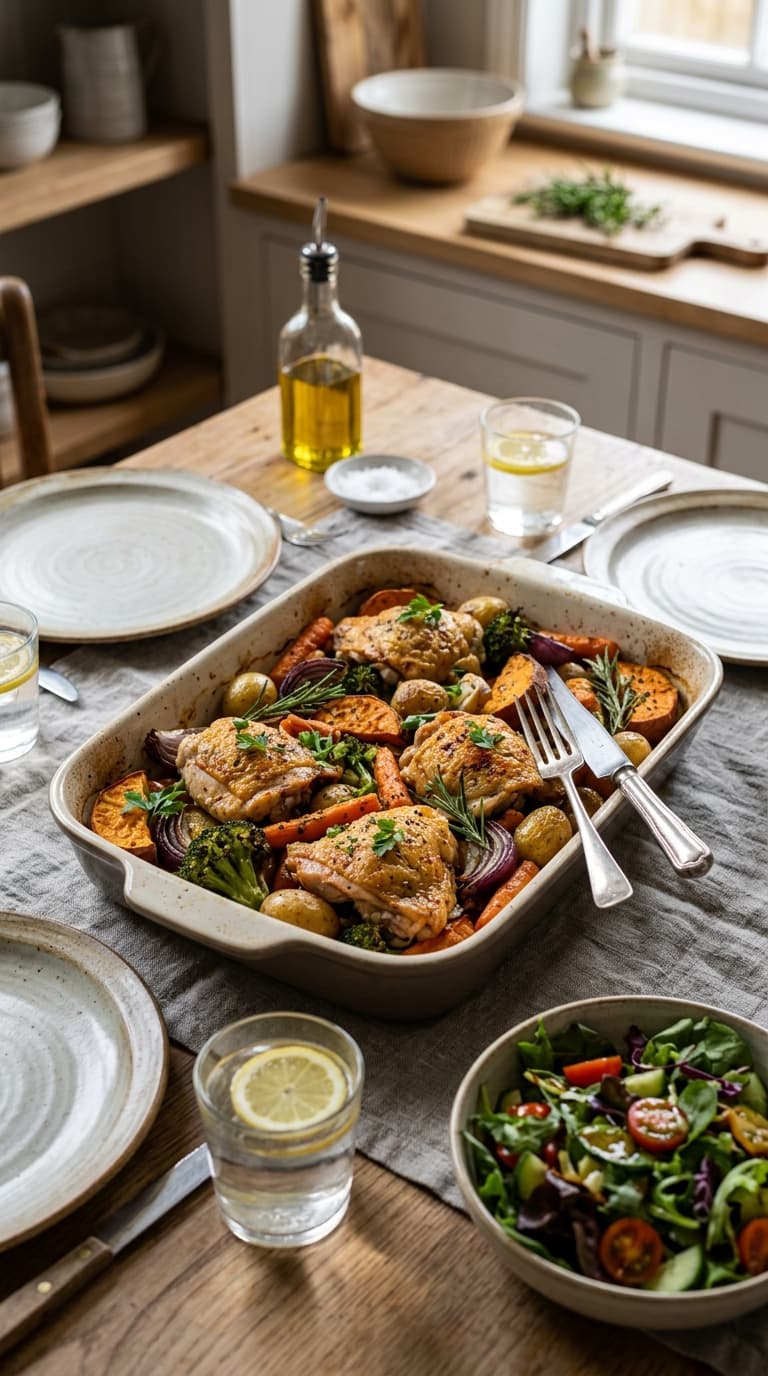
- Day 3: Chicken thighs with olives, tomatoes, and herbs over farro
- Day 4: Shakshuka (eggs poached in spiced tomato sauce) — simple and ridiculously good
- Day 5: Tuna and white bean salad with crusty bread
- Day 6: Veggie stir-fry with chickpeas over quinoa
- Day 7: Baked cod with roasted sweet potato and greens
Week 1 Pro Tip: Roast a big tray of vegetables on Sunday. Use them throughout the week in salads, wraps, and grain bowls. Instant time savings, zero stress.
Week 2: Finding Your Rhythm
By week two, you’ll notice something. The meals feel less like “eating healthy” and more like just… eating. Your palate adjusts faster than you’d expect. You’ll start craving olives and lemon over chips and dip. (Okay, maybe still chips sometimes. We’re human.)
Breakfasts (Week 2)
- Day 8–10: Avocado toast with a poached egg and red pepper flakes on whole grain bread
- Day 11–12: Smoothie with Greek yogurt, spinach, frozen berries, and a drizzle of honey
- Day 13–14: Feta and veggie omelette with a side of sliced tomatoes
Lunches (Week 2)
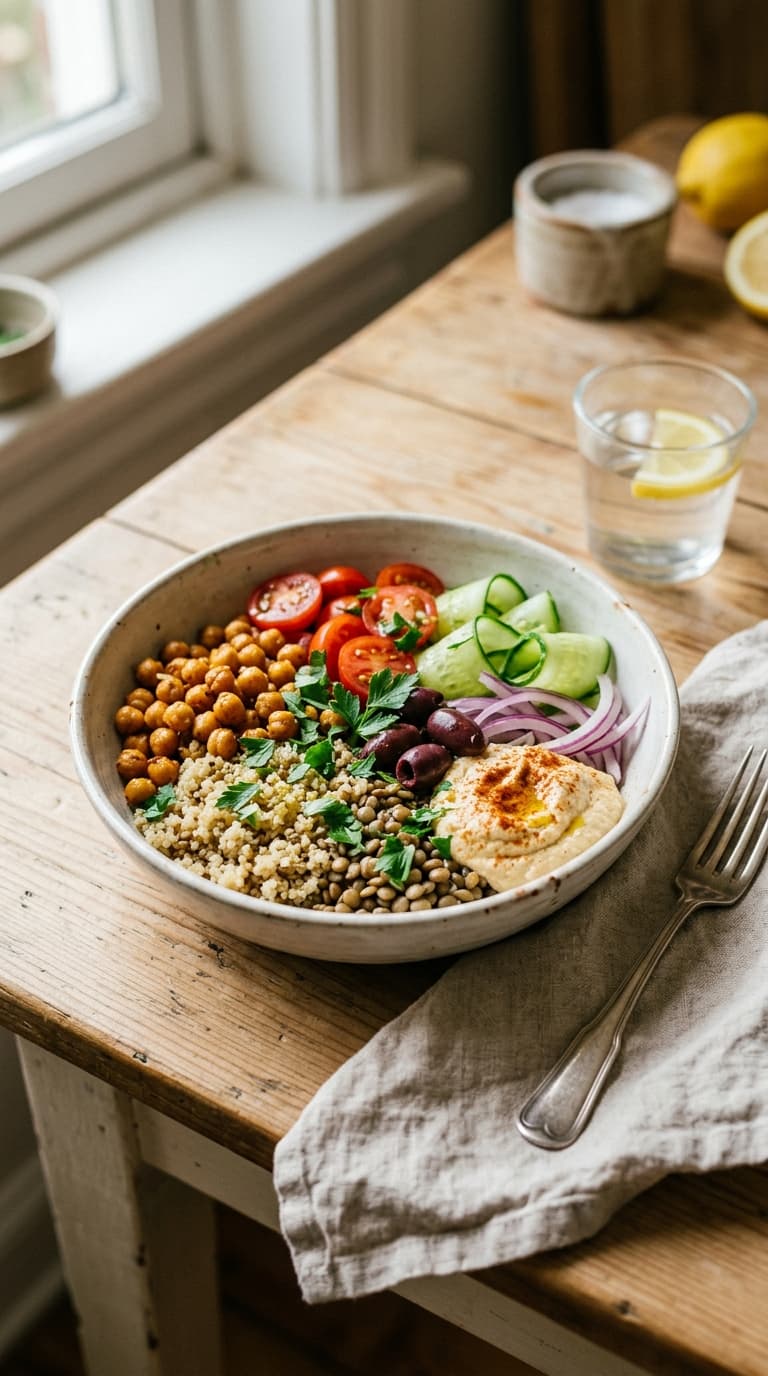
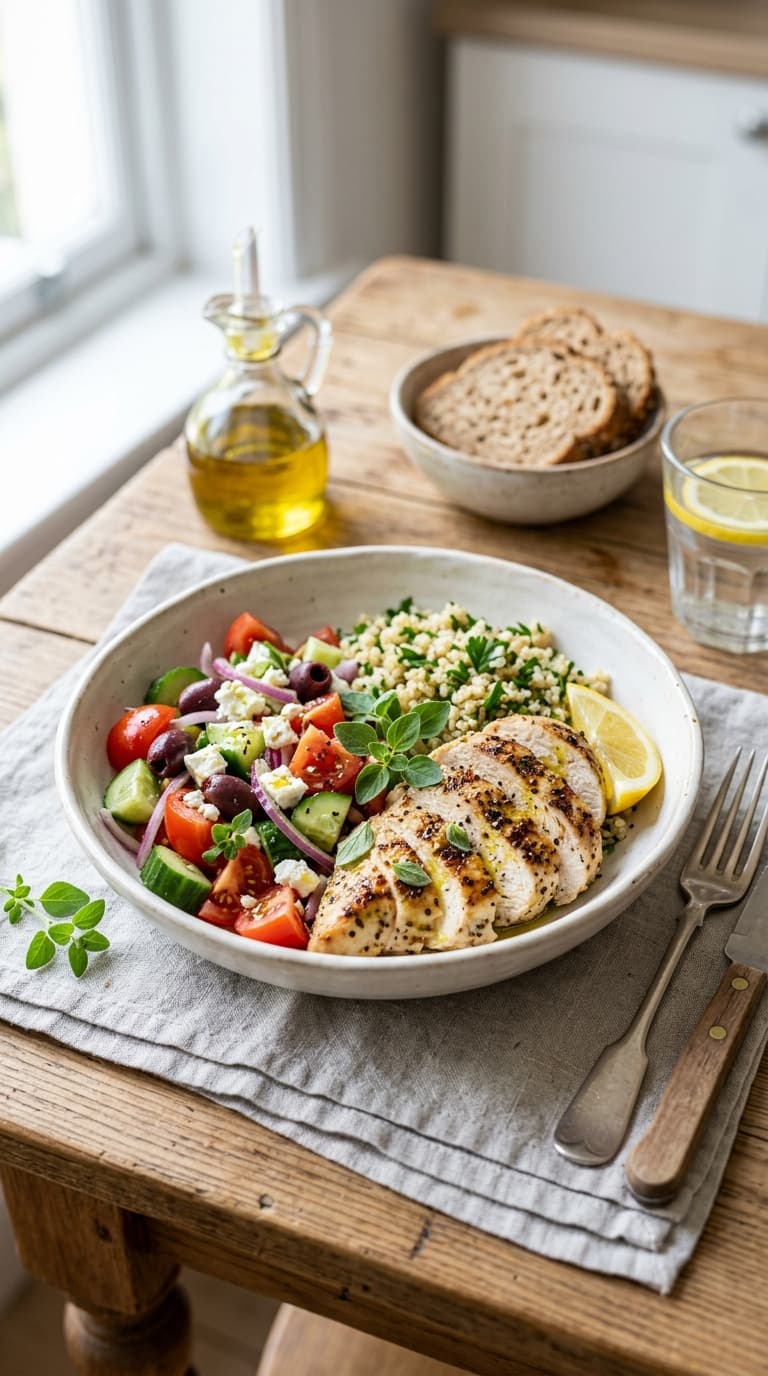
- Mediterranean grain bowls: farro or brown rice base, roasted veggies, hummus, and your protein of choice
- Leftover baked salmon flaked over greens with a lemon-tahini dressing
- Lentil and vegetable soup from scratch — it takes 30 minutes and lasts three days
These grain bowls are genuinely one of the best things about this diet. If you love the concept, you’ll find a ton more inspiration in these healthy meal prep bowls that feel like comfort food.
Dinners (Week 2)
- Day 8: Greek-style chicken souvlaki with tzatziki and pita
- Day 9: White bean and kale soup with a parmesan rind (big flavor, zero effort)
- Day 10: Shrimp with garlic, cherry tomatoes, and whole grain pasta
- Day 11: Stuffed bell peppers with ground turkey, rice, and herbs
- Day 12: Baked eggplant with tomato sauce and feta
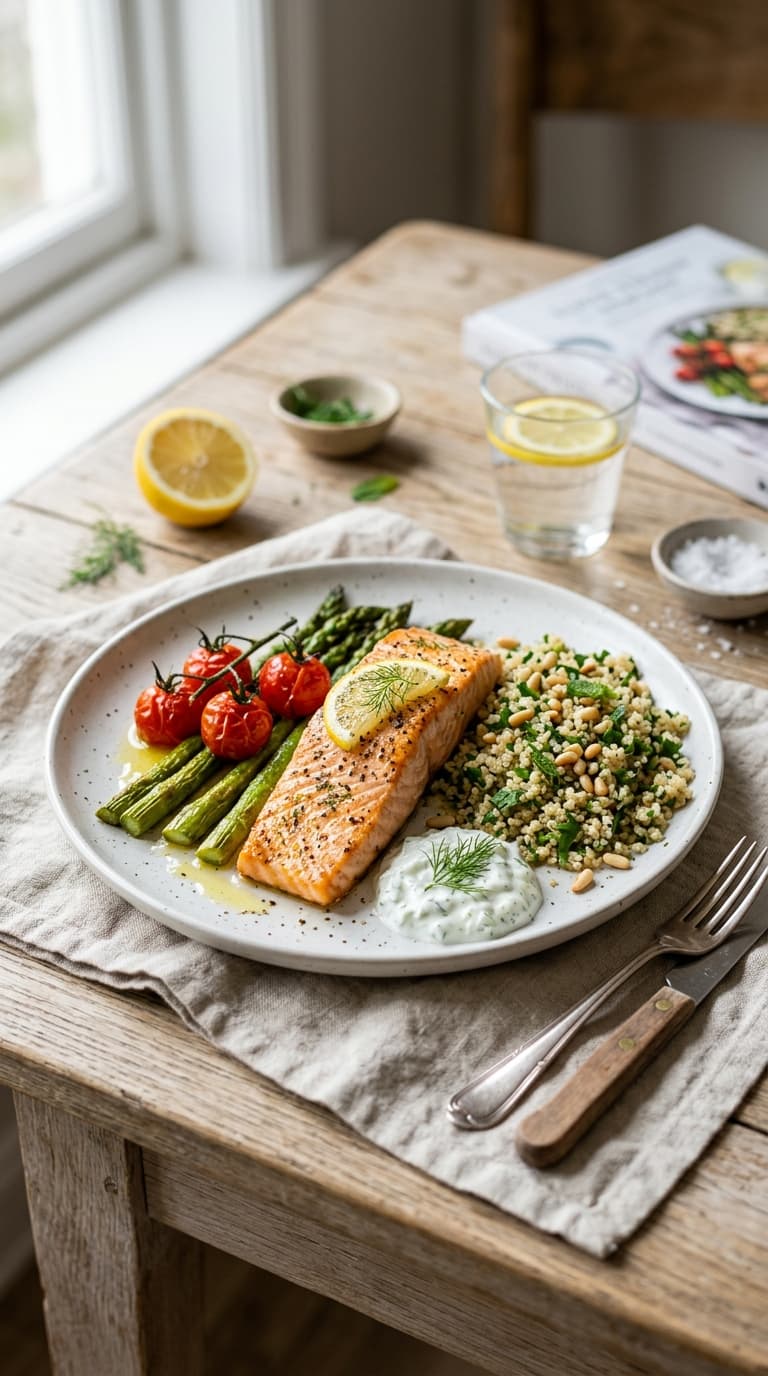
- Day 13: Herb-marinated salmon with roasted asparagus and lemon rice
- Day 14: One-pan chicken with olives, capers, and roasted potatoes
Week 2 Pro Tip: Make a double batch of lentil soup or grain bowls. The Mediterranean diet is naturally meal-prep friendly, and you’ll thank yourself on Thursday when you have zero energy to cook.
Week 3: You’re Actually in It Now
Week three is where things click. You’re not thinking about the plan anymore — you’re just eating. Your energy is more consistent, your digestion feels smoother, and honestly? You feel lighter even if the scale hasn’t moved dramatically. That matters.
Breakfasts (Week 3)
- Day 15–17: Whole grain toast with ricotta, sliced strawberries, and a drizzle of honey
- Day 18–19: Greek yogurt parfait with granola, pomegranate seeds, and pistachios
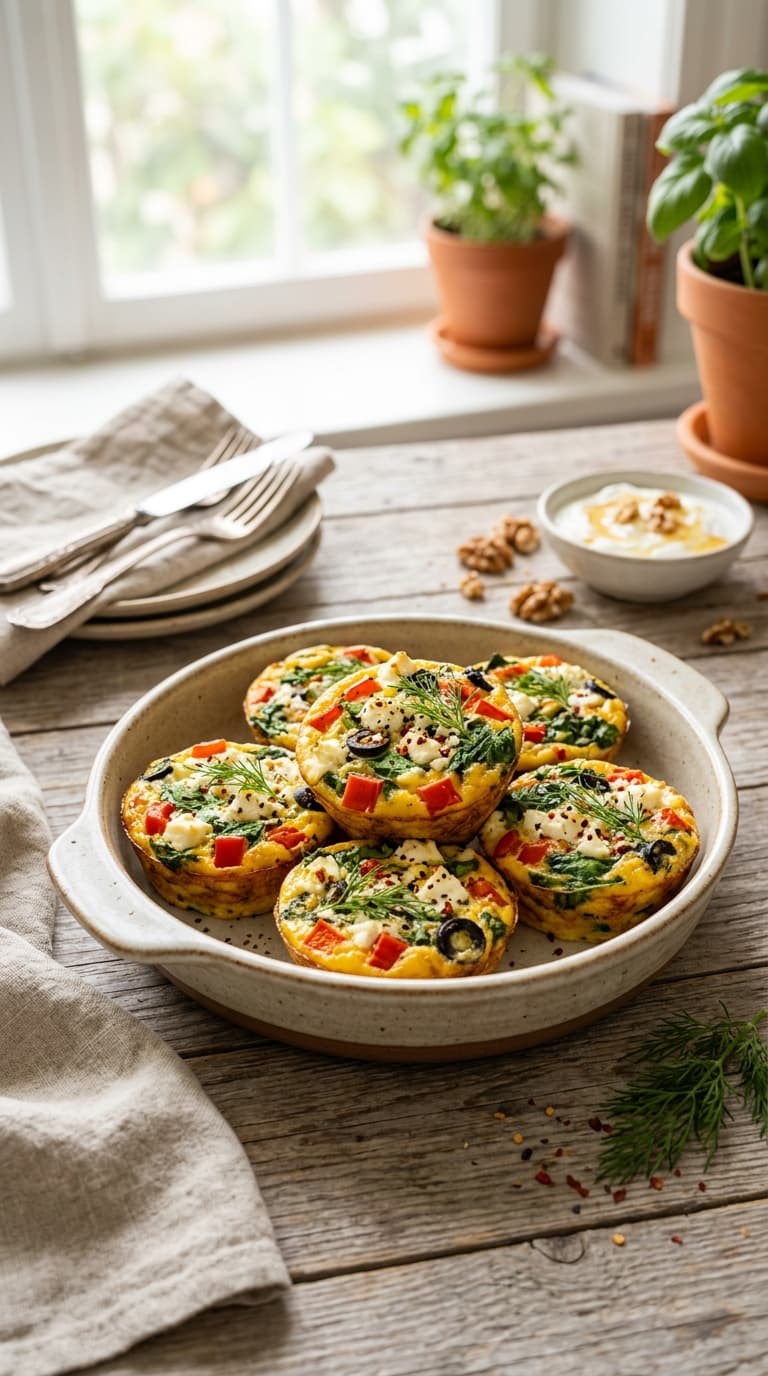
- Day 20–21: Veggie-packed frittata — make it Sunday, eat it through Tuesday
Lunches (Week 3)
- Niçoise-style salad: tuna, hard-boiled eggs, olives, green beans, cherry tomatoes
- Whole grain wraps with roasted veggies, hummus, and baby spinach
- Chickpea and roasted red pepper soup
IMO, the Niçoise salad is the unsung hero of week three. It sounds fancy but it’s basically just tuna and vegetables arranged nicely on a plate. Even your pickiest friend would eat it.
Dinners (Week 3)
- Day 15: Lemon-herb baked chicken with roasted carrots and farro
- Day 16: Spaghetti with clams or mussels and a simple white wine sauce
- Day 17: Moroccan-spiced chickpea stew with couscous
- Day 18: Sheet pan salmon with asparagus and cherry tomatoes
- Day 19: Greek-style turkey meatballs with tzatziki and warm pita
- Day 20: Roasted vegetable and goat cheese tart on whole grain pastry
- Day 21: Your favorite meal from the past three weeks — you earned it
Week 3 Pro Tip: Start thinking about what you’ll keep doing after day 21. Pick your five favorite meals from the plan and rotate them into your regular routine. That’s how this becomes a lifestyle rather than a “thing you did once.”
Snacks That Actually Fit the Plan
Snacking gets a bad reputation, but Mediterranean-style snacking is genuinely satisfying. You’re not grabbing a handful of crackers and calling it a day.
Here are some go-to options:
- Hummus with raw veggies — classic for a reason
- A small handful of mixed nuts (almonds, walnuts, pistachios)
- Greek yogurt with a drizzle of honey
- Whole grain crackers with feta and sliced cucumber
- An apple with almond butter
- Olives — literally just olives, they’re perfect
These are the kinds of snacks that keep you full without spiking your blood sugar and crashing an hour later. And if you want more ideas for low-calorie meals that keep you full beyond just snacks, that resource covers it well.
What About Calories?
Here’s the thing — the Mediterranean diet doesn’t ask you to obsess over numbers. The focus is on food quality and satisfaction, not restriction. Most people naturally end up in a moderate calorie range because whole foods are filling and the diet naturally limits processed junk.
That said, if you’re working toward specific weight loss goals, you might find it helpful to pair this approach with a 14-day calorie deficit meal plan for more structure. The two approaches work really well together — Mediterranean foods are naturally volume-friendly and keep hunger in check.
Common Mistakes to Avoid
Even a simple plan has pitfalls. Here’s where people go wrong:
- Drowning everything in olive oil. Yes, it’s healthy. No, that doesn’t mean unlimited quantities. A tablespoon or two per meal is plenty.
- Skipping protein. This diet isn’t vegetarian by default. Make sure you’re hitting a good protein target at each meal or you’ll feel hungry and cranky by 3pm.
- Forgetting about fiber. Load up on legumes and vegetables consistently. They’re the backbone of why this diet makes you feel so good.
- Treating it like a punishment. The Mediterranean diet is genuinely delicious. If you’re dreading your meals, something’s off — adjust the recipes until you enjoy them.
- Going overboard on wine. It’s mentioned in the diet guidelines, yes. One glass with dinner, not a bottle. :/
Batch Cooking: Your Secret Weapon
You don’t need to cook every single day to follow this plan. In fact, the people who stick with Mediterranean eating long-term are usually the ones who batch cook strategically. Spend about 60–90 minutes on Sunday and you can set up most of your week.
Here’s a simple Sunday prep routine:
- Cook a big batch of whole grains (farro, brown rice, or quinoa)
- Roast two sheet pans of mixed vegetables
- Make a large pot of soup or stew
- Hard-boil six eggs
- Prep your salad bases in containers
That’s it. From those components, you can build a week’s worth of lunches and supplement your dinners easily. If you want a proper structure for this, a 7-day meal prep plan for busy people lays it all out step by step.
And if you’re cooking for the whole family, you’ll be happy to know this style of eating translates really well — most kids take to roasted veggies and pasta dishes without much convincing. A 7-day family meal prep plan everyone will eat can help you adapt the portions and variety.
Budget-Friendly Mediterranean Eating
Ever wonder why people assume healthy eating is expensive? It genuinely doesn’t have to be. The Mediterranean diet is built around some of the cheapest foods on the planet — legumes, canned fish, eggs, seasonal vegetables, and grains.
Here’s how to keep costs down:
- Buy canned chickpeas and lentils in bulk — they’re nutritional powerhouses for very little money
- Choose frozen fish over fresh when fresh isn’t affordable or available
- Shop seasonal vegetables — they’re cheaper, fresher, and taste better
- Make your own hummus — a can of chickpeas, olive oil, lemon, garlic, and tahini costs a fraction of store-bought
- Use whole grains as your base — they’re filling and cheap
If budget is a real concern for you, a 21-day budget meal prep plan for tight schedules gives you specific shopping strategies that keep this kind of eating very affordable week over week.
How to Actually Stick With It Beyond 21 Days
The goal of this plan isn’t to lock you into 21 days and then leave you hanging. The goal is to show you that eating this way feels good enough that you naturally want to continue.
After the three weeks, most people find they’ve developed a handful of go-to meals they love, a new appreciation for simple ingredients, and a way of eating that doesn’t feel like a diet at all. That’s the magic of it.
If you want to keep the momentum going, check out a 30-day weight loss meal plan that actually works — it extends the principles nicely and keeps things interesting with more variety.
Wrapping It Up
The Mediterranean diet works because it’s not trying to trick you. It gives you real food, real flavor, and real satisfaction. No protein shakes, no expensive supplements, no ingredient you can’t pronounce. Just good food that happens to be incredibly good for you.
Three weeks is genuinely enough time to feel the difference — more energy, better digestion, and a clearer head. And the meals are good enough that you won’t feel like you’re suffering through it. That’s honestly the whole point.
Start with week one, batch cook on Sunday, and don’t overthink the details. You’ve got this.