14-Day Mediterranean Diet Meal Plan For Beginners (Simple & Satisfying)
14-Day Mediterranean Diet Meal Plan For Beginners (Simple & Satisfying)
So you’ve heard about the Mediterranean diet approximately 47 times this month and you’re finally curious enough to actually try it. Good. Because honestly, this is one of those rare eating styles that doesn’t make you feel like you’re being punished. No weird powders, no starvation windows, no food that tastes like cardboard — just real, delicious food that people in Greece and Italy have been eating for centuries while somehow staying healthier than the rest of us. 🙂
I started exploring the Mediterranean diet when I got tired of restrictive plans that left me hungry by 3 PM. What I found was a lifestyle that felt sustainable, enjoyable, and — shockingly — actually worked. Let me walk you through a full 14-day beginner meal plan that’s simple enough to actually stick to.
What Is the Mediterranean Diet (And Why Should You Care)?
Before we get into the food, let’s make sure we’re on the same page. The Mediterranean diet isn’t really a “diet” in the traditional sense. It’s more of an eating pattern inspired by the traditional foods of countries bordering the Mediterranean Sea — think Greece, Italy, Spain, and Turkey.
The core idea is simple: eat mostly plants, healthy fats, lean proteins, and whole grains. You’re not counting calories obsessively or swearing off entire food groups. You’re just eating better quality food, more consistently.
Key Foods You’ll Be Eating
- Vegetables and fruits — lots of them, every day
- Whole grains — quinoa, farro, brown rice, whole wheat bread
- Legumes — chickpeas, lentils, black beans
- Healthy fats — olive oil, avocado, nuts
- Lean proteins — fish, chicken, eggs
- Dairy in moderation — mostly Greek yogurt and feta cheese
- Herbs and spices — garlic, oregano, basil, cumin
And yes, a glass of red wine occasionally is considered part of the tradition. Not that I’m complaining.
The Benefits That Actually Matter
You’ve probably seen the headlines — “Mediterranean diet reduces heart disease!” — but let’s talk about what you’ll actually feel as a beginner.
Within the first week, most people notice they feel less bloated and more energized after meals. That’s because you’re cutting back on processed foods and loading up on fiber-rich vegetables and whole grains. Your digestion thanks you immediately.
By week two, the meals start feeling normal. You stop missing the junk food because you’re genuinely satisfied. This isn’t a coincidence — healthy fats and fiber keep you fuller for longer, so you’re not raiding the pantry every two hours.
If you’re also trying to manage your weight, pairing this with a smart 14-day calorie deficit meal plan can accelerate your results without making you miserable.
Before You Start: 3 Things to Set Up for Success
1. Stock Your Pantry
You don’t need to buy everything at once. Start with these Mediterranean diet staples:
- Extra virgin olive oil (get a good one — it makes a difference)
- Canned chickpeas and lentils
- Whole grain pasta and brown rice
- Canned diced tomatoes
- Garlic, onions, and lemons
- Greek yogurt and feta cheese
- Dried herbs: oregano, cumin, paprika, basil
2. Plan Your Prep Days
FYI — the easiest way to stick to any meal plan is to prep ahead. Pick two days a week (Sunday and Wednesday work well) to wash vegetables, cook grains, and portion snacks. Even 30 minutes of prep saves you hours of decision fatigue during the week.
If meal prepping feels overwhelming, check out this 14-day simple meal prep anyone can follow — it breaks things down in a way that won’t make your head spin.
3. Set Realistic Expectations
This isn’t a crash diet. You won’t lose 10 pounds in 14 days. What you will do is build habits that actually last, feel more energized, and genuinely enjoy your meals. That’s the whole point.
Week 1 Meal Plan (Days 1–7)
Day 1
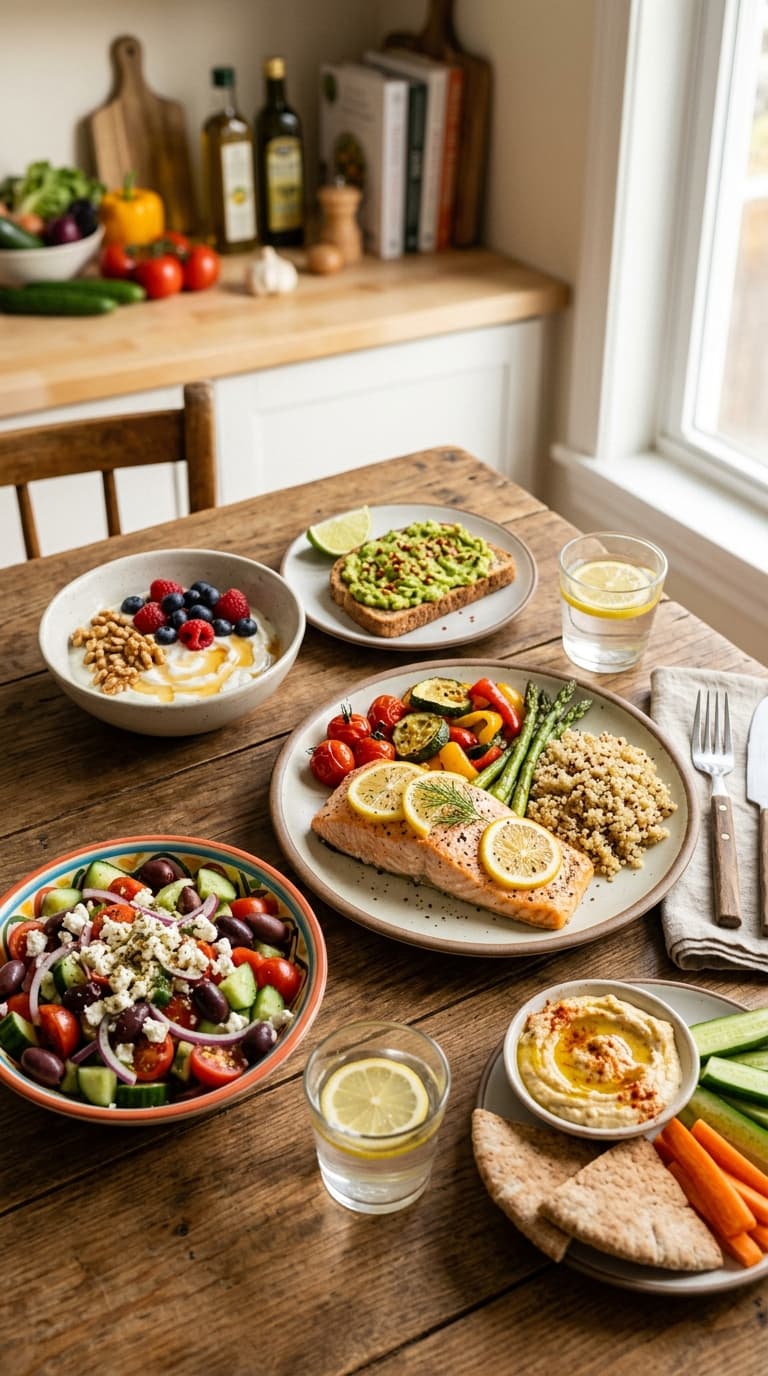
- Breakfast: Greek yogurt with honey, walnuts, and fresh berries
- Lunch: Whole wheat pita with hummus, cucumber, tomatoes, and feta
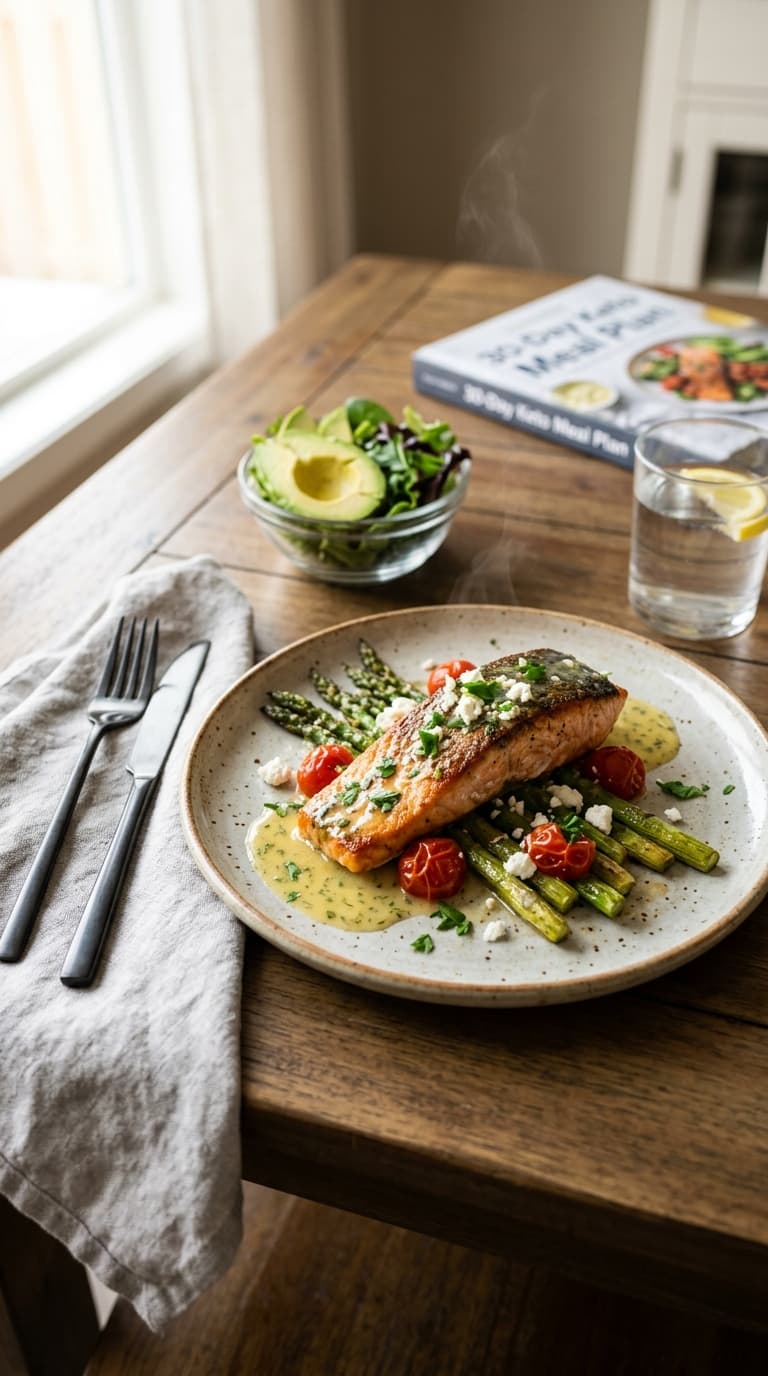
- Dinner: Baked salmon with roasted zucchini and a side of quinoa
- Snack: A small handful of mixed nuts and an apple
Day 2
- Breakfast: Scrambled eggs with spinach and cherry tomatoes, cooked in olive oil
- Lunch: Large Greek salad with olives, cucumber, red onion, feta, and chickpeas
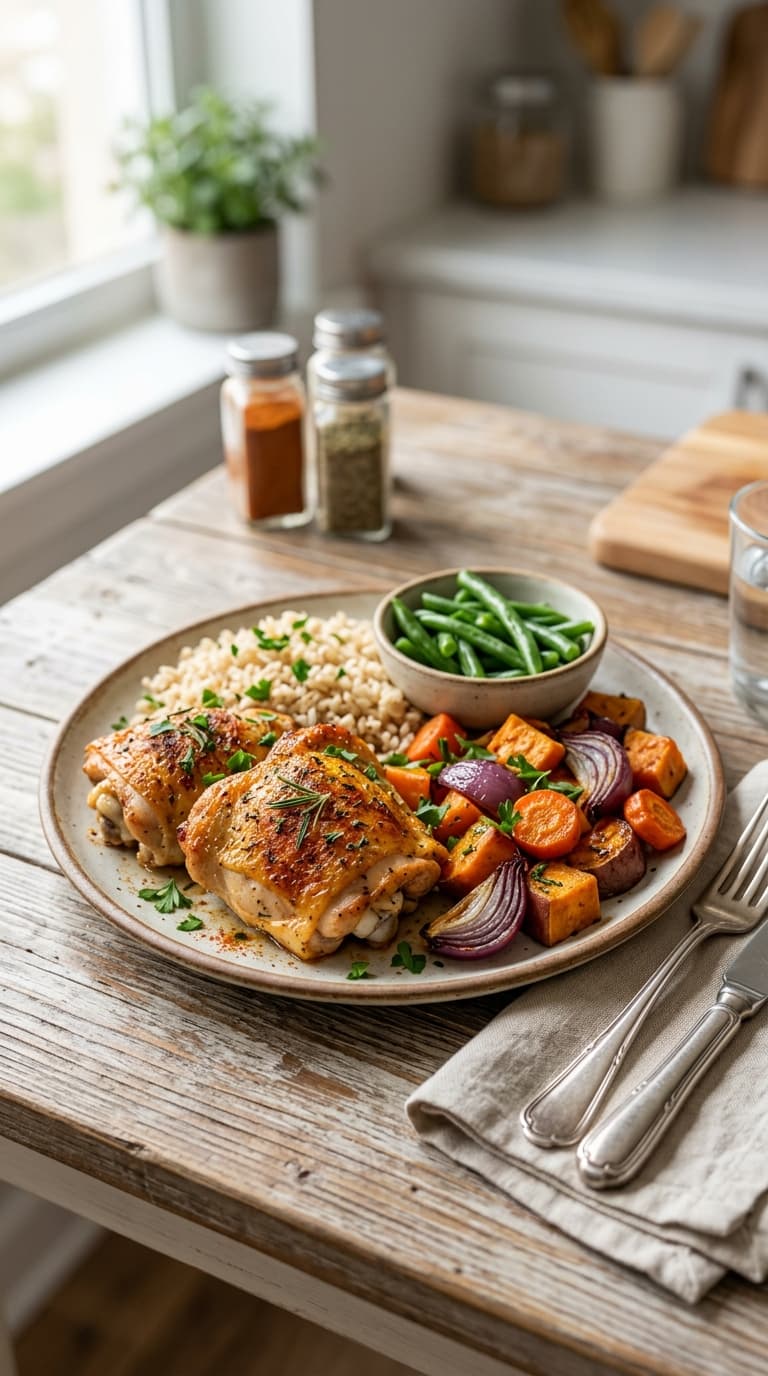
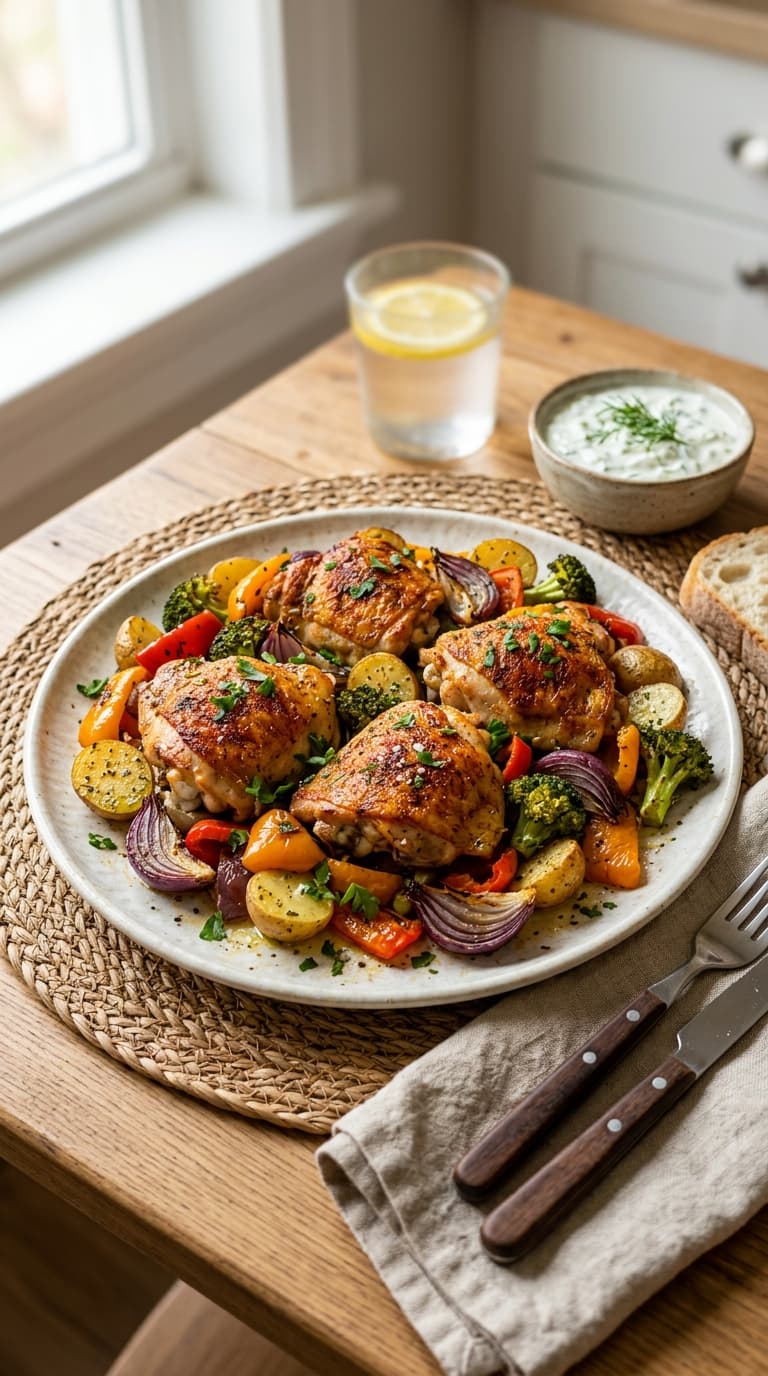
- Dinner: Lemon herb chicken thighs with roasted sweet potato and steamed broccoli
- Snack: Sliced cucumber with tzatziki
Day 3
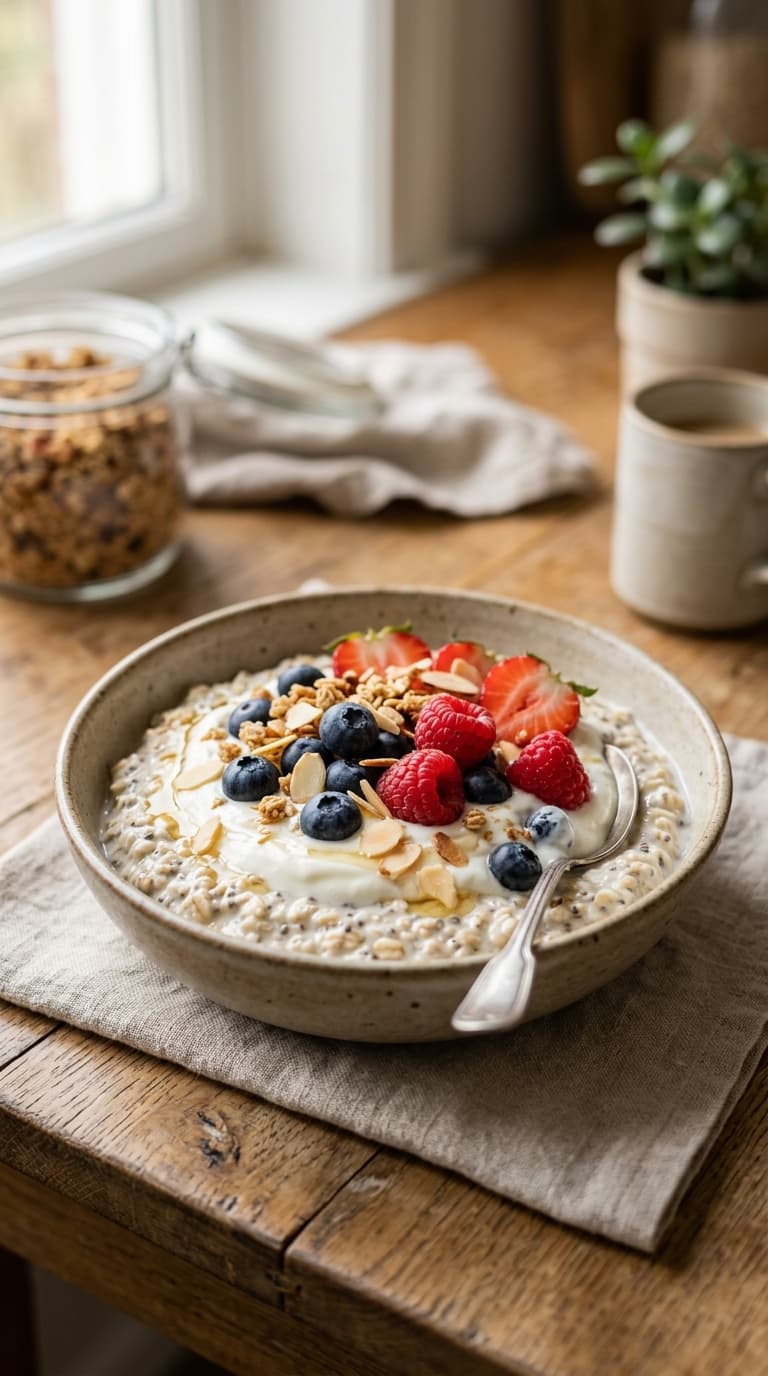
- Breakfast: Overnight oats with almond milk, banana, and a sprinkle of cinnamon
- Lunch: Lentil soup with crusty whole grain bread
- Dinner: Shrimp stir-fried with garlic, cherry tomatoes, and whole wheat pasta
- Snack: Greek yogurt with a drizzle of honey
Day 4
- Breakfast: Whole grain toast with avocado, a poached egg, and red pepper flakes
- Lunch: Tuna salad (olive oil-based, no mayo) stuffed into a bell pepper
- Dinner: Vegetable tagine with chickpeas, served over couscous
- Snack: A handful of almonds and a pear
Day 5
- Breakfast: Smoothie with spinach, banana, almond butter, and almond milk
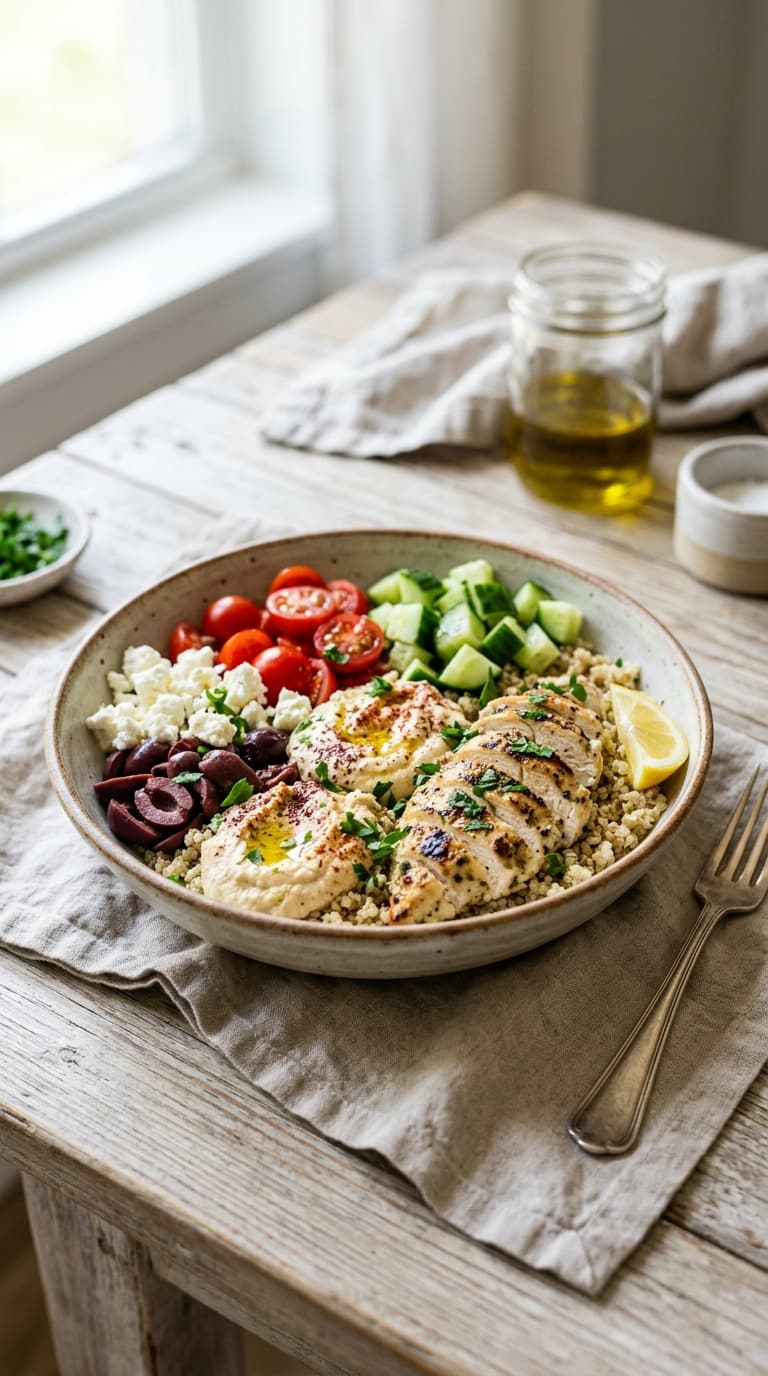
- Lunch: Quinoa bowl with roasted vegetables, hummus, and a lemon tahini drizzle
- Dinner: Grilled swordfish with a tomato and olive relish, served with brown rice
- Snack: Celery sticks with hummus
Day 6
- Breakfast: Greek yogurt parfait with granola and sliced peaches
- Lunch: Falafel wrap in whole wheat flatbread with lettuce, tomato, and tahini
- Dinner: Baked chicken with Mediterranean spices, roasted red peppers, and orzo
- Snack: Orange slices and a few walnuts
Day 7
- Breakfast: Veggie omelette with feta, olives, and sun-dried tomatoes
- Lunch: White bean and kale soup with a side of whole grain crackers
- Dinner: Grilled lamb chops with tabbouleh and roasted eggplant
- Snack: Hummus with carrot sticks
Week 1 Check-In: How Are You Feeling?
Honestly, if Day 3 felt a little boring, that’s normal. The first week of any new eating pattern has an adjustment period. By Day 5 or 6, most people start getting into the rhythm — and the flavors really start clicking. Olive oil, lemon, and garlic together is basically a cheat code for making everything taste amazing.
Ever wondered why Mediterranean food feels so satisfying even without heavy cream sauces or loads of sugar? It’s the combination of healthy fats, fiber, and bold flavors that keeps your brain and body happy.
Week 2 Meal Plan (Days 8–14)
Day 8
- Breakfast: Whole grain toast with ricotta, sliced strawberries, and a drizzle of honey
- Lunch: Chickpea and spinach salad with lemon vinaigrette and toasted pine nuts
- Dinner: Baked cod with herbed couscous and roasted asparagus
- Snack: Greek yogurt with mixed seeds
Day 9
- Breakfast: Overnight oats with dried figs, walnuts, and a touch of vanilla
- Lunch: Mediterranean grain bowl with farro, roasted vegetables, olives, and feta
- Dinner: Turkey meatballs in marinara sauce over whole wheat spaghetti
- Snack: A handful of pistachios and a clementine
Day 10
- Breakfast: Egg muffins with spinach, sun-dried tomatoes, and goat cheese (batch-prep these!)
- Lunch: Lentil and roasted vegetable salad with a lemon-mustard dressing
- Dinner: Grilled chicken souvlaki with tzatziki, pita, and a simple tomato salad
- Snack: Sliced bell peppers with hummus
Day 11
- Breakfast: Smoothie bowl with mixed berries, banana, Greek yogurt, and granola
- Lunch: Spiced chickpea and tomato stew with whole grain bread for dipping
- Dinner: Pan-seared salmon with a cucumber-dill salad and quinoa
- Snack: Apple slices with almond butter
Day 12
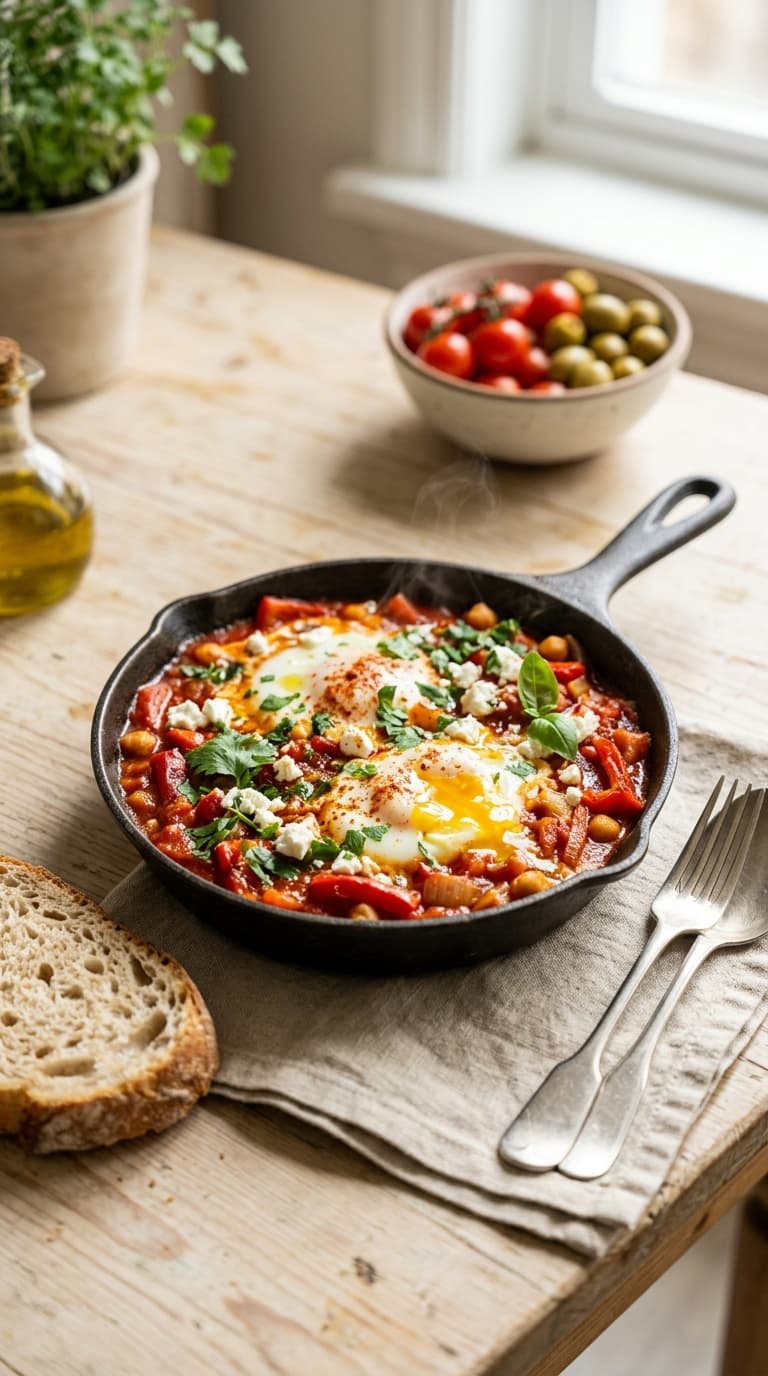
- Breakfast: Shakshuka (eggs poached in spiced tomato sauce) — yes, it’s as good as it sounds
- Lunch: Tuna and white bean salad with arugula, lemon, and capers
- Dinner: Stuffed bell peppers with ground turkey, rice, tomatoes, and herbs
- Snack: A small bowl of mixed olives and nuts
Day 13
- Breakfast: Whole grain waffles topped with Greek yogurt and fresh blueberries
- Lunch: Roasted vegetable and hummus flatbread pizza on whole wheat base
- Dinner: Garlic butter shrimp with farro, wilted spinach, and cherry tomatoes
- Snack: Carrot and cucumber sticks with baba ganoush
Day 14
- Breakfast: Classic Mediterranean egg scramble with tomatoes, olives, feta, and herbs
- Lunch: Big Greek salad with grilled chicken, extra lemon dressing, and warm pita
- Dinner: Whole roasted fish (try sea bass or branzino) with lemon, herbs, and roasted potatoes
- Snack: Fresh fruit plate with a small piece of dark chocolate — you’ve earned it 🙂
Tips to Make Week 2 Even Easier
By now you should have a solid feel for the flavors and textures that make Mediterranean cooking so satisfying. Week 2 is a great time to start batch cooking more efficiently.
- Roast a big tray of mixed vegetables on Sunday — use them in salads, grain bowls, and wraps all week
- Cook a large batch of grains (quinoa or farro) and refrigerate — they last 5 days easily
- Make a big jar of lemon-tahini dressing — it works on literally everything
If you want to keep the momentum going after day 14, a 21-day weight loss meal prep plan is a natural next step that builds on exactly what you’ve learned here.
What to Do When You Hit a Wall
Look, some days you won’t want to cook. Some days a frozen pizza sounds a thousand times better than a grain bowl. That’s human. IMO, the key to any long-term eating shift is having easy fallback options that still fit the pattern.
Quick Mediterranean meals for low-energy days:
- Canned sardines on whole grain crackers with a squeeze of lemon
- Greek yogurt with nuts and fruit — that’s literally a complete meal
- Scrambled eggs with whatever vegetables are in your fridge
- Whole wheat toast with hummus and sliced tomatoes
These take under five minutes and still keep you on track. If you’re looking for more no-fuss ideas, this collection of low-calorie meals that keep you full has plenty of options that overlap nicely with Mediterranean eating.
Eating Out on the Mediterranean Diet
One of the genuinely great things about this eating pattern? It travels well. When you’re eating out, you’re not completely stranded like you might be on keto or a strict elimination diet.
At most restaurants, you can:
- Order grilled fish or chicken over fried options
- Ask for olive oil and lemon instead of heavy dressings
- Choose whole grain bread when available
- Load up on vegetable sides and salads
- Skip the sugary desserts and go for fresh fruit or a small piece of dark chocolate
Greek, Italian, Turkish, and Middle Eastern restaurants are your best friends. Walk into a Lebanese restaurant and you’re basically already eating Mediterranean. :/
Snacking the Mediterranean Way
Snacks on this plan aren’t an afterthought — they’re strategic. The goal is to keep your energy stable between meals so you’re not arriving at dinner completely ravenous.
Best Mediterranean snack combinations:
- Nuts + fruit (almonds and an apple, walnuts and grapes)
- Hummus + raw vegetables
- Greek yogurt + honey + seeds
- Whole grain crackers + feta
- A small handful of olives + a boiled egg
These snacks hit the right mix of protein, fat, and fiber to hold you over without spiking and crashing your blood sugar. If you want meals that go big on volume without going heavy on calories, high-volume low-calorie meals pair really well with a Mediterranean approach.
A Quick Note on Portions
The Mediterranean diet isn’t a license to eat unlimited amounts of anything. Olive oil is healthy — it’s also calorie-dense. Nuts are great — but a “handful” should actually be a handful, not a soup bowl full.
The portion philosophy here is: eat until satisfied, not stuffed. Learn to tell the difference. It sounds simple, but it takes a bit of mindfulness, especially if you’re used to eating quickly or while distracted.
Slowing down, sitting at a table, and actually tasting your food? Turns out that’s also part of the Mediterranean lifestyle. Who knew.
After Day 14: Where Do You Go From Here?
You made it! Fourteen days of real food, satisfying meals, and (hopefully) a whole new appreciation for what eating well can actually feel like.
Here’s the thing — this shouldn’t just be a 14-day experiment. The Mediterranean diet works because it’s enjoyable and sustainable, not because it restricts you into submission. The habits you’ve built over these two weeks — cooking with olive oil, loading up on vegetables, choosing whole grains, snacking smarter — those are worth keeping.
If you want to stay consistent and keep building on your progress, explore this 30-day weight loss meal plan that actually works — it extends the principles you’ve already been living by and keeps things interesting.
And if meal prep is your new best friend (it should be), the 14-day healthy meal prep for consistent energy is worth bookmarking for your next planning session.
Final Thoughts
The Mediterranean diet gets recommended so often because it actually works — not as a quick fix, but as a genuinely enjoyable way to eat for life. It’s built on food that tastes good, keeps you full, and supports your health without making you miserable.
Fourteen days from now, you’ll have tried new recipes, discovered flavors you love, and proven to yourself that eating well doesn’t have to be complicated or boring. That’s worth more than any before-and-after photo.
Start with Day 1. Roast some vegetables. Drizzle on the olive oil. Squeeze a lemon over everything. You’ve got this.