30-Day Whole30 Meal Plan (Everything You Need Week By Week)
30-Day Whole30 Meal Plan (Everything You Need Week By Week)
So you’ve decided to do Whole30. Maybe a friend convinced you, maybe you stumbled across it at 11pm while doom-scrolling, or maybe your gut has been staging a quiet protest and you finally decided to listen. Whatever brought you here — welcome. This is going to be a real conversation about what a 30-day Whole30 meal plan actually looks like, week by week, without the sugarcoating (literally and figuratively).
I’m not going to pretend this is easy. But I will tell you it’s absolutely doable, especially when you stop winging it and start planning like you mean it.
What Even Is Whole30 (And Why Should You Care)?
Whole30 is a 30-day elimination protocol — not a diet, not a cleanse, not a punishment. You cut out sugar, grains, dairy, legumes, alcohol, and all the sneaky processed stuff for exactly 30 days. Then you reintroduce foods one at a time to figure out what actually agrees with your body.
The whole point is to reset your relationship with food and discover what’s been making you feel sluggish, bloated, or just… off. A lot of people finish Whole30 and realize they had food sensitivities they didn’t even know about. Others just feel dramatically better and decide to stick with a mostly clean way of eating. Either way, it’s 30 days of intentional eating — and having a solid meal plan is what separates people who finish from people who quit on Day 9.
Before You Start: The Whole30 Ground Rules
Let’s get the basics locked in before we talk food.
You CAN eat:
- Meat, poultry, and seafood
- Eggs
- Vegetables (all of them)
- Fruit (yes, fruit is fine)
- Nuts and seeds
- Healthy fats like olive oil, avocado oil, coconut oil, and ghee
You CANNOT eat:
- Sugar (real or fake — yes, that includes honey and maple syrup)
- Grains (wheat, rice, oats, corn — all of it)
- Dairy (cheese, milk, yogurt, butter — ghee is the one exception)
- Legumes (beans, lentils, peanuts, soy)
- Alcohol
- Processed snack foods or “Whole30 approved” versions of junk food (the SWYPO rule — Sex With Your Pants On — basically means no paleo pancakes or almond flour cookies)
FYI — reading labels becomes your new hobby. Sunflower oil, carrageenan, MSG, sulfites? All off the list. Whole30 is strict on purpose, and that strictness is actually what makes it work.
Week 1: The “What Did I Sign Up For” Phase
Okay, real talk — Week 1 is rough for most people. Your body is adjusting, you might feel tired or headachy (they literally call it the “Whole30 Hangover”), and every ad you see will somehow involve pizza. This is normal.
The goal in Week 1 is simple, repeatable meals. Don’t try to get fancy. Just nail the basics.
Week 1 Sample Meal Plan
Breakfast ideas:
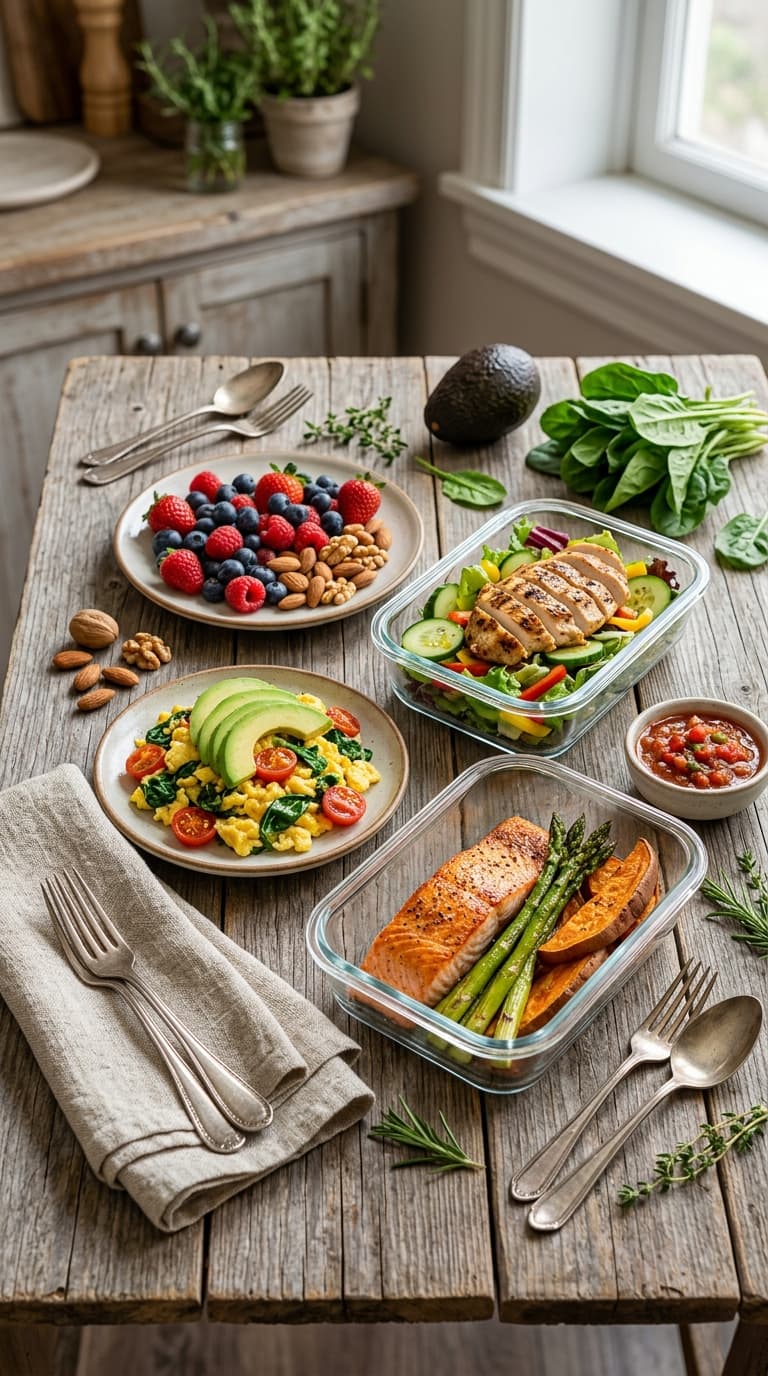
- Scrambled eggs with sautéed spinach and avocado
- Sweet potato hash with ground turkey and peppers
- Hard-boiled eggs with a handful of almonds and fruit
Lunch ideas:
- Big salad with grilled chicken, olive oil, and lemon dressing
- Lettuce-wrapped burgers with homemade guacamole
- Tuna (in water, no additives) over greens with cherry tomatoes
Dinner ideas:
- Sheet pan chicken thighs with roasted Brussels sprouts and sweet potato
- Ground beef stir-fry with zucchini and coconut aminos
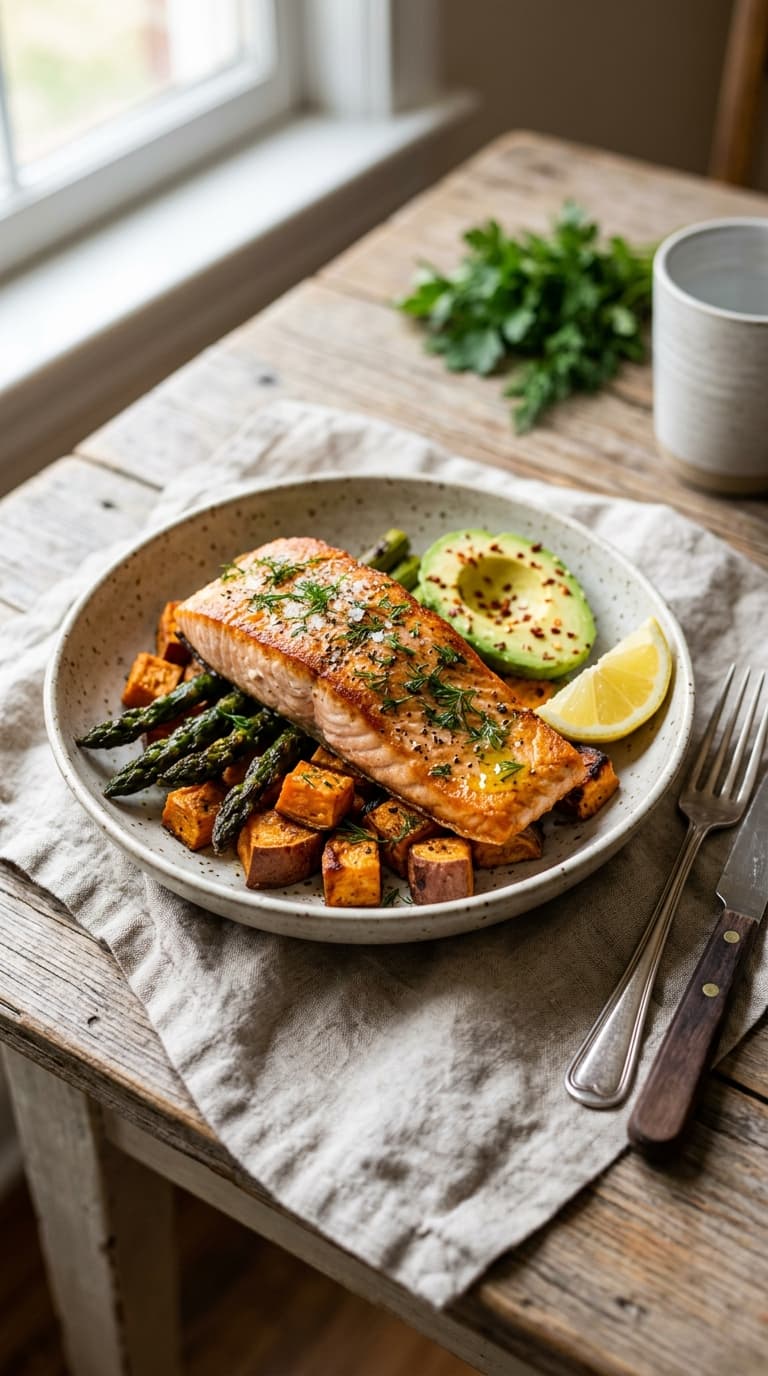
- Salmon with steamed broccoli and cauliflower rice
Pro tip: Cook a big batch of protein on Sunday. If you’re looking for structure, a solid 7-day meal prep plan for busy women can give you the framework you need to stop scrambling every morning.
Keep snacks minimal in Week 1. Whole30 actually encourages you to eat full meals instead of grazing all day — it helps reset your hunger signals.
Week 2: The “Kill All The Things” Phase
Week 2 has a reputation. You’re past the initial shock, but the novelty has worn off and the cravings hit hardest right around days 10-12. This is when most people either push through or bail. You’re going to push through.
The key is to add more variety so you don’t go insane eating the same chicken and broccoli every night. Also — keep your fridge stocked. An empty fridge on Whole30 is a dangerous place.
Week 2 Sample Meal Plan
Breakfast ideas:
- Egg muffins with peppers, onion, and Italian sausage (check the label — no sugar)
- Coconut milk chia pudding with sliced mango
- Leftover dinner protein with fried eggs on top (trust me on this one)
Lunch ideas:
- Shrimp lettuce cups with mango salsa
- Chicken soup made with compliant broth and loads of veggies
- Zucchini noodles with ground beef and marinara (no-sugar tomato sauce)
Dinner ideas:
- Pork tenderloin with roasted root vegetables
- Baked cod with asparagus and lemon
- Thai-inspired ground chicken with coconut milk and cauliflower rice
This is also a great week to batch cook. Roast a whole tray of vegetables, prep some cauliflower rice, and keep hard-boiled eggs in the fridge. If you want ideas for filling meals that don’t leave you starving, these high-volume low-calorie meals for fat loss translate really well into Whole30-style eating.
Week 3: The “I Actually Feel Pretty Good” Phase
Something shifts in Week 3. Most people report better sleep, clearer skin, less bloating, and actual energy in the mornings — without multiple coffees. It’s kind of wild. 🙂
Week 3 is when Whole30 starts feeling sustainable instead of torturous. You’ve figured out your go-to meals, you’re reading labels on autopilot, and eating out (if you do) is no longer panic-inducing.
Week 3 Sample Meal Plan
Breakfast ideas:
- Smoked salmon with avocado and cucumber slices
- Whole30 shakshuka (eggs poached in compliant tomato sauce)
- Banana and almond butter with hard-boiled eggs
Lunch ideas:
- Compliant BLT salad with bacon (yes, some bacon is Whole30 approved — read the label)
- Turkey-stuffed bell peppers
- Chicken and vegetable soup prepped in bulk
Dinner ideas:
- Lamb chops with roasted garlic cauliflower and asparagus
- Grilled shrimp skewers with mango avocado salsa and zucchini
- Beef and vegetable stew (batch cook this — it gets better the next day)
By Week 3, you might also feel comfortable experimenting with more complex recipes. If batch cooking on weekends is your thing, a 14-day meal prep plan to reset your routine gives you good structural ideas that translate perfectly to Whole30 planning.
Week 4: The “Finish Line Is in Sight” Phase
You’re almost there. Don’t you dare quit now — not on Week 4. IMO, Week 4 is actually the most interesting because you start thinking about the reintroduction phase and what you’ll discover about your body.
The goal in Week 4 is consistency and observation. Start noticing how you feel. Energy levels, digestion, mood, sleep quality — all of it. You’re collecting data that will inform your reintroduction.
Week 4 Sample Meal Plan
Breakfast ideas:
- Egg and veggie scramble with everything left in the fridge (Week 4 gets creative)
- Compliant sausage with roasted sweet potato and kale
- Coconut milk smoothie with banana, spinach, and almond butter
Lunch ideas:
- Big protein salad with any compliant protein, lots of vegetables, and olive oil
- Lettuce-wrapped turkey burgers with sweet potato fries (baked in avocado oil)
- Chicken thighs over cauliflower rice with roasted peppers
Dinner ideas:
- Whole roasted chicken with roasted root vegetables
- Seafood stew with compliant coconut broth and vegetables
- Grass-fed beef patties with roasted broccoli and guacamole
Week 4 tip: Start writing down how you feel each day. This makes the reintroduction phase so much more useful. Also — plan your Day 31 reintroduction before you get there. The transition matters.
Whole30 Meal Prep Strategy (How to Not Lose Your Mind)
Let’s talk strategy because planning is what makes or breaks a Whole30. Without it, you’ll be standing in front of your fridge at 6:30pm on a Tuesday making questionable decisions. :/
Here’s what a solid Whole30 prep session looks like:
- Pick one day to prep (Sunday works for most people) and block 2-3 hours
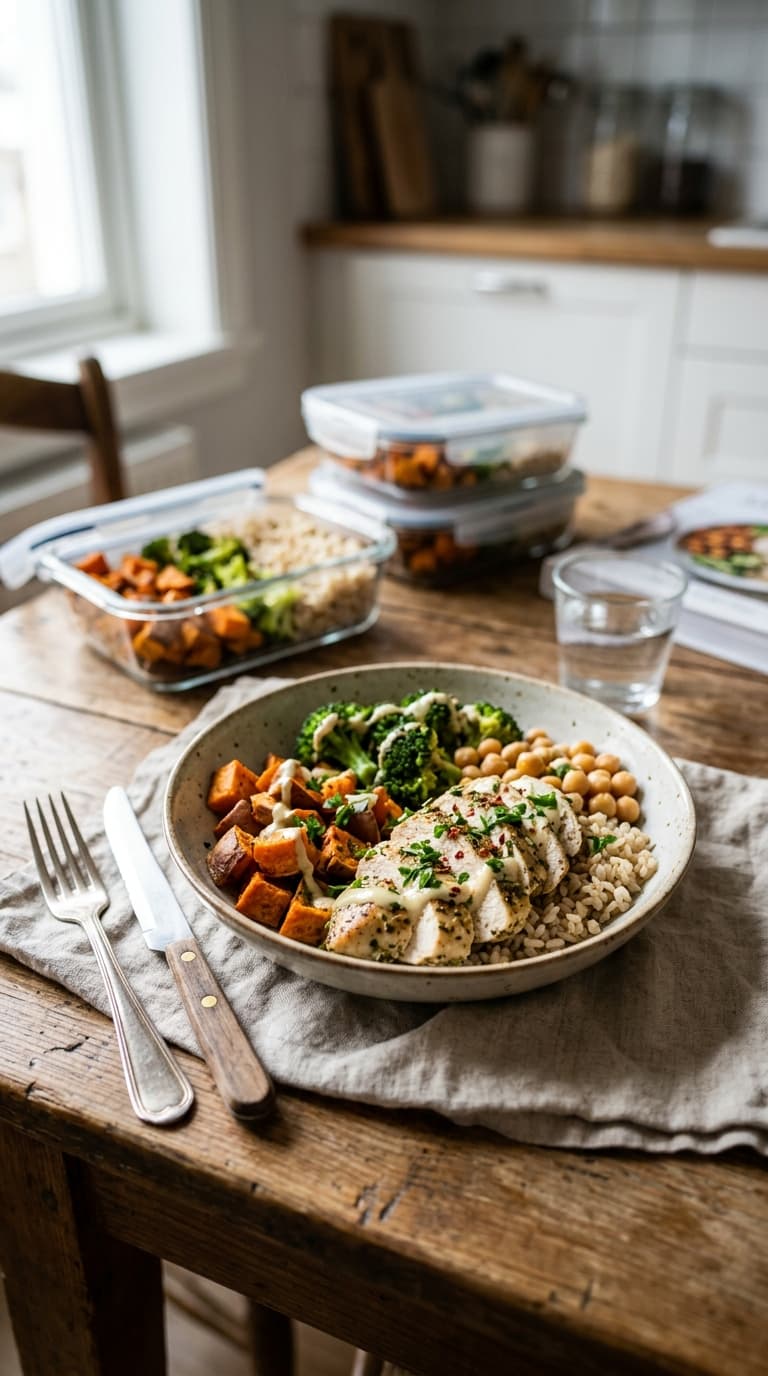
- Batch cook proteins — chicken thighs, ground beef, hard-boiled eggs, and a piece of salmon all at once
- Roast a giant tray of vegetables — sweet potatoes, broccoli, Brussels sprouts, bell peppers, whatever’s in season
- Make a compliant sauce or dressing — tahini-lemon, coconut aminos stir-fry sauce, or a simple olive oil vinaigrette
- Prep your breakfast staples — egg muffins, chia pudding, or a batch of sweet potato hash
If meal prep feels overwhelming, start small. Easy meal prep ideas you can do every week will help you build the habit before going all-in on a full Whole30 prep routine.
Eating Out on Whole30 (Yes, It’s Possible)
Whole30 doesn’t require you to become a hermit. You CAN eat out — it just requires a bit of strategy.
Tips for eating out on Whole30:
- Choose protein-based dishes and ask for sauces on the side
- Request that food be cooked in olive oil instead of butter
- Ask the server about ingredients (yes, this is slightly awkward — do it anyway)
- Stick to meat, fish, or poultry with vegetables as sides
- Skip the bread basket. Just… walk away.
Steakhouses and sushi restaurants (sashimi-only, no soy sauce) are usually the safest bets. Mexican food can work too — a protein bowl over greens instead of rice and beans, with guacamole and salsa.
Whole30 and Weight Loss: Let’s Be Real
Whole30 isn’t marketed as a weight loss diet, but a lot of people do lose weight during the 30 days — mainly because you’re cutting out processed foods, added sugar, and alcohol simultaneously. That’s a big shift.
If weight loss is part of your goal, pairing Whole30 principles with a structured approach to volume eating can be really effective. Meals that are nutritionally dense but not calorie-heavy tend to keep you full for longer, which makes the whole process easier. Check out these low-calorie meals that keep you full for ideas that align well with Whole30 eating.
That said, Whole30 strongly discourages weighing yourself during the 30 days. The focus is on how you feel, not the number on the scale. Trust the process.
What Happens After Day 30?
Here’s the part most people don’t plan for — the reintroduction phase. This is where Whole30 actually pays off.
The recommended reintroduction schedule looks like this:
- Day 31: Introduce legumes (peanuts, beans, hummus)
- Day 34: Introduce non-gluten grains (rice, gluten-free oats, quinoa)
- Day 37: Introduce dairy (starting with less processed forms like full-fat cream or kefir)
- Day 40: Introduce gluten-containing grains (bread, pasta, wheat)
Give each food group at least 2-3 days of observation before adding the next one. Pay attention to bloating, energy crashes, skin changes, or mood shifts. That’s your body giving you real, personalized data.
After reintroduction, many people transition into a longer-term approach that keeps most Whole30 principles but reintroduces the foods that didn’t cause problems. If that sounds like something you want to continue, a structured 30-day weight loss meal plan can help bridge that transition.
Final Thoughts: Is It Worth It?
Thirty days of no sugar, no grains, no dairy, and no alcohol sounds like a lot — because it is. But here’s the thing: most people who finish Whole30 say it’s one of the most impactful things they’ve ever done for their health, not because of the weight loss or the Instagram-worthy meals, but because they finally understand how food affects them.
You’ll hit hard days. Week 2 will test your patience. You’ll fantasize about cheese. But you’ll also wake up on Day 20 with more energy than you’ve had in months and think — oh. This is what feeling good actually feels like.
Plan your meals, prep on Sundays, keep your fridge stocked, and don’t try to do this on willpower alone. The plan is the strategy. The strategy is what gets you to Day 30.
You’ve got this. Now go make some sweet potato hash.