Build Your Perfect Clean Eating Meal Prep
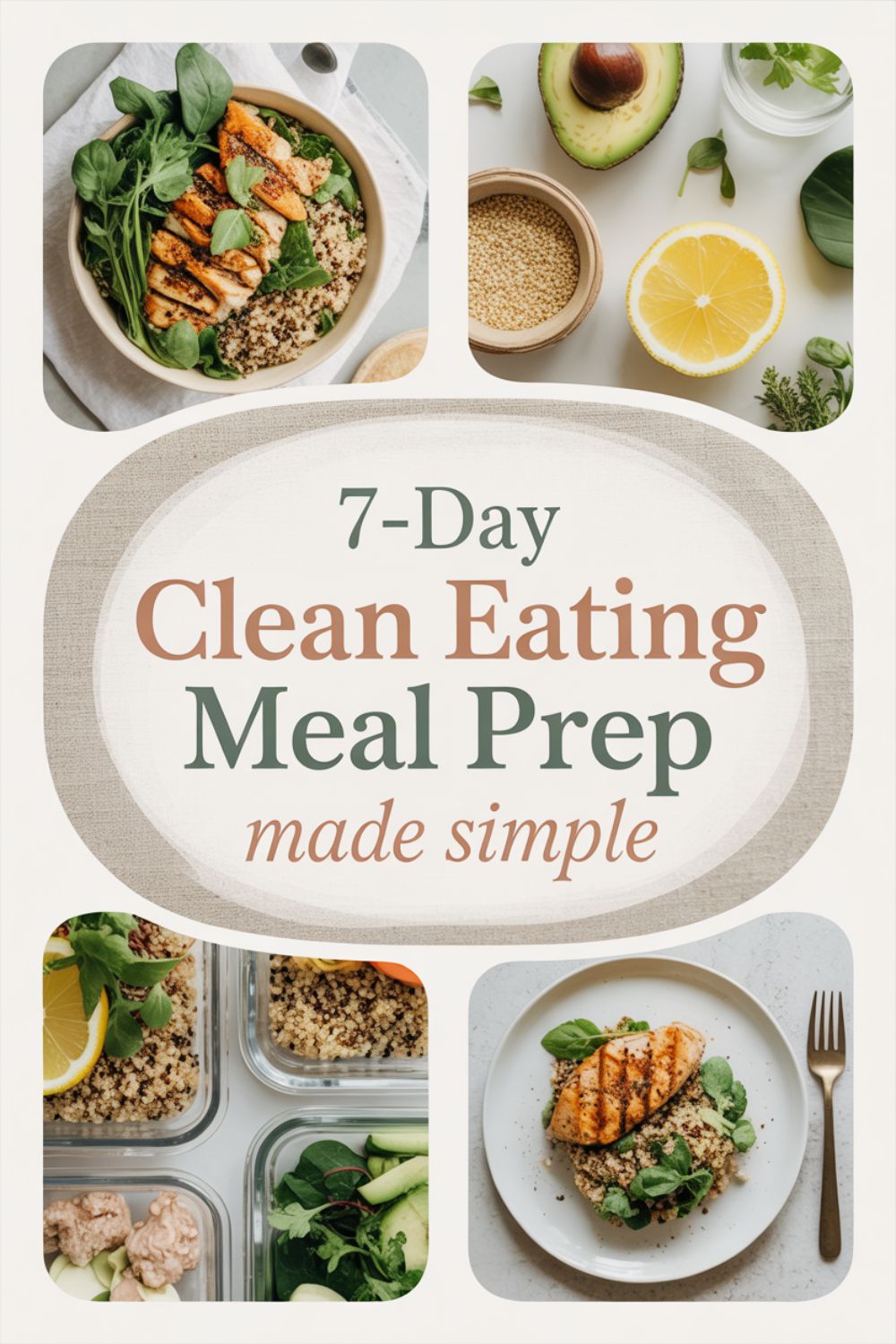
7-Day Clean Eating Meal Prep Made Simple
Let me guess. You want to eat better, feel amazing, and stop thinking about what’s for dinner at five o’clock every night. You’re tired of the takeout cycle and ready to actually stick with healthy eating this time. But the thought of meal prep sounds overwhelming, right?
Here’s the truth. Clean eating meal prep doesn’t have to be complicated, expensive, or boring. You don’t need to spend your entire Sunday in the kitchen or eat the same grilled chicken and broccoli for seven days straight. You just need a solid plan, some basic kitchen skills, and recipes that actually taste good.
This seven-day clean eating meal prep guide gives you everything you need to start eating whole, nutritious foods without the stress. We’re talking real ingredients, balanced meals, and a system that works even when life gets hectic. Ready to make this the week you finally nail meal prep?
How This Clean Eating Plan Works
Clean eating focuses on whole, minimally processed foods that fuel your body naturally. This isn’t about restriction or following rigid rules. It’s about choosing ingredients in their most natural state and building meals that actually nourish you.
According to Harvard’s Nutrition Source, planning your meals ahead helps you stick to healthy eating patterns and makes nutritious choices more accessible during busy weekdays. Their research shows that people who meal prep tend to have better diet quality and less food waste.
This plan emphasizes whole grains, lean proteins, healthy fats, and plenty of vegetables. You’ll eat three balanced meals plus one snack each day, with protein amounts clearly listed so you know exactly what you’re getting. Each meal hits that sweet spot between satisfying and nutritious.
The Core Principles
Clean eating means different things to different people, but this plan sticks to some universal basics. We’re choosing foods with minimal ingredients, skipping refined sugars and heavily processed items, and prioritizing nutrient density over empty calories. Think brown rice instead of white, whole vegetables instead of canned, and home-cooked proteins instead of pre-seasoned freezer meals.
You’ll notice we’re not counting every single calorie or obsessing over macros. The goal here is building sustainable habits that feel natural, not restrictive. The Girl on Bloor explains clean eating as following the 80/20 rule: eating nutritious whole foods most of the time while leaving room for flexibility and enjoyment.
Your meals will naturally balance out when you focus on variety and whole ingredients. Each day includes lean protein, complex carbohydrates, healthy fats, and fiber-rich vegetables. This combination keeps your energy steady, your digestion happy, and your cravings under control.
Pro Tip: Start with just three days of meal prep if seven feels overwhelming. Once you nail your system, scaling up to a full week becomes surprisingly easy.
Your Complete 7-Day Meal Plan
Day 1
- Breakfast: Greek Yogurt Protein Parfait with mixed berries, sliced almonds, and honey drizzle (28g protein)
- Lunch: Grilled Chicken Caesar Salad with romaine, parmesan, chickpeas, and homemade dressing (35g protein)
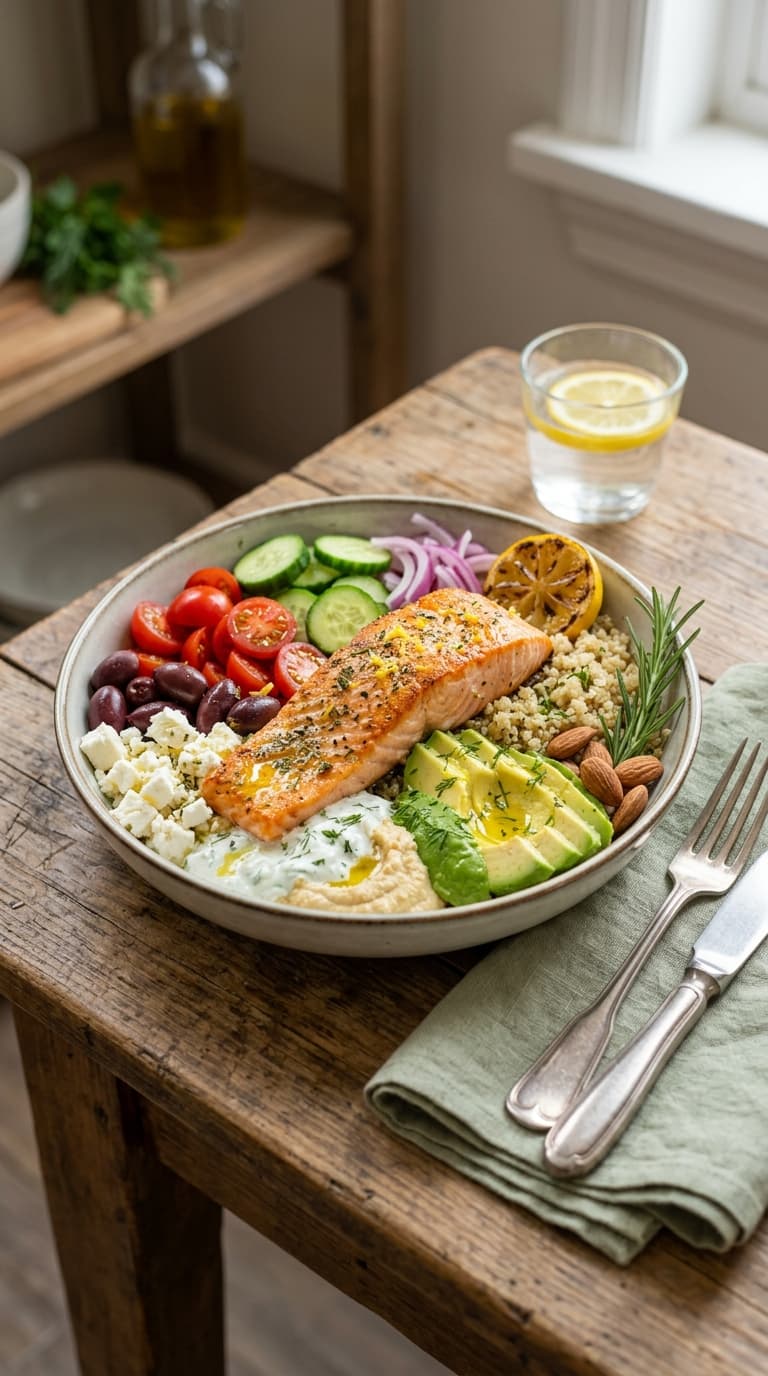
- Dinner: Baked Salmon with roasted broccoli, sweet potato wedges, and lemon-herb butter (32g protein)
- Snack: Hard-boiled eggs with cucumber slices and cherry tomatoes (12g protein)
Day 2
- Breakfast: Steel-Cut Oatmeal with sliced banana, walnuts, and cinnamon (10g protein)
- Lunch: Turkey and Avocado Wrap with whole wheat tortilla, spinach, tomatoes, and hummus (30g protein)
- Dinner: Lean Beef Stir-Fry with bell peppers, snap peas, brown rice, and ginger-garlic sauce (34g protein)
- Snack: Apple slices with natural almond butter (6g protein)
Day 3
- Breakfast: Veggie Egg Scramble with spinach, mushrooms, tomatoes, and whole grain toast (22g protein)
- Lunch: Quinoa Buddha Bowl with roasted chickpeas, kale, shredded carrots, tahini dressing (18g protein)
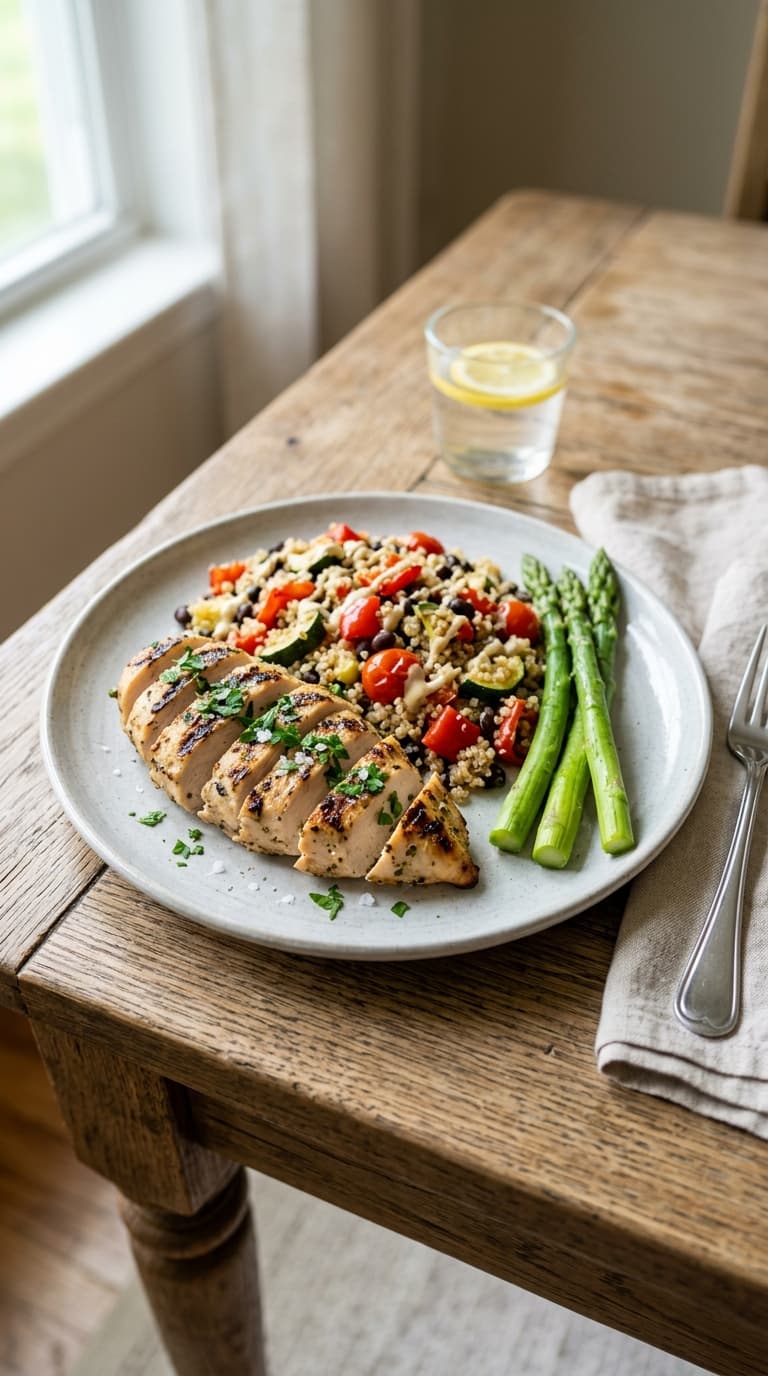
- Dinner: Herb-Crusted Chicken Breast with roasted Brussels sprouts and wild rice (38g protein)
- Snack: Greek yogurt with honey and mixed nuts (15g protein)
Quick Swap Options
Don’t like salmon? Swap it for grilled chicken breast, turkey breast, or white fish like cod.
Vegetarian? Replace any meat with extra-firm tofu, tempeh, or a double portion of legumes.
Low-carb preference? Swap quinoa and rice for cauliflower rice or extra roasted vegetables.
Day 4
- Breakfast: Protein Smoothie Bowl with banana, spinach, protein powder, topped with granola and berries (25g protein)
- Lunch: Mediterranean Tuna Salad with white beans, olives, cucumber, feta, lemon vinaigrette (32g protein)
- Dinner: Slow-Cooked Turkey Chili with black beans, kidney beans, diced tomatoes, served over baked sweet potato (30g protein)
- Snack: Cottage cheese with pineapple chunks (14g protein)
Day 5
- Breakfast: Whole Grain Pancakes with fresh strawberries and pure maple syrup (12g protein)
- Lunch: Grilled Shrimp and Avocado Salad with mixed greens, mango, red onion, cilantro-lime dressing (28g protein)
- Dinner: Baked Cod with roasted asparagus, cherry tomatoes, and quinoa pilaf (29g protein)
- Snack: Hummus with carrot and celery sticks (8g protein)
Day 6
- Breakfast: Overnight Oats with chia seeds, blueberries, and sliced almonds (14g protein)
- Lunch: Chicken and Vegetable Soup with white beans, kale, carrots, and whole grain roll (26g protein)
- Dinner: Grass-Fed Beef Burger on whole wheat bun with lettuce, tomato, sweet potato fries (35g protein)
- Snack: Protein energy balls with dates, oats, and peanut butter (8g protein)
Day 7
- Breakfast: Breakfast Burrito with scrambled eggs, black beans, salsa, avocado in whole wheat tortilla (24g protein)
- Lunch: Asian-Inspired Chicken Lettuce Wraps with water chestnuts, ginger, and peanut sauce (31g protein)
- Dinner: Herb-Roasted Pork Tenderloin with roasted root vegetables and garlic green beans (36g protein)
- Snack: Edamame with sea salt (11g protein)
Week 1 Prep Checklist
- Cook proteins: chicken breasts, salmon fillets, ground turkey
- Prep grains: quinoa, brown rice, steel-cut oats
- Chop vegetables: bell peppers, broccoli, carrots, celery
- Hard-boil one dozen eggs
- Portion snacks into grab-and-go containers
- Prepare dressings and sauces in small jars
- Label all containers with contents and date
Speaking of breakfast, you might also love these meal prep breakfast ideas for busy mornings. They’re designed to save time while keeping nutrition on point.
What You’ll Eat (High-Level Overview)
This plan revolves around variety and balance. You’ll eat different proteins each day to keep things interesting and ensure you’re getting diverse amino acids and nutrients. Your vegetables change daily too, covering everything from leafy greens to cruciferous vegetables to colorful bell peppers.
Carbohydrates come primarily from whole grains, starchy vegetables, and fruit. We’re talking quinoa, brown rice, sweet potatoes, and oats. These complex carbs provide sustained energy without the blood sugar spikes you get from refined grains. Nutrition.gov emphasizes that whole grain preparation methods can maximize nutritional benefits while maintaining flavor.
Healthy fats appear in every meal through nuts, seeds, avocados, olive oil, and fatty fish. These fats help you absorb fat-soluble vitamins and keep you satisfied between meals. You’ll notice hunger drops significantly when your meals include adequate healthy fats.
Protein Distribution Throughout the Day
Each day provides approximately 100-130 grams of protein spread across your meals. Research suggests distributing protein throughout the day helps with muscle maintenance and satiety better than loading it all in one meal. Your breakfast typically provides 10-28 grams, lunch brings 18-35 grams, dinner delivers 29-38 grams, and snacks add another 6-15 grams.
This distribution keeps your metabolism active and helps prevent the afternoon energy crash that comes from carb-heavy, protein-light lunches. Your muscles get a steady stream of amino acids throughout the day rather than feast-or-famine cycles.
Vegetable Variety Matters
You’ll eat vegetables with every lunch and dinner, plus many breakfasts include them too. Different colored vegetables provide different phytonutrients and antioxidants. Dark leafy greens bring iron and calcium. Orange vegetables provide beta-carotene. Cruciferous vegetables offer unique cancer-fighting compounds.
Rotating your vegetable choices ensures you’re getting a wide spectrum of nutrients rather than relying on the same three vegetables all week. This variety also prevents flavor fatigue that makes people abandon healthy eating plans.
If you’re looking for more variety in your meals, check out these high-volume low-calorie meal ideas that keep portions generous while supporting your goals.
Pro Tip: Buy pre-washed greens and pre-cut vegetables if budget allows. The time savings makes meal prep more sustainable, and you’ll actually use the vegetables instead of watching them wilt in your crisper drawer.
Meal Prep & Kitchen Setup That Makes Life Easy
Your meal prep success depends heavily on having the right tools and a system that actually works. You don’t need a kitchen full of gadgets, but a few key items make everything smoother and faster.
Start with quality food storage containers. Good Housekeeping’s testing shows that proper containers can extend food freshness significantly and prevent the soggy, unappetizing meals that make people quit meal prep.
Your Meal Prep Timeline
Block out two to three hours on Sunday afternoon or your preferred prep day. This isn’t active cooking time—it’s total time including cleanup. You’ll multitask by roasting vegetables while grains cook and proteins bake simultaneously.
Start by preheating your oven and getting grains going on the stovetop. While those work, prep your vegetables and proteins. Season everything, get it in the oven or on the grill, then tackle any stovetop items. The last thirty minutes involves portioning everything into containers while items cool.
Keep raw proteins in the refrigerator until you’re ready to cook them. Don’t let chicken or fish sit at room temperature while you prep other ingredients. Food safety matters even more when you’re eating prepared food several days later.
The Batch Cooking Approach
Cook proteins in larger batches than you need for individual meals. Grill four chicken breasts instead of one. Bake two salmon fillets instead of a single serving. This extra protein becomes lunch additions, snack boosters, or easy dinner components throughout the week.
The same goes for grains and roasted vegetables. Make a big batch of quinoa and brown rice on prep day. Roast two full sheet pans of mixed vegetables. Having these components ready means throwing together a balanced meal takes five minutes instead of thirty.
Season your proteins simply during the initial cook, then add different sauces and seasonings when you eat them. Plain grilled chicken becomes Mediterranean with tzatziki, Asian-inspired with peanut sauce, or Mexican with salsa and avocado. This variety from the same base protein prevents boredom.
For more make-ahead meal strategies, these meal prep bowl ideas show you exactly how to mix and match components for maximum variety.
Storage Strategy That Preserves Quality
Store wet ingredients separately from dry ones when possible. Keep salad dressings in small containers until you’re ready to eat. This prevents soggy lettuce and maintains texture. Mason jars work great for dressings, and those little 2-ounce sauce containers are perfect for keeping things separate.
Label everything with the day you prepared it. Use masking tape and a permanent marker if you don’t have fancy labels. Most cooked proteins stay fresh for four days in the refrigerator, so prep days one through four early in the week, then prep days five through seven on Wednesday evening.
Freeze anything you won’t eat within four days. Soups, chilis, and cooked grains freeze beautifully. Individual portions of protein freeze well too when properly wrapped. Just thaw in the refrigerator overnight before eating.
Meal Prep Essentials Used in This Plan
Glass Meal Prep Containers
These BPA-free glass containers keep food fresh longer and won’t stain like plastic. Microwave and dishwasher safe for easy reheating and cleanup.
Digital Food Scale
Portion control becomes effortless with a reliable kitchen scale. Great for tracking protein amounts and keeping serving sizes consistent.
Sheet Pan Set
Heavy-duty rimmed baking sheets let you roast multiple vegetables and proteins simultaneously. Game-changer for batch cooking efficiency.
Meal Prep Recipe Ebook
Download this comprehensive guide with 50+ clean eating recipes designed specifically for weekly meal prep. Includes shopping lists and nutritional information.
Printable Meal Planning Calendar
Visual meal planning templates help you organize your week and track what you’re eating. Includes grocery list sections and prep reminders.
Clean Eating Food Swap Guide
Instant download showing exactly how to substitute processed ingredients with whole food alternatives. Perfect for adapting your favorite recipes.
Common Mistakes That Kill Results
Even with the best intentions, certain mistakes derail meal prep success faster than anything else. Knowing these pitfalls helps you avoid them before they become problems.
Making Too Many Recipes
New meal preppers often try to make seven different lunches and seven different dinners. This creates hours of work and mountains of dishes. Stick to two or three recipes that make multiple servings instead. Eating the same lunch three days in a row isn’t boring when the food tastes good and saves you significant time.
Build variety through different vegetables, sauces, and sides rather than completely different proteins and preparations. Grilled chicken with three different vegetable combinations feels more varied than three entirely different protein sources.
Ignoring Food Safety Rules
Cooked food should cool to room temperature within two hours, then go straight into the refrigerator. Don’t let prepared meals sit out for hours while you finish other tasks. The danger zone for bacterial growth runs between 40 and 140 degrees Fahrenheit.
Store raw proteins on the bottom shelf of your refrigerator, never above ready-to-eat foods. Cross-contamination causes foodborne illness more often than people realize. Use separate cutting boards for raw proteins and produce if possible, or thoroughly wash boards between uses.
Reheat leftovers to 165 degrees Fahrenheit, especially chicken and ground meats. Use a food thermometer if you’re unsure. Your microwave’s power varies, so what takes two minutes in one microwave might need three minutes in another.
Choosing Recipes That Don’t Reheat Well
Some foods turn soggy, rubbery, or flavorless when reheated. Delicate fish like tilapia doesn’t meal prep well. Crispy items like fried foods or breaded chicken lose their texture. Cream-based sauces sometimes separate when reheated.
Focus on foods that maintain or improve with time. Soups, stews, and chilis actually taste better the next day as flavors meld. Roasted vegetables and grains reheat beautifully. Grilled proteins like chicken, salmon, and lean beef stay tender when reheated gently.
Keep components separate when texture matters. Store your salad greens separate from toppings and dressing. Keep crispy elements like nuts or croutons in separate small containers to add right before eating.
Skipping the Prep Work Before Prep Day
Sunday meal prep goes much smoother when you’ve done your homework. Create your meal plan and shopping list by Friday. Shop on Saturday so everything’s ready. Thaw frozen proteins in the refrigerator overnight Saturday into Sunday.
Clean out your refrigerator before shopping. You need space for all these fresh ingredients and prepared meals. Toss expired items, wipe down shelves, and make room for the week ahead.
Read through your recipes before starting. Nothing slows meal prep like realizing halfway through that something needs to marinate for an hour or requires a tool you don’t have. A quick recipe review prevents these surprises.
You might find these grab-and-go meal ideas helpful for days when reheating isn’t convenient. They’re designed for eating cold or at room temperature.
Pro Tip: Keep a running grocery list on your phone throughout the week. When you use the last of something or notice you’re running low, add it immediately. This prevents last-minute shopping trips and forgotten ingredients.
Customizing This Plan for Your Lifestyle
This seven-day plan provides a framework, not a rigid prescription. Your life, preferences, and goals differ from everyone else’s. Adjust the plan to fit your reality instead of forcing yourself into someone else’s template.
Adjusting for Different Calorie Needs
The base plan provides approximately 1,600-1,800 calories per day. Need fewer calories? Reduce portion sizes by about twenty-five percent or skip the daily snack. Need more calories? Increase portion sizes, add a second snack, or include more calorie-dense foods like nuts, nut butters, and avocados.
Don’t slash calories too drastically. Your body needs adequate fuel to function optimally. Very low calorie diets slow your metabolism and make adherence nearly impossible long-term. Small, sustainable deficits work better than extreme restrictions.
Track your energy levels and hunger cues rather than obsessing over exact calorie counts. If you’re constantly starving and low-energy, you need more food. If you’re gaining weight unexpectedly, you might need slightly less. Your body gives you feedback if you pay attention.
Adapting for Dietary Restrictions
Going vegetarian? Replace all meat and fish with plant-based proteins like tofu, tempeh, legumes, and seitan. Increase your iron sources through dark leafy greens, beans, and fortified grains. Pair iron-rich foods with vitamin C sources to boost absorption.
Following a gluten-free diet? Swap wheat-based grains for quinoa, rice, certified gluten-free oats, and corn. Most of this plan’s meals work perfectly gluten-free already. Just check that your sauces and seasonings don’t contain hidden gluten.
Need dairy-free options? Use coconut yogurt or almond yogurt instead of Greek yogurt. Replace cheese with nutritional yeast for a savory, cheesy flavor. Coconut milk makes an excellent cream substitute in soups and sauces.
For more specialized meal prep, check out this comprehensive 21-day weight loss meal prep guide that includes multiple dietary variations.
Scaling for Families
Meal prepping for multiple people requires some adjustments but follows the same principles. Triple or quadruple the protein portions. Buy vegetables in bulk rather than by the pound. Cook grains in your largest pot or use a rice cooker to handle bigger batches hands-free.
Consider each family member’s preferences when choosing recipes. If your kids hate Brussels sprouts, roast carrots or green beans instead. The meal structure stays the same even when specific ingredients vary.
Prep individual portions for adults and shared family-style containers for dinners. This gives you the convenience of grab-and-go lunches while preserving the ritual of family dinners together. Everyone wins.
Working Around Odd Schedules
Not everyone can meal prep on Sunday. If you work weekends, choose Monday or Tuesday instead. The specific day matters less than consistency. Pick whatever day works with your schedule and stick with it.
Split your prep into two shorter sessions if finding three consecutive hours proves impossible. Prep proteins and grains one evening, then assemble everything the next evening. This distributed approach works great for people with unpredictable schedules.
Night shift workers should adjust meal timing to match their wake-sleep cycle. Your first meal after waking is breakfast regardless of what the clock says. Build your meal schedule around your actual day, not arbitrary meal times.
Tools & Resources That Make Cooking Easier
Instant Pot Pressure Cooker
Transform tough cuts into tender proteins in a fraction of the time. This multi-cooker handles rice, soups, and one-pot meals with minimal supervision.
Quality Chef’s Knife
Vegetable prep speeds up dramatically with a sharp, well-balanced knife. Worth every penny for the time you’ll save over years of cooking.
Stackable Storage Containers
Maximize refrigerator space with containers designed to stack without tipping. Clear lids let you see contents at a glance.
Weekly Meal Prep Planner App
Digital meal planning tool with built-in recipes, automatic grocery lists, and nutrition tracking. Syncs across devices for planning on the go.
Clean Eating Cookbook Collection
Downloadable collection of seasonal clean eating recipes organized by prep time. Includes substitution guides and allergen information.
Portion Control Guide
Printable visual guide showing proper serving sizes for proteins, grains, and vegetables. Laminated version perfect for keeping on your refrigerator.
Looking for no-reheat options for work? These no-reheat lunch ideas taste great cold and travel perfectly.
Making Your Grocery Shopping Effortless
Strategic grocery shopping makes or breaks your meal prep success. Going to the store without a plan leads to forgotten ingredients, impulse purchases, and wasted money. A solid shopping list organized by store section saves significant time and frustration.
Your Master Shopping List
Proteins: Chicken breasts, salmon fillets, ground turkey, eggs, Greek yogurt, cottage cheese, canned tuna
Grains: Quinoa, brown rice, steel-cut oats, whole wheat bread, whole wheat tortillas
Vegetables: Spinach, kale, romaine lettuce, broccoli, Brussels sprouts, bell peppers, tomatoes, cucumbers, carrots, sweet potatoes, asparagus, mushrooms
Fruits: Berries, bananas, apples, lemons
Healthy Fats: Avocados, almonds, walnuts, natural almond butter, olive oil, tahini
Pantry: Black beans, chickpeas, white beans, honey, maple syrup, spices and herbs
Buy what you’ll actually use. Don’t grab every vegetable that looks good if your meal plan only calls for five types. Stick to your list to minimize waste and stay on budget.
Fresh vs Frozen Considerations
Frozen vegetables work beautifully for meal prep and often cost less than fresh. They’re picked at peak ripeness and flash-frozen, preserving nutrients. Stock your freezer with mixed vegetables, broccoli florets, and green beans for backup when fresh produce runs out.
Frozen proteins like chicken breasts and fish fillets offer convenience and longer storage. Just remember to thaw them safely in the refrigerator, never on the counter. Budget-conscious shoppers often find better deals on proteins in the freezer section.
Fresh produce works best for raw applications like salads and snacks. Cucumbers, tomatoes, and lettuce don’t freeze well. But vegetables destined for roasting or cooking can absolutely come from the freezer aisle.
Budget-Friendly Shopping Strategies
Buy proteins when they’re on sale and freeze extras. Stock up on pantry staples like grains and canned beans when prices drop. These items keep for months, making bulk buying practical.
Store brands often match name brand quality for basic items like canned beans, rice, and oats. Save your money for items where quality truly matters, like olive oil and proteins. The USDA’s smart shopping guide emphasizes comparing unit prices rather than package prices to identify the best deals.
Shop seasonal produce for the best prices and flavors. Summer brings cheap berries and tomatoes. Fall offers affordable squash and root vegetables. Winter features great deals on citrus and hearty greens. Adjusting your meal plan based on what’s in season saves money naturally.
If you’re working with a tight budget, this budget-friendly meal plan shows you how to eat clean without breaking the bank.
Staying Motivated When Life Gets Messy
The first week of meal prep feels exciting. Everything’s new, your containers look gorgeous in your refrigerator, and you’re proud of your accomplishment. Then week two hits, and suddenly meal prep feels like another obligation on your already overwhelming to-do list.
Building Sustainable Habits
Start smaller than you think necessary. If seven days sounds daunting, prep for three days instead. Success breeds motivation more effectively than struggling through ambitious plans you barely complete. You can always scale up once the habit feels automatic.
Track how you feel rather than just what you eat. Notice your energy levels, how your clothes fit, your mood throughout the day. These non-scale victories often provide stronger motivation than pounds lost. Your body responds to good nutrition in dozens of ways beyond the number on the scale.
Build flexibility into your system. Some weeks will be chaos. You’ll travel, get sick, or face unexpected demands on your time. Having a backup plan for these weeks prevents complete derailment. Keep a few healthy frozen meals on hand for true emergencies.
Getting Your Family On Board
Resistance from family members kills many meal prep plans before they start. Your partner complains about eating “boring healthy food” while your kids demand chicken nuggets. Navigate this by involving them in planning and preparation.
Let family members choose one meal each week. Kids who pick the Tuesday dinner menu feel invested in eating it. Your partner who selects Saturday’s lunch stop complaining about the food. Shared ownership creates buy-in.
Prep components rather than complete meals for family dinners. Having grilled chicken, roasted vegetables, and cooked quinoa ready means everyone can build their own plate according to preferences. Some people want larger protein portions. Others prefer more vegetables. Component prep accommodates these differences.
Dealing With Cravings and Special Occasions
Clean eating doesn’t mean never eating birthday cake or skipping your favorite restaurant. Rigid approaches backfire spectacularly when special occasions arise. Plan for these moments instead of pretending they won’t happen.
Eat normally at social events and celebrations. One meal won’t undo weeks of consistent healthy eating. Trying to bring your meal prep containers to a dinner party makes you that person nobody wants to invite. Enjoy the experience, then return to your normal routine the next day.
Keep portions reasonable when indulging. You can absolutely have dessert. Just don’t eat half the cake. Savor smaller portions of special foods rather than mindlessly consuming them while feeling guilty.
For women specifically managing calorie needs, this calorie deficit meal plan provides strategies for balancing nutrition with realistic eating.
Community Feedback: Sarah from our reader community says the game-changer for her was prepping just breakfast and lunch, then cooking dinner fresh each night. This hybrid approach gave her convenience during busy workdays while preserving the enjoyment of cooking dinner with her family. Find what works for your lifestyle rather than following someone else’s perfect system.
Frequently Asked Questions
How long does meal prepped food stay fresh?
Most cooked proteins and vegetables stay fresh for four days in the refrigerator when stored properly in airtight containers. If you’re prepping for a full week, consider doing a mid-week mini prep session on Wednesday or Thursday for the last few days. Grains and legumes typically last five to six days. When in doubt, trust your nose and eyes. If something smells off or looks questionable, toss it.
Can I freeze meal prepped food?
Absolutely. Soups, chilis, cooked grains, and most proteins freeze beautifully for up to three months. Freeze in individual portions for easy grab-and-go convenience. Just avoid freezing foods with high water content like lettuce, cucumbers, and cream-based sauces, as they don’t thaw well. Label everything with the date and contents before freezing.
What if I get bored eating the same meals?
Switch up your sauces, seasonings, and sides to create variety from the same base ingredients. Grilled chicken tastes completely different with pesto versus teriyaki sauce. Rotate your vegetable choices weekly. If you get genuinely bored, prep just two or three recipes instead of a full week, then make fresh meals the other days. Meal prep should make your life easier, not feel like punishment.
How much should I expect to spend on groceries?
Grocery costs vary dramatically by location and dietary choices, but most people spend between fifty to seventy-five dollars per person per week for clean eating meal prep. Buying in bulk, choosing seasonal produce, and sticking to simpler proteins like chicken and eggs helps keep costs down. You’ll likely save money compared to eating out or buying convenience foods despite the higher grocery bill.
Do I need special containers for meal prep?
Not necessarily. Any airtight containers work fine for meal prep. That said, investing in quality glass containers makes reheating easier and prevents plastic staining from foods like tomato sauce. Containers with divided sections help keep foods separate. Whatever you choose, make sure lids seal tightly to prevent spills and maintain freshness. Cheap containers that leak or don’t seal properly make meal prep frustrating fast.
Your Clean Eating Journey Starts Now
This seven-day meal prep plan gives you everything you need to start eating cleaner, feeling better, and reclaiming your time during the week. You’ve got the complete meal plan, shopping list, prep strategies, and troubleshooting tips to make this work in real life.
Remember that meal prep is a skill that improves with practice. Your first week might feel clumsy and time-consuming. By week three, you’ll move through your prep routine efficiently. By week six, it becomes second nature.
Start this Sunday. Block out a few hours, grab your groceries, and prep your first week. The difference between thinking about eating better and actually doing it comes down to taking that first step. Your future self will thank you when Wednesday rolls around and lunch is already waiting in your refrigerator.