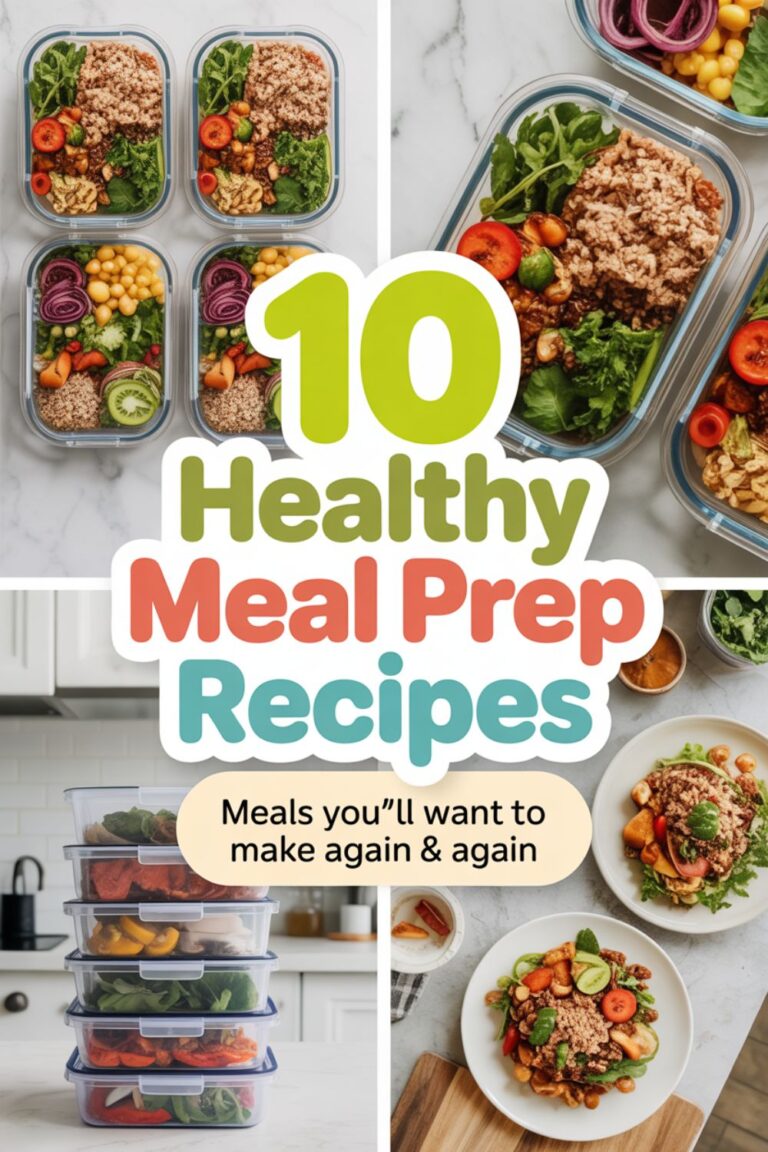
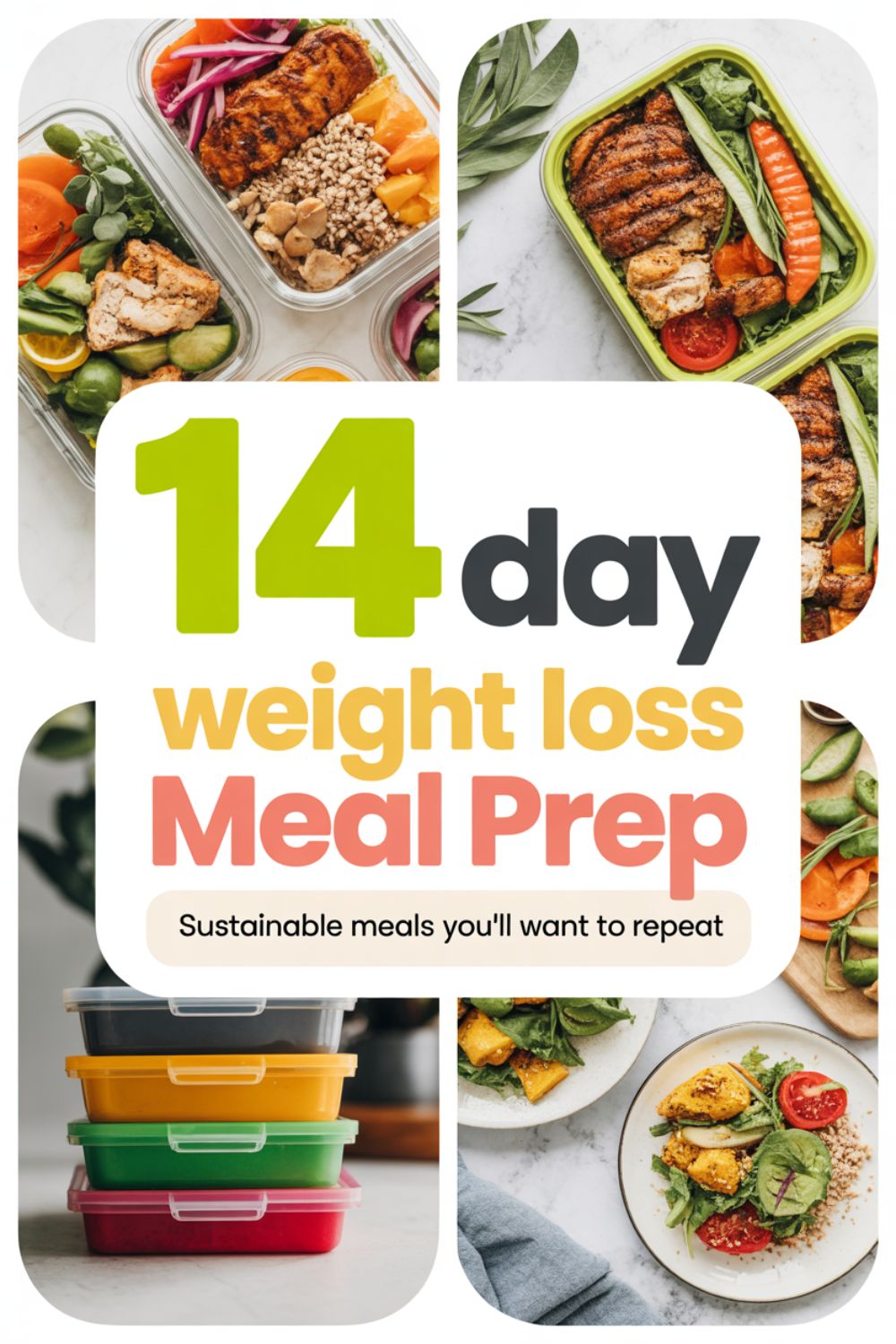
14-Day Weight Loss Meal Prep That Feels Sustainable
Look, I’m not going to tell you that meal prepping will magically transform your life overnight. But here’s what I will say: two weeks of intentional meal prep can absolutely shift how you think about food, portion control, and—yeah—weight loss. The difference between this and those crash diets you’ve tried? This one doesn’t make you want to throw your meal containers out the window by day three.
So why 14 days? It’s long enough to build a habit without feeling like you’re trapped in some endless cycle of bland chicken and broccoli. It’s also short enough that you can actually see it through without losing steam. Think of it as a reset button for your eating patterns, not a life sentence.
What makes meal prep sustainable isn’t just the cooking—it’s the mental relief of knowing exactly what you’re eating and when. No more standing in front of the fridge at 9 PM wondering if leftover pizza counts as dinner. No more impulse decisions that derail your progress. Just good food, planned ahead, ready when you need it.
Why 14 Days Is the Sweet Spot for Weight Loss Meal Prep
Here’s the thing about most meal prep plans: they either ask for too much commitment upfront or they’re so vague you end up winging it anyway. Fourteen days hits different. It’s structured enough to keep you accountable but flexible enough that you won’t feel like you’re eating the same thing until you lose your mind.
Research actually backs this up. A study published in the International Journal of Behavioral Nutrition and Physical Activity found that people who plan their meals ahead of time are more likely to have better diet quality and lower body weight. They’re also more likely to eat a variety of foods instead of falling into the takeout trap every other night.
The two-week timeframe also gives your body enough time to adjust. You’re not just losing water weight here—you’re actually creating patterns that can stick. And honestly? After 14 days, most people don’t want to go back to their old habits because they finally feel like they’re in control.
What You’ll Actually Eat (And Why It Won’t Bore You to Tears)
Let’s get one thing straight: sustainable meal prep doesn’t mean eating grilled chicken and steamed broccoli for two weeks. If that’s your jam, cool. But for the rest of us, variety is what keeps this whole thing from feeling like a chore.
Your 14-day plan should include a mix of proteins, complex carbs, healthy fats, and vegetables—but in combinations that actually taste good. Think Mediterranean-inspired bowls, Asian-style stir-fries, Mexican-inspired burrito bowls, and hearty salads that don’t leave you hungry an hour later.
Breakfast Ideas That Don’t Require Morning Motivation
Mornings are rough. The last thing you need is a complicated breakfast routine. Get Full Recipe for overnight oats that you can customize with different toppings throughout the week. Seriously, just mix oats, milk, chia seeds, and a touch of honey the night before. Wake up, add some berries or nut butter, and you’re done.
If you’re more of a savory breakfast person, egg muffins are your friend. Whisk eggs with vegetables, pour into a muffin tin, bake, and you’ve got grab-and-go protein for days. They reheat well and you can switch up the veggie combinations so you’re not eating the same flavor profile all week.
Looking for more morning inspiration? Try these breakfast meal prep ideas or this high-protein breakfast plan if you’re serious about keeping your energy steady until lunch.
Lunch That Actually Keeps You Full
The biggest complaint about packed lunches? They’re either too small and leave you starving by 3 PM, or they’re too big and make you want to nap under your desk. Balance is key here.
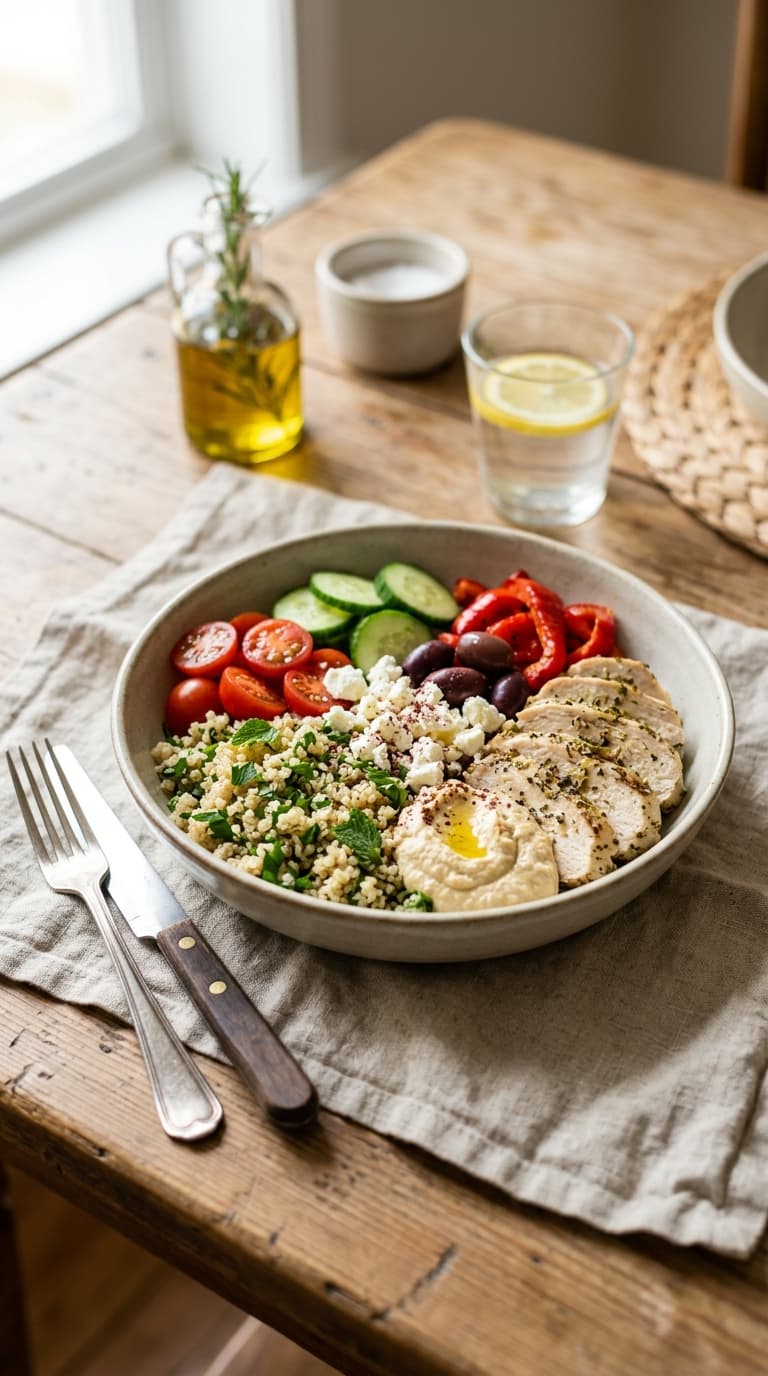
Aim for lunches that include a palm-sized portion of protein, a fist-sized portion of complex carbs, and at least two different vegetables. Get Full Recipe for a Mediterranean quinoa bowl that checks all these boxes and actually tastes better after sitting in the fridge for a day.
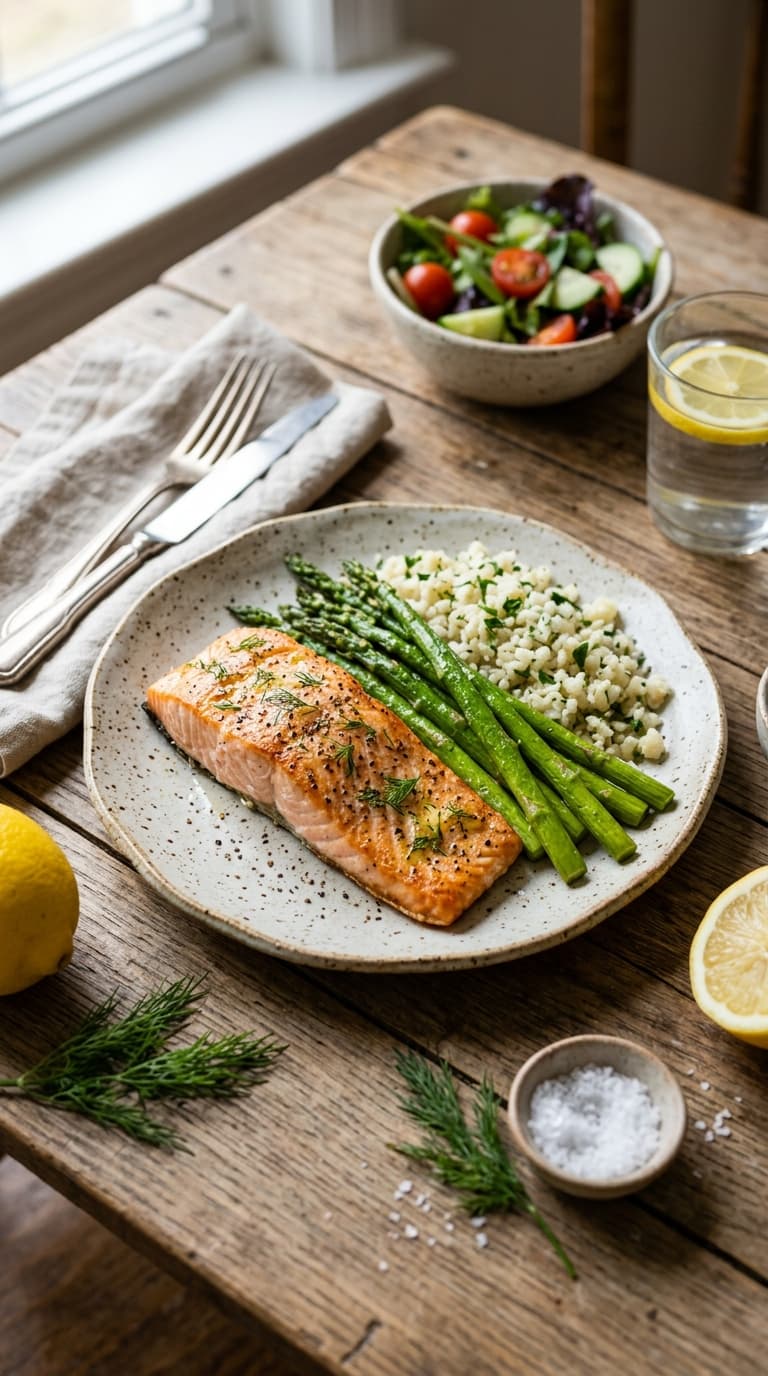
For protein, rotate between grilled chicken, baked salmon, chickpeas, or tofu. Carbs can be quinoa, brown rice, sweet potato, or whole grain pasta. Vegetables are where you can get creative—roasted Brussels sprouts, sautéed bell peppers, raw cucumber, shredded cabbage. Mix and match throughout the week so your taste buds don’t get bored.
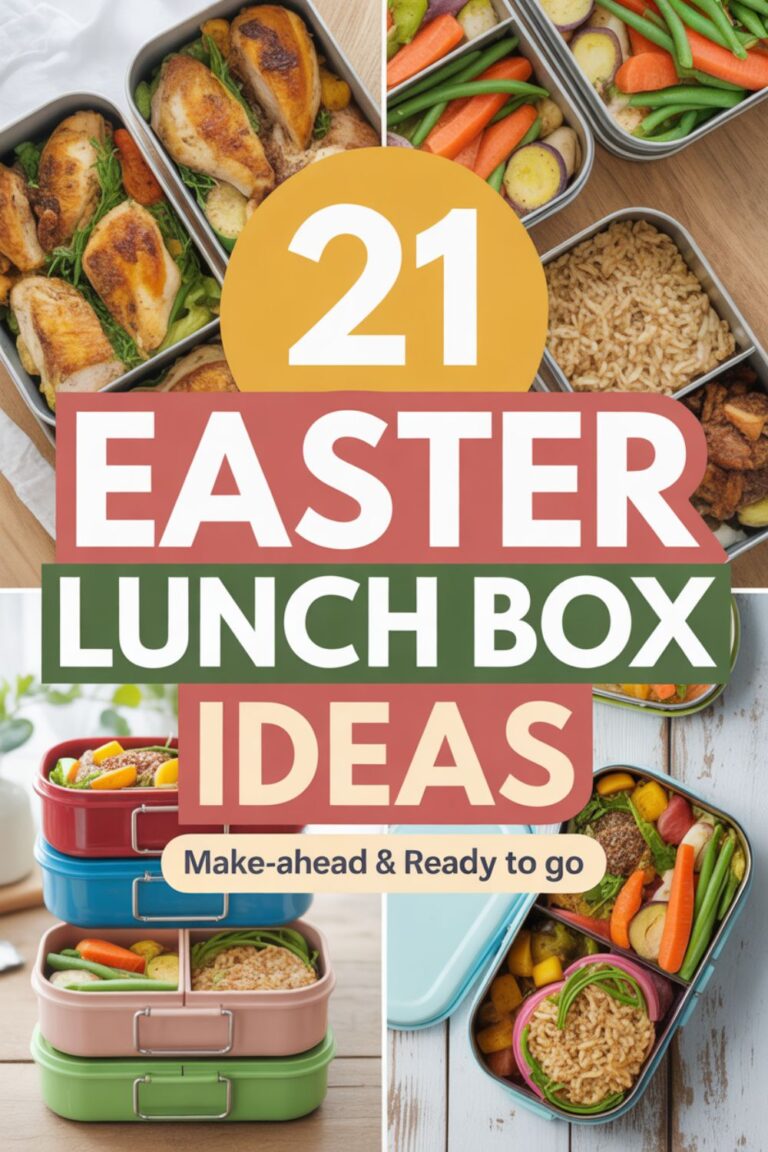
I’m a huge fan of using a bento-style lunch container for this because it keeps everything separate but organized. No soggy lettuce, no sauce leaking everywhere—just clean compartments that make your lunch look weirdly professional.
Dinner Without the Drama
Dinner is where most people either succeed or completely fall off the wagon. You’re tired, you’re hungry, and the idea of cooking feels impossible. This is exactly why prep matters.
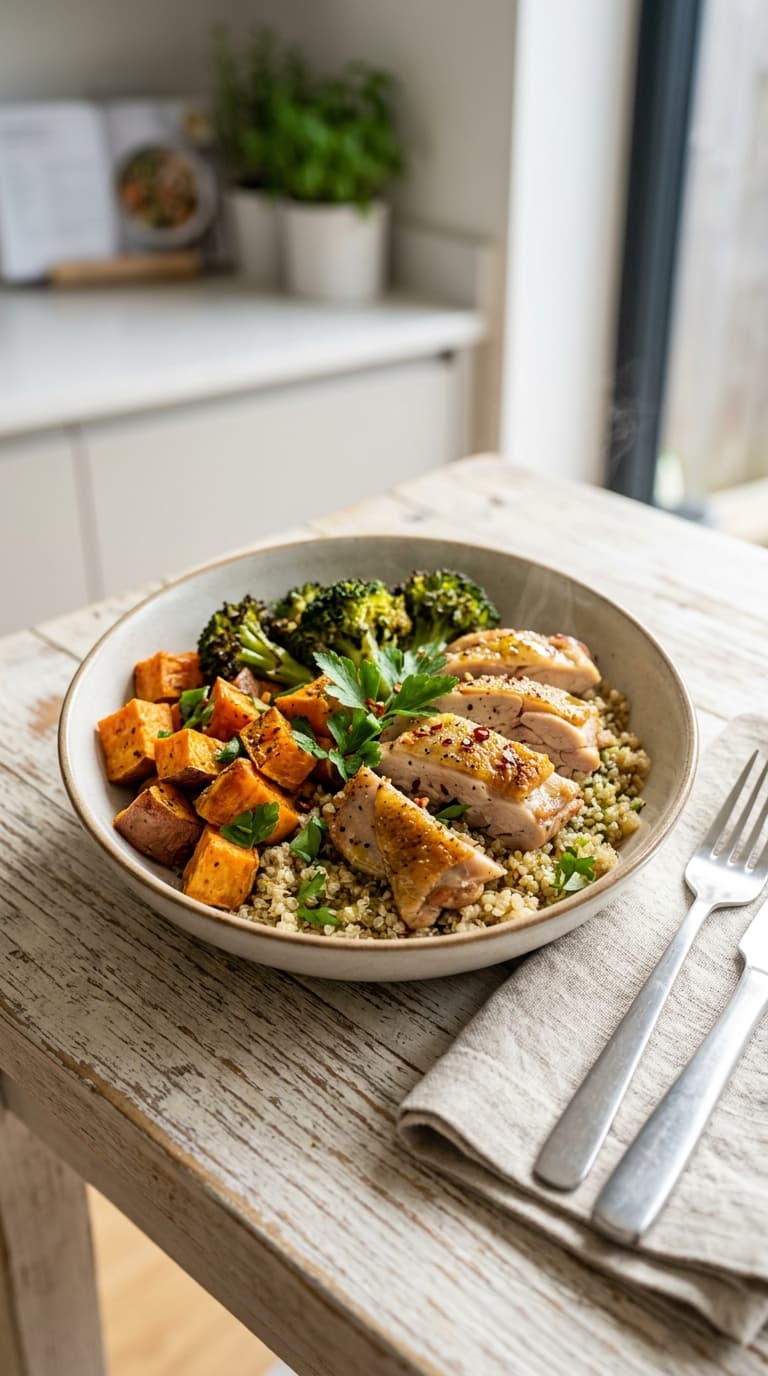
Sheet pan dinners are a lifesaver. Throw protein and vegetables on a pan, season them, roast everything at 400°F for 20-30 minutes, and you’re done. Get Full Recipe for a sheet pan chicken with roasted vegetables that you can portion into containers for the week.
Slow cooker meals work too if you prefer a set-it-and-forget-it approach. A big batch of chili, curry, or soup can stretch across multiple dinners. Just make sure you’re not relying solely on one-pot meals because variety really does matter when you’re trying to stick with this for two weeks.
For more dinner inspiration, check out these stress-free dinner ideas or this high-protein dinner plan.
Meal Prep Essentials Used in This Plan
Look, you don’t need a kitchen full of gadgets to make this work. But a few key items will make your life exponentially easier. Here’s what I actually use every week:
- Glass meal prep containers with snap lids – These are non-negotiable. They stack well, don’t stain, and you can see what’s inside without opening them.
- Digital food scale – If you’re serious about portions (and weight loss), guessing doesn’t cut it. This takes the guesswork out.
- Meal prep backpack with insulated compartments – Game changer for bringing lunch to work. Keeps everything cold and organized.
- 14-Day Meal Prep Planner PDF – A printable weekly planner with shopping lists and prep schedules (digital download)
- Weight Loss Macro Calculator Spreadsheet – Helps you figure out exactly how much protein, carbs, and fat you need daily (digital download)
- 100+ Healthy Meal Prep Recipes eBook – Because you’ll want more ideas after these two weeks (digital download)
- Join Our Meal Prep Community on WhatsApp – Weekly tips, recipe swaps, and accountability check-ins
The Science Behind Why This Actually Works
Okay, let’s talk about why meal prep isn’t just some trendy thing fitness influencers push. There’s actual science here.
When you prep your meals in advance, you’re essentially removing the decision fatigue that comes with figuring out what to eat. Every time you have to decide what’s for dinner, your brain uses energy. And when you’re tired or stressed, that’s when you make choices that don’t align with your goals—like ordering pizza instead of making that salad you planned.
According to Harvard’s School of Public Health, meal planning is associated with improved diet quality and reduced reliance on fast food. They also note that people who meal prep tend to eat more vegetables and whole grains, simply because those foods are already prepped and ready to go.
There’s also the portion control factor. When you pre-portion your meals, you’re not eyeballing servings or eating straight from the container. You know exactly how much you’re eating, which makes it way easier to stay in a calorie deficit without feeling deprived.
IMO, the biggest benefit is the psychological one. When your meals are ready, you feel in control. You’re not scrambling, you’re not stressed, and you’re not derailed by whatever chaos the day throws at you.
How to Actually Prep for 14 Days Without Losing Your Mind
Here’s where most people mess up: they try to prep all 14 days of food in one marathon Sunday session. Don’t do that. You’ll burn out, your food won’t stay fresh, and you’ll end up hating the whole process.
Instead, split it into two prep sessions—one at the start of the week, one midweek. This keeps your food fresher and prevents that “I can’t look at another container of chicken” feeling.
Week 1: Days 1-7
Your first prep session should cover Monday through Thursday. That’s four days of breakfast, lunch, and dinner. On Wednesday evening or Thursday morning, do a mini-prep for Friday through Sunday.
Start with your proteins. Bake all your chicken, grill your fish, or roast your tofu at once. While that’s cooking, prep your vegetables. Chop everything you’ll need for the week and store them in airtight containers.
Next, cook your grains. Brown rice, quinoa, and pasta can all be made in large batches and stored in the fridge for up to five days. Same goes for roasted sweet potatoes or baked regular potatoes.
Finally, assemble your meals. This is where those glass containers come in handy. Layer your ingredients thoughtfully—dressing on the bottom, sturdier vegetables next, grains, then protein on top. This keeps everything fresh and prevents sogginess.
Week 2: Days 8-14
By week two, you’ll have a rhythm. You know what worked, what didn’t, and what you’re actually excited to eat. This is when you can start tweaking things.
Maybe you realized you don’t love quinoa as much as you thought. Swap it for farro or wild rice. Maybe your lunches were too small and you were starving by 3 PM. Add an extra snack or increase your protein portions.
The goal here isn’t perfection—it’s consistency. Even if you mess up a meal or two, you’re still way ahead of where you’d be without any plan at all.
For more structured plans that take you beyond two weeks, check out this 21-day weight loss plan or this clean eating guide.
Common Mistakes (And How to Avoid Them)
Let’s talk about what usually goes wrong, because knowing this ahead of time can save you a lot of frustration.
Mistake #1: Prepping Food You Don’t Actually Like
This one’s huge. Just because kale is healthy doesn’t mean you have to choke it down if you hate it. If you don’t enjoy your meals, you won’t stick with the plan. It’s that simple.
Choose foods you actually like eating. If you prefer spinach over kale, use spinach. If you can’t stand salmon, don’t force it—chicken, turkey, or even eggs work just fine for protein.
Mistake #2: Not Accounting for Snacks
You’re going to get hungry between meals. That’s normal. What’s not normal is having zero healthy snacks available and then raiding the vending machine at 4 PM.
Prep snacks too. Cut up vegetables with hummus. Portion out nuts or trail mix. Make protein balls with oats, natural peanut butter, and a touch of honey. Having these ready means you’re not derailed by hunger.
Mistake #3: Forgetting About Flavor
Plain chicken and plain rice will get old fast. Season your food. Use spices, herbs, citrus juice, vinegar, hot sauce—whatever makes your taste buds happy.
I keep a spice rack organizer stocked with basics like garlic powder, smoked paprika, cumin, oregano, and chili flakes. A little seasoning makes a massive difference in whether you actually want to eat what you prepped.
Tools & Resources That Make Cooking Easier
Honestly, meal prep gets ten times easier when you have the right tools. You don’t need everything at once, but these are the things I reach for constantly:
- High-speed blender – For smoothies, sauces, and soups. Worth every penny if you use it regularly.
- Instant Pot or slow cooker – Set it and forget it. Perfect for soups, stews, and shredded meats.
- Silicone baking mats – I use these for everything. No more scrubbing stuck-on food off sheet pans.
- Macro-Friendly Recipe Swaps Guide – Learn how to swap ingredients without ruining your macros (digital download)
- Grocery Shopping Checklist Template – A reusable checklist organized by food category to speed up shopping (digital download)
- Meal Prep Video Course – Step-by-step video tutorials for beginners (digital download)
- Join Our WhatsApp Accountability Group – Daily motivation, meal ideas, and support from people doing the same thing
Staying Flexible Without Sabotaging Your Progress
Life happens. You’re going to have days when you don’t eat what you prepped. Maybe you have a work lunch, or a friend’s birthday dinner, or you just really want tacos instead of the salad you packed.
That’s fine. One meal off-plan doesn’t ruin 14 days of effort. The key is getting back on track with the next meal instead of throwing in the towel completely.
Flexibility is what makes this sustainable. If you treat meal prep like some rigid rulebook, you’ll rebel against it. But if you see it as a helpful framework that gives you structure while still allowing for real life? That’s when it works.
Some people find it helpful to plan one “flex meal” per week where they don’t eat from their prepped containers. This keeps things from feeling too restrictive and gives you something to look forward to.
What Happens After Day 14?
So you’ve made it through two weeks. Now what?
Honestly, most people who finish a 14-day meal prep cycle don’t want to stop. Not because they’re obsessed, but because they finally feel like they’ve figured out a system that works.
You can extend this into a 21-day plan, or even a 30-day plan if you’re feeling ambitious. The principles stay the same—prep in batches, eat balanced meals, stay consistent.
Or you can shift to a more relaxed version where you prep components instead of full meals. Maybe you cook proteins and grains in bulk but assemble meals fresh each day. There’s no one right way to do this long-term.
The goal isn’t to meal prep forever. It’s to build habits and knowledge that make healthy eating feel automatic instead of exhausting.
If you’re ready to take things further, explore these 30 healthy recipes or this collection of easy weekly ideas.
Real People, Real Results
Sarah from our community started this 14-day plan back in October. She wasn’t looking to lose a dramatic amount of weight—just wanted to feel more in control of her eating. By the end of the first two weeks, she’d lost four pounds without feeling deprived once. Three months later, she’s down 15 pounds and still meal prepping because it became part of her routine.
Another member, Jake, said the biggest shift wasn’t even the weight loss (though he did drop eight pounds in the first month). It was the mental relief of not having to think about food constantly. He stopped ordering takeout five nights a week and started actually enjoying cooking because it wasn’t this stressful, last-minute scramble anymore.
These aren’t extreme transformations. They’re normal people making sustainable changes that actually stick.
Frequently Asked Questions
How much weight can I realistically lose in 14 days?
Most people lose between 2-6 pounds in two weeks with consistent meal prep and portion control. This varies based on your starting weight, activity level, and calorie deficit. The CDC recommends aiming for 1-2 pounds per week for sustainable weight loss, so 2-4 pounds over 14 days is a healthy, realistic goal.
Do I need to count calories if I’m meal prepping?
Not necessarily. If you’re prepping balanced meals with proper portions of protein, carbs, and vegetables, you’ll naturally create a calorie deficit without obsessive tracking. That said, some people find it helpful to track for the first week just to get a sense of portions, then they stop once they have a feel for it.
Can I meal prep if I have dietary restrictions?
Absolutely. Meal prep works for any eating style—vegetarian, vegan, gluten-free, dairy-free, low-carb, you name it. The principles stay the same: prep in batches, portion your meals, stay consistent. You just swap ingredients to fit your needs.
What if I get bored eating the same thing?
This is why variety matters. Don’t prep the exact same meal seven times. Instead, prep components (proteins, grains, vegetables) and mix and match them throughout the week. Also, use different seasonings and sauces to change up flavors even when the base ingredients are similar.
How long do prepped meals last in the fridge?
Most cooked meals stay fresh for 3-4 days in the fridge. This is why I recommend splitting your prep into two sessions per week instead of trying to prep all seven days at once. If you want meals to last longer, freeze them and thaw as needed.
Final Thoughts
Here’s the bottom line: 14 days of meal prep won’t fix everything. It won’t magically make you love cooking if you hate it, and it won’t erase years of less-than-ideal eating habits overnight.
But what it will do is give you a framework. A starting point. A chance to prove to yourself that you can actually stick with something and see results.
The weight loss is great, sure. But the real win is the confidence that comes from feeling in control. From knowing that you planned something, executed it, and followed through. That’s the kind of momentum that carries over into other areas of your life.
So yeah, try the 14 days. See what happens. Worst case, you eat some decent food and learn what works for you. Best case, you find a system that actually feels sustainable for the first time in a long time.
Either way, you’re two weeks closer to figuring this whole thing out. And that’s worth something.