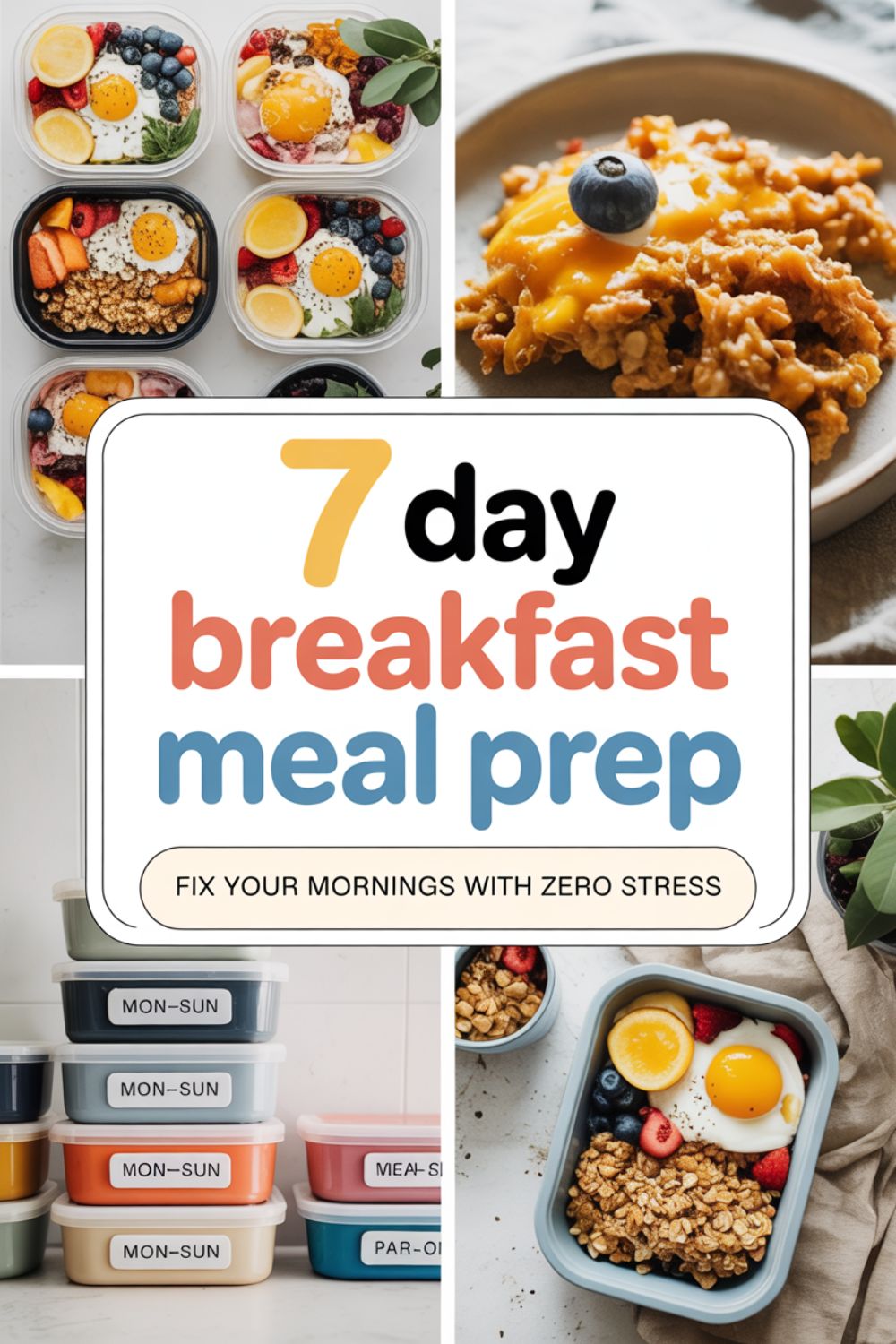
7-Day Breakfast Meal Prep to Fix Your Mornings
Look, I’m not going to sugarcoat it—mornings are rough. You’re either scrambling to find matching socks or staring blankly into your fridge wondering if last night’s pizza counts as breakfast. But here’s the thing: what if your mornings didn’t have to be a hot mess? What if you could actually have your breakfast ready and waiting, no frantic scrambling required?
That’s exactly what I figured out when I started meal prepping my breakfasts for the week. One Sunday afternoon of focused effort transformed my entire week. No more skipping breakfast because I was running late. No more grabbing sugary muffins from the coffee shop. Just grab, heat if needed, and go.
This isn’t about being some meal prep influencer with color-coded containers and perfectly portioned everything. This is about real people who need real solutions to fix their chaotic mornings. And trust me, if I can do it while juggling a full schedule, you absolutely can too.
Why Your Morning Chaos Needs a Breakfast Meal Prep Intervention
Ever wonder why you feel sluggish by 10 AM or find yourself raiding the vending machine before lunch? The culprit is usually that skipped or crappy breakfast you had—or didn’t have. According to Harvard Health, starting your day without proper fuel means your body taps into energy reserves, leaving you running on fumes.
But here’s what really sold me on meal prepping: research shows that people who eat a protein-rich breakfast experience better appetite control throughout the entire day. A study published in the Journal of Dairy Science found that consuming around 28 grams of protein at breakfast led to reduced appetite and more stable blood sugar levels hours later. That’s not just some wellness blogger making claims—that’s actual science backing up what works.
When you prep your breakfasts ahead of time, you’re not just saving time. You’re taking control of your nutrition, energy levels, and honestly, your entire day. No more decision fatigue at 6:30 AM. No more “I’ll just grab something later” excuses that lead to poor choices.
The Game-Changing Benefits You’ll Actually Notice
Time Savings That Feel Like Magic
Picture this: instead of spending 15-20 minutes every morning cooking, cleaning, and stressing, you spend maybe two hours one afternoon prepping for the entire week. That’s it. The math is ridiculously good—you’re essentially buying back hours of your life each week.
I started timing myself out of curiosity. My typical rushed morning breakfast routine? About 18 minutes from start to cleanup. With meal prep? Thirty seconds to grab a container from the fridge. That’s an extra 17 minutes per day I can spend actually enjoying my coffee or, you know, getting dressed properly.
Better Nutrition Without Overthinking It
When you’re hungry and rushed, your brain gravitates toward whatever’s easiest—usually carb-heavy, sugar-loaded options. But when your healthy breakfast is already prepped? You’re naturally making better choices because the healthy option is the easy option.
According to research from Harvard Medical School, people who consume extra protein at breakfast have lower blood sugar levels and reduced appetite later in the day. This isn’t about restriction—it’s about feeling genuinely satisfied so you’re not prowling around for snacks by 10 AM.
Money in Your Pocket
Let’s talk dollars and cents for a second. That $8 breakfast sandwich you grab on the way to work? Times five days a week? You’re looking at $40 weekly, which adds up to over $2,000 per year. Meanwhile, meal prepping costs you maybe $20-25 for the entire week. The savings are honestly insane.
“I was spending nearly $50 a week on breakfast alone between coffee runs and drive-thrus. After three months of meal prepping, I’ve saved over $500 and actually feel better. My energy is more consistent, and I’m not crashing by lunchtime anymore.” — Sarah M., Community Member
Your Complete 7-Day Breakfast Meal Prep Blueprint
This plan isn’t about making seven completely different elaborate meals. That’s exhausting and unrealistic. Instead, we’re focusing on three solid recipes that you’ll rotate through, making enough of each to cover multiple days. Smart, efficient, and honestly way more doable.
Day 1-2: Protein-Packed Overnight Oats
Overnight oats are the OG of meal prep breakfasts for good reason. They’re versatile, require zero cooking, and are loaded with fiber to keep you full. I use these airtight mason jars because they’re leak-proof and the perfect portion size.
The base recipe is simple: half a cup of rolled oats, half a cup of milk (I use almond milk, but any works), a scoop of protein powder, and a tablespoon of chia seeds. Let it sit overnight and boom—breakfast is ready. Top with fresh berries in the morning for extra nutrition and that fresh-made feel.
The protein powder is crucial here. I swear by this vanilla whey protein because it blends smoothly without getting chalky. You’re looking at roughly 20-25 grams of protein per serving, which aligns perfectly with what research suggests for appetite control throughout the day.
If you’re looking for more variations, definitely check out these Get Full Recipe for chocolate peanut butter overnight oats that taste like dessert but pack 30 grams of protein.
Day 3-4: Make-Ahead Egg Muffin Cups
These little guys are absolute lifesavers. They’re basically mini crustless quiches that you can customize with whatever vegetables and proteins you have on hand. I make a batch of 12 on Sunday and they last perfectly through Thursday.
Whisk together 8-10 eggs, add your mix-ins (I love spinach, cherry tomatoes, and feta cheese), pour into silicone muffin cups, and bake at 350°F for about 22 minutes. The silicone cups are a game-changer because nothing sticks, and cleanup is ridiculously easy.
Each muffin has roughly 6-7 grams of protein, so eating two gives you a solid protein-forward breakfast. Plus, they reheat beautifully in the microwave—just 45 seconds and they taste freshly made. Store them in these stackable containers so they don’t get crushed in your fridge.
Want to try a southwestern version with black beans and jalapeños? Get Full Recipe for these spicy breakfast egg cups that have become my weekend favorite.
Day 5-7: Freezer-Friendly Breakfast Burritos
Breakfast burritos might seem complicated, but they’re actually one of the easiest things to batch-prep and freeze. The trick is wrapping them properly so they don’t get freezer burn. I learned this the hard way after ruining my first batch.
Scramble 12 eggs with your choice of vegetables and cooked protein (turkey sausage or black beans work great). Warm up whole wheat tortillas, divide the filling, add a bit of cheese, and roll them up tight. Wrap each individually in parchment paper first, then aluminum foil. They’ll keep in the freezer for up to three months.
The reheating method matters here. Unwrap the foil but keep the parchment paper on, then microwave for 2-3 minutes, flipping halfway. The parchment prevents the tortilla from getting rubbery while the steam keeps everything moist. Total breakfast prep time in the morning? Literally just the time it takes to microwave.
I use these large freezer bags to store multiple burritos, and I always label them with the date and filling type. Trust me, future-you will appreciate knowing which ones have jalapeños and which don’t.
Speaking of breakfast burritos, you might also love these Get Full Recipe for vegetarian breakfast burritos loaded with sweet potatoes and black beans.
Meal Prep Essentials Used in This Plan
After months of trial and error, these are the tools and products that actually make a difference:
Physical Products:
- Glass meal prep containers with snap lids – Honestly, these changed everything. They’re microwave-safe, dishwasher-safe, and don’t stain like plastic. I have 10 of them and rotate through constantly.
- Silicone baking cups set – For egg muffins, these eliminate the need for oil or cooking spray. Nothing sticks, and they last forever.
- Insulated lunch bag – Keeps your prepped breakfast cold if you’re taking it to work. The one I use fits three containers plus an ice pack perfectly.
Digital Resources:
- 7-Day Meal Prep Planning Template – A simple spreadsheet that helps you map out your breakfast prep schedule and grocery list.
- Freezer-Friendly Recipe Guide – Detailed instructions for 15 make-ahead breakfast recipes with freezing and reheating notes.
- Nutrition Calculator Spreadsheet – Helps you track macros if you’re into that level of detail (I occasionally check mine to make sure I’m hitting protein goals).
Want more tips and exclusive recipes? Join our WhatsApp community where we share weekly meal prep ideas and troubleshooting advice.
For those mornings when you want something different, these Get Full Recipe for protein pancakes freeze beautifully and toast up perfectly in minutes.
The Protein Question Everyone Gets Wrong
Here’s something that surprised me when I first started researching breakfast: most people consume the majority of their daily protein at dinner. But here’s the kicker—according to the American Society for Nutrition, spreading your protein intake more evenly throughout the day actually increases your body’s ability to build and maintain muscle.
The research suggests aiming for around 25-30 grams of protein at breakfast. That might sound like a lot, but it’s totally doable. Two egg muffins plus a serving of Greek yogurt? You’re there. A protein-packed smoothie with a scoop of protein powder and some nut butter? Done.
The difference I noticed personally? Way less snacking between meals and stable energy that doesn’t crash mid-morning. Those mid-morning energy dips I used to blame on needing more coffee? Turns out I just needed more protein at breakfast.
If you’re struggling to hit your protein goals, these Get Full Recipe for high-protein smoothie bowls are game-changers. Each one has 35+ grams of protein and tastes like a milkshake.
Smart Shortcuts That Don’t Sacrifice Quality
Embrace the Pre-Chop Life
Sunday meal prep shouldn’t take all day. When I grocery shop, I grab pre-chopped vegetables from the produce section. Yeah, they cost a bit more, but the time savings are worth every penny. We’re talking onions, peppers, and even pre-rinsed spinach.
Same goes for proteins. Rotisserie chicken, pre-cooked turkey sausage, and canned beans are your friends. Nobody’s giving out medals for chopping every single ingredient from scratch. The goal is consistency and sustainability, not martyrdom.
Double Up and Freeze
If you’re making egg muffins, why make 12 when you can make 24? The second batch goes straight into the freezer. Same effort, double the output. I use these freezer-safe containers that stack perfectly and keep everything organized.
Label everything with dates. I learned this lesson after discovering mystery containers in my freezer that could’ve been pancakes or hockey pucks—honestly couldn’t tell.
The Power of Theme Days
Instead of eating the same thing seven days straight (boring), rotate through your prepped options. Monday and Tuesday might be overnight oats, Wednesday and Thursday are egg muffins, Friday through Sunday you’re hitting those breakfast burritos from the freezer.
This keeps things interesting while still maintaining that meal prep efficiency. Plus, it means you’re only really prepping 2-3 different recipes each week, which is way more manageable than trying to make seven unique breakfasts.
Looking for even more variety? Check out these Get Full Recipe for sweet potato breakfast bowls that prep beautifully and reheat like a dream.
What About Special Dietary Needs?
The beauty of meal prepping is that you control exactly what goes into your food. Got food allergies? Awesome—you know precisely what’s in every bite. Following a specific diet? No problem, customize everything to fit your needs.
Plant-Based Protein Options
If you’re vegetarian or vegan, getting enough protein at breakfast can feel tricky, but it’s totally doable. I’ve experimented with tofu scrambles, chickpea flour pancakes, and protein-boosted smoothies. They all prep well and pack serious nutrition.
For plant-based protein powder, I recommend this pea protein blend because it doesn’t have that weird chalky aftertaste some plant proteins have. Mix it with oat milk for a creamy texture that rivals dairy-based options.
These Get Full Recipe for vegan breakfast burritos with tempeh bacon are legitimately delicious and meal prep perfectly.
Low-Carb and Keto-Friendly
Egg muffins are naturally low-carb and keto-friendly, making them perfect for anyone watching their carb intake. Skip the tortilla on the breakfast burritos and just meal prep the filling in containers—equally delicious, way fewer carbs.
I’ve also had great success with chia pudding made with full-fat coconut milk, which keeps you in ketosis while providing that creamy, satisfying texture. Top with a handful of nuts and some unsweetened coconut flakes for crunch.
Want more keto breakfast ideas? These Get Full Recipe for cloud bread breakfast sandwiches are fluffy, protein-packed, and have virtually no carbs.
Tools & Resources That Make Cooking Easier
Beyond the basics, these are the tools that genuinely improved my meal prep game:
Physical Kitchen Tools:
- Digital kitchen scale – If you’re tracking macros or just want consistent portions, this is essential. Mine paid for itself in the first month.
- Immersion blender – Perfect for smoothies directly in your meal prep container. Less cleanup, less hassle.
- Batch cooking slow cooker – Set it overnight with steel-cut oats, wake up to breakfast for four days. Minimal effort, maximum return.
Digital Planning Tools:
- Grocery List Template – Pre-organized by store section so you’re not zigzagging through the store like a confused tourist.
- Macro-Friendly Recipe Database – Searchable collection of 50+ breakfast recipes with full nutritional breakdowns.
- Meal Prep Video Course – Step-by-step video tutorials showing exactly how to prep efficiently without wasting time.
Join our growing community on WhatsApp for daily motivation, recipe swaps, and troubleshooting tips from people who are actually doing this stuff every week.
Common Meal Prep Mistakes (And How to Avoid Them)
Mistake #1: Making Everything Too Complicated
Your first week of meal prep should not involve 12 different recipes with exotic ingredients. Start simple. Master overnight oats and egg muffins first. Once those become second nature, branch out to more complex options.
I fell into this trap initially, trying to prep elaborate grain bowls with multiple components. By Wednesday, I was exhausted and ready to give up. Simplicity wins, especially when you’re building a new habit.
Mistake #2: Not Investing in Proper Containers
Those flimsy takeout containers from the Chinese restaurant? Not gonna cut it. They leak, they crack, and they make everything taste like plastic. Spend the money upfront on quality glass containers. I use these ones specifically, and they’ve lasted over two years of constant use.
Good containers are microwave-safe, dishwasher-safe, and actually seal properly. This matters when you’re rushing out the door and toss breakfast into your bag. Nobody wants scrambled eggs all over their laptop.
Mistake #3: Forgetting About Texture
Some foods just don’t reheat well or get soggy after a few days. Crispy bacon? Add it fresh each morning rather than prepping it days ahead. Fresh fruit? Chop it the night before at most, or your berries will be mushy disasters.
This is where understanding which components to prep separately becomes crucial. For breakfast burritos, I sometimes keep the salsa and avocado separate, adding them fresh when I reheat. Makes all the difference in taste and texture.
“I used to meal prep elaborate breakfasts that tasted amazing on Sunday but terrible by Wednesday. Once I simplified to three core recipes and started adding fresh toppings daily, everything changed. Now I actually look forward to my prepped breakfasts.” — Mike T., Community Member
Making It Sustainable Long-Term
Here’s the truth nobody talks about: meal prep only works if you can maintain it. That means building systems that fit your actual life, not some idealized version of your life where you have unlimited time and energy.
Start With Just Two Days
Don’t pressure yourself to prep seven perfect breakfasts immediately. Start with prepping just Monday and Tuesday. See how it feels. Adjust what isn’t working. Then gradually expand to more days as it becomes routine.
I started with just Wednesday and Thursday because those were my craziest morning days. Once I saw how much easier those mornings became, I was motivated to prep more days.
Build In Flexibility
Some weeks, you’ll nail meal prep. Other weeks, life happens. Maybe you prep three days instead of five. That’s still three mornings you’re not scrambling. Perfect is the enemy of good enough, and good enough is what keeps you consistent.
I keep these protein bars in my pantry as backup for those weeks when I simply didn’t get around to prepping. They’re not ideal, but they’re infinitely better than skipping breakfast or hitting the drive-thru.
Rotate Your Recipes Seasonally
Eating the same three breakfasts year-round sounds mind-numbing. In summer, I’m all about chia pudding with fresh berries. Winter? Give me warm baked oatmeal cups. Rotating recipes with the seasons keeps things interesting and takes advantage of what’s fresh and affordable.
For seasonal inspiration, check out these Get Full Recipe for pumpkin spice baked oatmeal that’s perfect for fall mornings.
Your Meal Prep Questions Answered
How long do meal-prepped breakfasts actually stay fresh?
Most refrigerated breakfast meal preps stay fresh for 4-5 days when stored properly in airtight containers. Egg-based items like muffins or scrambles should be eaten within 4 days for best quality. Overnight oats can actually improve in texture and last up to 5 days. For anything longer, your freezer is your best friend—properly wrapped breakfast burritos, pancakes, and baked oatmeal cups can last 2-3 months frozen.
Can I meal prep if I have a tiny kitchen or limited storage?
Absolutely. Focus on recipes that require minimal equipment—overnight oats only need mason jars and a fridge. Egg muffins need just a muffin tin and oven. You don’t need fancy equipment or tons of storage. Start with just 2-3 days of prep instead of a full week, and use stackable containers to maximize fridge space. Many people successfully meal prep in dorm kitchens and tiny apartments.
What if my family has different breakfast preferences?
Make customizable base recipes that each person can personalize. Prep a batch of basic overnight oats and let everyone add their own toppings. For egg muffins, use a muffin tin where each cup can have different mix-ins—some with veggies, some with bacon, some cheese-free. The key is creating flexible foundations rather than rigid single-option meals.
Is meal prep worth it if I’m only cooking for myself?
Actually, solo meal prep is often easier because you’re only managing your own preferences and schedule. Many recipes scale down beautifully—make 6 egg muffins instead of 12, or prep 3-4 breakfast burritos. You’ll still save time and money compared to buying breakfast daily, and you avoid food waste since you’re only making what you’ll eat.
What about reheating—does everything get soggy or weird?
Some things reheat better than others. Egg muffins and burritos reheat perfectly. Overnight oats are eaten cold, so no issues there. The trick is knowing what to add fresh versus what to prep ahead. Keep crunchy toppings separate until you’re ready to eat. For items you’re freezing, wrap them individually and reheat properly—this prevents sogginess and maintains texture.
Your Morning Transformation Starts Now
Here’s what I want you to remember: breakfast meal prep isn’t about perfection. It’s not about having Instagram-worthy containers or following some complicated system. It’s about making your mornings less chaotic and giving yourself the nutrition you actually need to function like a capable human.
Start small. Pick one recipe from this guide—maybe those overnight oats or egg muffins—and prep just two or three days worth. See how it feels. Notice the difference in your energy, your mornings, your stress levels. Then build from there.
The goal isn’t to become some meal prep guru. The goal is to fix your mornings so you can start your days feeling prepared, nourished, and ready to tackle whatever comes your way. And honestly? That’s worth way more than an extra 15 minutes of sleep.
Your future self—the one who’s grabbing a nutritious breakfast from the fridge instead of skipping it entirely or hitting the drive-thru—is already thanking you. Now get in that kitchen and make it happen.