Build Your Perfect 7-Day Meal Prep Plan
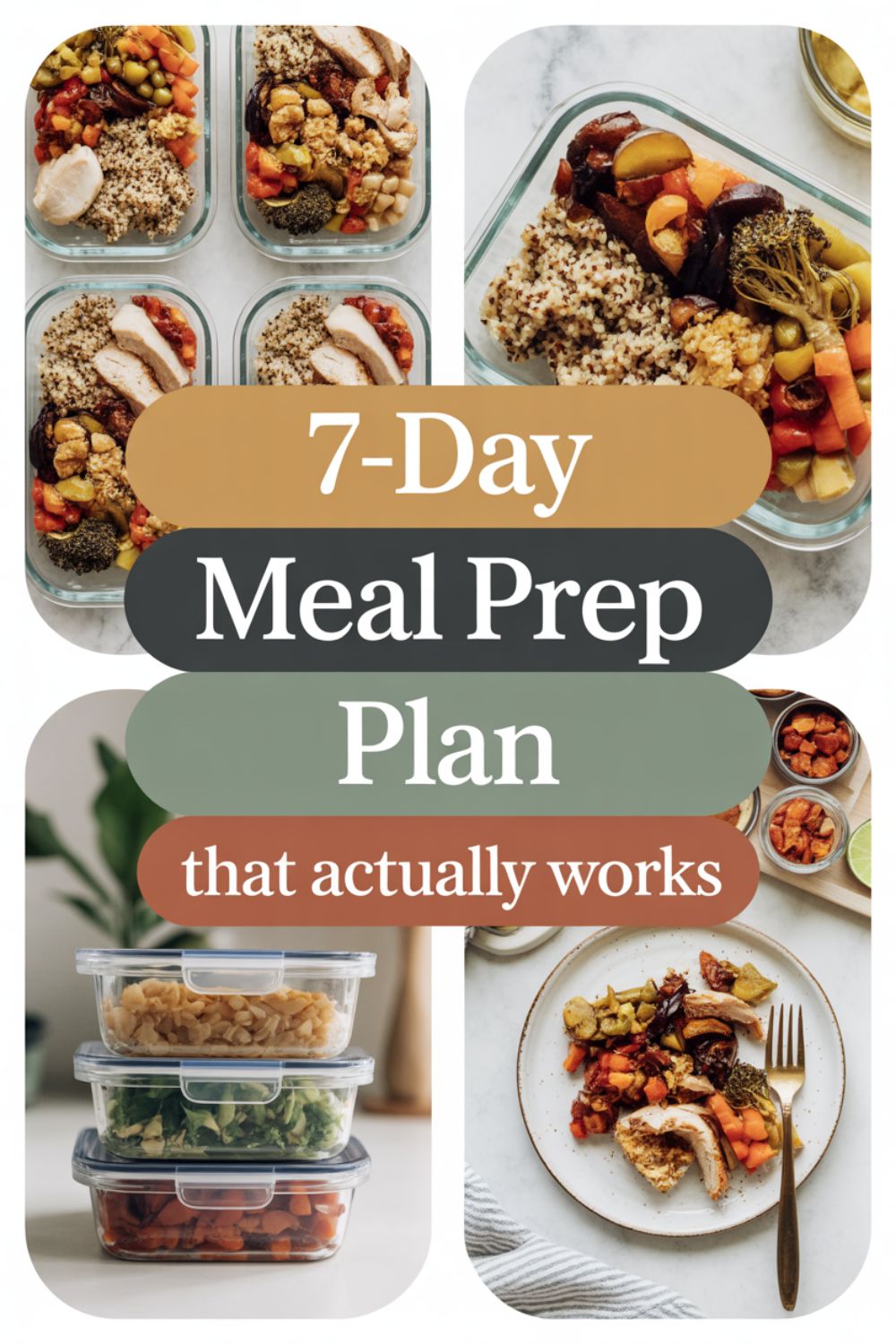
7-Day Meal Prep Plan That Actually Works
You know that Sunday feeling when you look at your empty fridge and realize you have zero meal prep done for the week ahead? Yeah, I’ve been there too many times to count. But here’s what I’ve learned after years of trial and error: meal prep doesn’t have to be this massive, intimidating project that takes over your entire weekend.
The truth is, most meal prep plans fail because they’re either too complicated, too boring, or they leave you eating the same chicken and broccoli for seven days straight. This 7-day meal prep plan is different because it actually works with your real life, not against it.
I’m talking about meals that stay fresh, taste good on day five, and don’t require you to cook for six hours straight. This plan will save you time, money, and those weeknight moments when ordering takeout feels like your only option. Let’s get into it.
How This Meal Prep Plan Works
This isn’t about cooking every single meal on Sunday and eating leftovers that taste like cardboard by Thursday. Instead, this plan uses smart batch cooking techniques combined with fresh components that you assemble throughout the week. Think of it as meal prep that meets meal assembly.
The strategy here is simple. You’ll spend about two hours on your prep day cooking proteins, chopping vegetables, and preparing base ingredients. Then during the week, you spend maybe 10 minutes putting meals together. According to Nutrition.gov’s meal prep guidelines, this approach helps maintain food quality while ensuring you’re eating nutritious meals throughout the week.
Here’s what makes this plan actually sustainable. You’re not eating identical meals seven days in a row. The proteins and vegetables rotate, flavors change, and you’re building meals that genuinely taste good even after a few days in the fridge. That matters more than you might think when it comes to actually sticking with meal prep.
The Three-Phase Approach
Phase one is your prep day. You’ll cook proteins in bulk, roast vegetables, prepare grains, and portion everything into containers. Phase two happens during the week when you quickly assemble these prepped components into complete meals. Phase three is your evaluation at the end of the week to see what worked and what didn’t.
The beauty of this system is flexibility. If you hate quinoa, swap it for rice. If chicken gets boring, rotate in turkey or tofu. The framework stays the same, but you control the specifics based on what you actually like eating.
Your Complete 7-Day Meal Plan
This week of meals is designed around balanced nutrition, realistic portions, and flavors that don’t get old. Each day provides roughly 1,600-1,800 calories with a solid protein foundation. The meals are structured so nothing goes bad sitting in your fridge, and you’re not stuck with that weird day-five taste that makes you question all your life choices.
Day 1
Day 2
Day 3
Quick Swap Options
Protein swaps: Swap chicken for turkey breast, salmon for cod or tilapia, beef for ground turkey. All cook the same way and keep just as well.
Grain swaps: Replace quinoa with brown rice, farro, or cauliflower rice. Replace regular pasta with chickpea or lentil pasta for extra protein.
Vegetable swaps: Use whatever’s on sale. Broccoli, Brussels sprouts, green beans, and asparagus all roast beautifully and last the whole week.
Day 4
Day 5
Day 6
Day 7
Week 1 Prep Checklist
- Bake all chicken breasts and salmon fillets
- Hard-boil one dozen eggs
- Cook quinoa and brown rice in bulk
- Roast three sheet pans of mixed vegetables
- Prep salad greens and store in containers with paper towels
- Make overnight oats and protein balls for grab-and-go options
- Portion proteins into individual containers
- Wash and chop all vegetables for the week
Speaking of meal prep essentials, you might also love these time-saving recipes:
The 21-Day Weight Loss Meal Prep Plan takes this same approach but extends it for three full weeks. And if you’re looking for variety, check out these 14 Meal Prep Bowls that rotate seamlessly into any weekly plan.
What You’ll Eat
Let’s break down the nutritional strategy behind this plan because understanding the why makes following the what a lot easier. You’re looking at roughly 120-140 grams of protein daily, which aligns with current nutritional science from the USDA’s Dietary Guidelines that emphasize adequate protein intake for muscle maintenance and satiety.
Protein Foundation
Every meal includes a solid protein source because protein keeps you full longer and helps maintain muscle mass during weight loss. You’re rotating between chicken, salmon, turkey, beef, and eggs. This variety ensures you’re not just meeting protein goals but also getting different amino acid profiles and nutrients.
The protein portions are deliberate. Breakfast provides 24-28 grams, lunch brings 29-37 grams, dinner delivers 30-39 grams, and snacks add another 11-18 grams. This distribution matters because your body processes protein more effectively when it’s spread throughout the day rather than loaded into one massive dinner.
Vegetables and Fiber
You’re eating vegetables with literally every meal except breakfast on some days. Broccoli, Brussels sprouts, bell peppers, spinach, green beans, and mixed greens provide fiber that aids digestion and keeps blood sugar stable. The CDC’s nutrition guidelines emphasize the importance of vegetable intake for overall health.
The vegetable rotation isn’t random. Roasted vegetables last longer than raw ones, which is why you’ll prep those first. Salad greens get stored with paper towels to absorb moisture and stay crisp. This attention to storage details means you’re eating quality vegetables all week, not wilted sad greens by Wednesday.
Smart Carbohydrates
Carbs aren’t the enemy. You’re getting them from quinoa, brown rice, sweet potatoes, and whole grains. These complex carbohydrates provide sustained energy without the blood sugar crashes that come from refined carbs. The portions are controlled but sufficient, especially around workout days when you need that glycogen for performance.
Meal Prep & Kitchen Setup That Makes Life Easy
Your kitchen setup determines whether meal prep feels manageable or overwhelming. I’m not talking about needing a Pinterest-perfect kitchen with every gadget imaginable. You need the right basics and a solid system for using them.
Essential Equipment
Glass meal prep containers are non-negotiable. I mean it. Those glass containers with snap-lock lids keep food fresh longer, don’t stain, and you can see what’s inside without opening them. Get at least seven large containers for main meals and five smaller ones for snacks and components.
A food scale transforms meal prep from guesswork into precision. You’ll accurately portion proteins, measure grains, and track exactly what you’re eating. The digital ones with tare functions make this process seamless. Sheet pans are your batch cooking best friend. Get three heavy-duty rimmed baking sheets so you can roast multiple proteins and vegetables simultaneously.
Sharp knives matter more than you think. A good chef’s knife cuts your vegetable prep time almost in half compared to those dull knives sitting in your drawer. Add a cutting board that doesn’t slide around, and you’ve got a setup that actually works.
The Two-Hour Prep Day Strategy
Sunday afternoon is prime time for most people, but pick whatever day works for your schedule. The key is consistency. Same day, same time, every week. Your brain stops fighting it once it becomes routine.
Start by preheating your oven to 400 degrees. While it heats, season all your proteins. Chicken breasts go on one sheet pan, salmon on another. Into the oven they go. Set a timer for 25 minutes for the salmon, 30-35 for the chicken depending on thickness.
While proteins cook, start your grains. Quinoa takes 15 minutes, brown rice takes 45. Get them going on the stovetop. Then move to vegetables. Chop everything you’ll need for the week: bell peppers, broccoli, Brussels sprouts, onions, whatever’s on your list. This parallel processing is how you compress hours of work into two.
When proteins come out, vegetables go in. Toss them with olive oil, salt, and pepper. Roast for 20-25 minutes until they’re tender with some caramelization. While vegetables roast, portion your now-cooled proteins into individual containers. Hard-boil eggs during this time too.
Meal Prep Essentials Used in This Plan
Glass Meal Prep Containers (10-Pack)
Leak-proof, microwave-safe containers that keep meals fresh all week. The clear glass lets you see what’s inside without opening every container.
Digital Food Scale
Accurate portioning is everything for consistent results. This scale has a tare function so you can weigh directly in your container.
Three-Pack Sheet Pans
Heavy-duty rimmed baking sheets for roasting proteins and vegetables simultaneously. These never warp, even at high heat.
Digital tools that streamline your meal prep routine:
Meal Prep Tracker App
Digital planners help you organize shopping lists, track prep schedules, and set reminders for when to start cooking each component.
Recipe Management Software
Store all your go-to recipes in one place, scale ingredients automatically, and generate shopping lists from your weekly meal plan.
Nutrition Calculator
Calculate exact macros for each meal as you build your plan. Essential for tracking protein, carbs, and calories accurately.
The final step is storage organization. Put similar items together. All breakfast parfaits in one section, lunch proteins in another, roasted vegetables in a third. Label containers with days if that helps you stay organized. Some people love this, others find it unnecessary. Do what works for your brain.
Common Mistakes That Kill Results
I’ve watched people fail at meal prep for the same reasons over and over. These mistakes are predictable and completely avoidable once you know what to look for. Let’s talk about what actually derails meal prep plans so you can sidestep these issues.
Prepping Foods That Don’t Reheat Well
Not all foods survive five days in the fridge. Crispy things get soggy, delicate fish turns mushy, and some vegetables become weirdly textured. Salmon is fine for three to four days max. After that, you’re pushing it regardless of what you read online. The FDA’s food storage guidelines recommend consuming cooked fish within three to four days.
If you’re meal prepping fish, eat it early in the week. Save chicken and turkey for days four through seven. They hold up better. Same logic applies to vegetables. Broccoli and Brussels sprouts roast beautifully and last all week. Delicate greens like spinach or arugula should be stored separately and added fresh to meals.
Making Everything Too Complicated
The meal prep plans that fail are usually the ones with 47 ingredients and recipes that require three cooking methods per meal. Complexity kills consistency. If your meal prep takes four hours and requires constant attention, you’ll do it once, maybe twice, then quit.
Stick with simple preparations. Salt, pepper, garlic powder, and olive oil work for almost everything. You don’t need elaborate sauces or complicated techniques. Sheet pan proteins and roasted vegetables are classics because they’re effective and repeatable. The 30 High-Volume Low-Calorie Meals collection shows how simple preparations can still be incredibly satisfying.
Not Eating Enough Variety
Meal prep doesn’t mean eating the same exact thing seven days straight. That’s a recipe for boredom and eventual failure. The plan I’ve given you rotates proteins, changes flavor profiles, and varies textures specifically to prevent this.
Even within this structure, you can add variety through toppings and seasonings. Day one chicken gets Italian seasoning. Day three chicken gets taco spices. Same protein, different flavor experience. Keep hot sauces, mustards, and other condiments at work or home to customize meals as needed.
Ignoring Food Safety
Cooked food lasts three to four days in the refrigerator at 40°F or below. Not five, not seven. Three to four. If you’re meal prepping on Sunday for the entire week, you need to either freeze some portions or accept that Thursday and Friday meals should be fresh or frozen options you reheat.
Cool food quickly before refrigerating. Don’t put hot containers straight into the fridge because they raise the internal temperature and put other foods at risk. Let proteins rest for 15-20 minutes, then refrigerate. Use shallow containers because food cools faster with more surface area exposed.
If something smells off, looks questionable, or has been sitting in your fridge longer than four days, throw it out. Period. No debate. Food poisoning isn’t worth saving six dollars worth of chicken. According to food safety experts at FoodSafety.gov, proper storage and timing are critical for preventing foodborne illness.
Looking for meals that last longer in the fridge?
Check out these 21 Grab-and-Go Weight Loss Meals designed specifically for extended freshness. Also, 30 No-Reheat Lunches are perfect if you don’t have microwave access at work.
Customizing This Plan for Your Lifestyle
This plan is a framework, not a prison sentence. You should absolutely adjust it based on your schedule, preferences, and goals. Here’s how to make intelligent modifications without losing the effectiveness.
Adjusting Calories Up or Down
The base plan sits around 1,600-1,800 calories. If you need more, add portions rather than completely different meals. An extra serving of quinoa here, another ounce of chicken there, a second snack in the afternoon. Keep the meal structure the same, just increase quantities.
For lower calories, reduce grain portions first. Cut quinoa from one cup to half a cup. Swap regular rice for cauliflower rice in one meal per day. Keep protein high because that’s what keeps you full. Dropping from 35 grams of protein to 20 grams to save 60 calories is a terrible trade. You’ll be hungry two hours later.
If you’re following specific calorie targets like in the 7-Day 1200-Calorie Meal Plan or the 14-Day Calorie Deficit Plan, you can adapt these same meals by adjusting portion sizes while maintaining the same prep-ahead approach.
Vegetarian and Plant-Based Modifications
Swap all animal proteins for plant-based alternatives. Chicken becomes tofu or tempeh. Salmon becomes seasoned chickpeas or white beans. Beef becomes lentils or textured vegetable protein. The meal structure stays identical, you’re just changing the protein source.
Pay attention to complete proteins. Combining rice with beans, quinoa with vegetables, or using soy-based proteins ensures you’re getting all essential amino acids. This matters more with plant proteins than animal proteins because you need to be strategic about combinations.
Making It Work with Specific Diets
Low-carb followers can drop the grains and double up on vegetables. Replace quinoa with cauliflower rice or additional roasted vegetables. The protein and vegetable foundation works perfectly for low-carb approaches.
Keto dieters need to increase fats while keeping carbs under 20-30 grams daily. Add avocado, nuts, cheese, and fatty cuts of meat. Cook vegetables in butter or coconut oil instead of just olive oil. The meal prep process stays the same, but macros shift dramatically.
For higher-carb approaches focused on athletic performance, increase grain portions and add fruit to more meals. The prep-ahead proteins and vegetables remain your foundation, you’re just adding more energy sources around training.
Tools & Resources That Make Cooking Easier
Instant Pot Pressure Cooker
Cook brown rice in 22 minutes, chicken breasts in 12 minutes, and hard-boiled eggs in 5 minutes. All hands-off cooking that frees you up for other prep.
Quality Chef’s Knife
A sharp 8-inch chef’s knife cuts vegetable prep time almost in half. Worth every penny for weekly meal prep sessions.
Produce Storage Containers
Keep salad greens crisp all week with proper airflow containers. Built-in vents and removable baskets maintain perfect humidity.
Digital resources for better meal planning:
Printable Meal Prep Templates
Weekly planning sheets, shopping list templates, and prep checklists you can print and use to stay organized every Sunday.
Macro Tracking Spreadsheet
Pre-built Excel templates that calculate daily macros automatically as you input your meals and portions.
Online Meal Prep Course
Video tutorials showing exact techniques for batch cooking proteins, storing vegetables, and organizing your weekly prep routine.
Time-Crunched Modifications
If two hours on Sunday feels impossible, split your prep into two sessions. Do proteins and grains on Sunday in one hour. Do vegetables and assembly on Wednesday in 30 minutes. You’re working with fresher food this way, and the time commitment per session feels less overwhelming.
Another option is prepping dinners only and keeping breakfast and lunch simpler. Greek yogurt and fruit for breakfast takes zero prep. Rotisserie chicken salads for lunch take five minutes. Reserve your batch cooking energy for dinners when you’re most likely to order takeout.
The 7-Day Meal Prep Plan for Busy Women uses exactly this approach, focusing prep time on the meals that matter most for your specific schedule.
Frequently Asked Questions
How long does meal-prepped food actually stay fresh?
Cooked proteins and vegetables last three to four days when stored properly at 40°F or below. Some items like roasted vegetables and grains can push five days, but fish should be eaten within three days maximum. If you’re prepping on Sunday for the full week, freeze meals for Thursday and Friday, then thaw them Wednesday night. This keeps everything at peak quality and safe to eat.
Can I freeze these meals instead of refrigerating them?
Absolutely. Most of these meals freeze beautifully for up to three months. Let everything cool completely, then freeze in airtight containers. Thaw in the refrigerator overnight before eating. The texture of some vegetables might change slightly after freezing, but the taste and nutrition stay solid. Grains and proteins freeze particularly well.
What if I don’t have time for a two-hour prep session?
Split your prep into smaller chunks. Do proteins Sunday, vegetables Wednesday, and keep breakfast simple with minimal prep items like Greek yogurt or overnight oats. You can also prep just dinners and handle breakfast and lunch with quick-assembly options. The framework is flexible. Start with whatever feels manageable and build from there.
How do I prevent meal prep from getting boring?
Rotate your seasonings and sauces. The same grilled chicken becomes completely different with Italian herbs versus taco seasoning versus teriyaki sauce. Keep variety in your vegetable choices and don’t eat identical meals back-to-back. The plan I’ve outlined already builds in variety, but you can increase it further by exploring the recipe collections linked throughout this article.
Do I need to buy expensive meal prep containers?
You need good containers, not expensive ones. Glass containers with airtight lids are the best investment because they last forever and don’t hold odors or stains. You can find affordable options that work perfectly well. Skip the fancy compartmentalized containers unless you really want them. Simple rectangular glass containers with snap lids do everything you need.
You’ve Got This
Meal prep doesn’t have to be perfect to be effective. Start with this 7-day plan, follow the two-hour Sunday routine, and adjust based on what actually works in your real life. The goal isn’t to become a meal prep robot who eats identical containers forever.
The goal is building a sustainable system that saves you time, keeps you on track with your nutrition goals, and eliminates those weeknight decisions when you’re tired and hungry. This plan gives you exactly that.
Pick your prep day, grab your containers, and get started. Your future self will thank you when Wednesday rolls around and dinner is already handled.