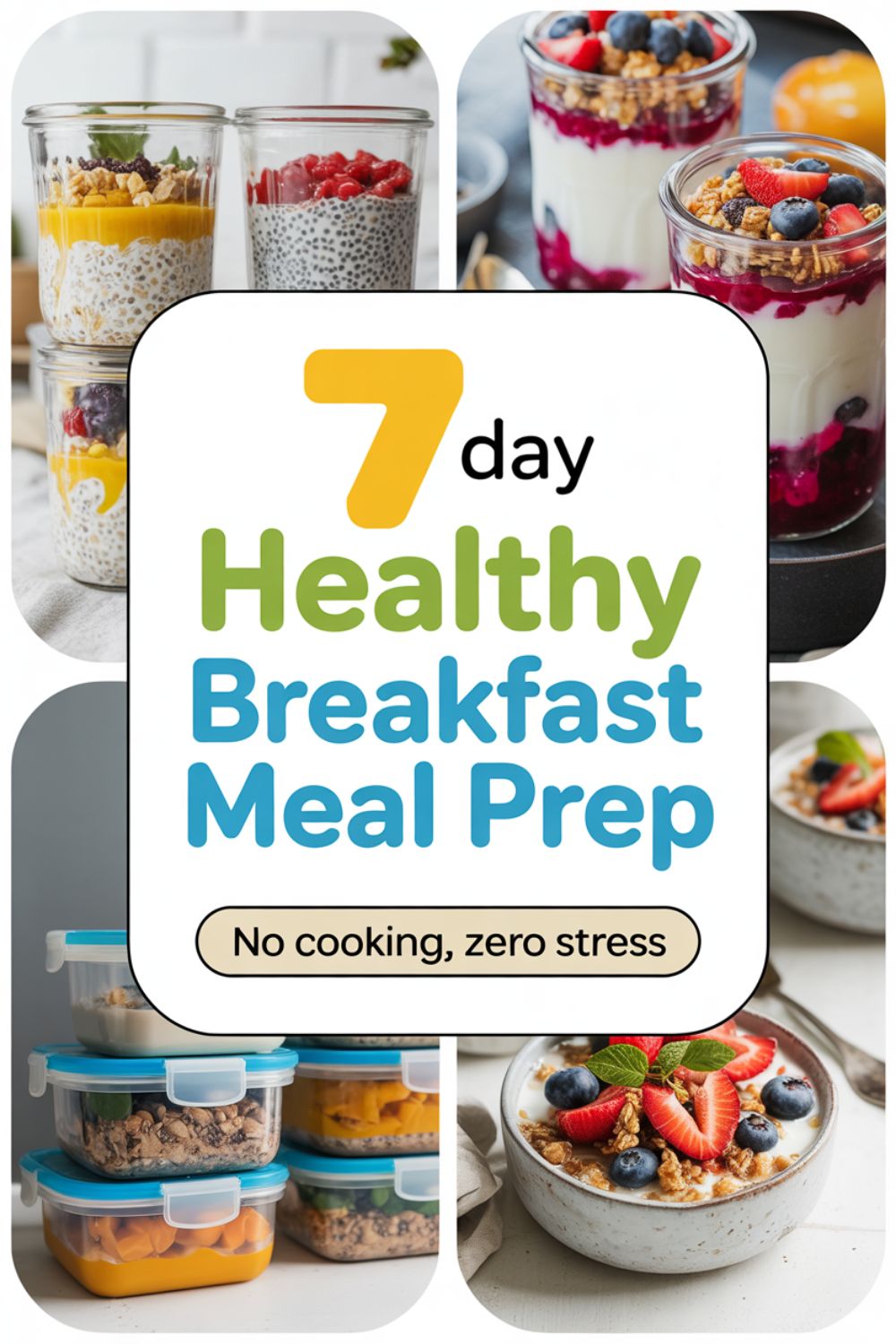
7-Day Healthy Breakfast Meal Prep Without Cooking Daily
Look, I’m just gonna say it: cooking breakfast every single morning is a trap. Not a fun one either. It’s that moment when your alarm goes off and you realize you have exactly two choices—scramble something together in five minutes that tastes like cardboard, or skip breakfast entirely and pretend coffee counts as a meal group.
Spoiler alert: it doesn’t.
That’s why I started meal prepping my breakfasts, and honestly? Game changer. You’re basically outsourcing your future self’s breakfast stress to your current, slightly-more-motivated self. And the best part? You only have to think about breakfast once a week instead of seven times. Your brain will thank you.
This isn’t about becoming some Pinterest-perfect meal prep guru with matching containers and color-coded labels. This is about real food that actually tastes good, keeps you full until lunch, and doesn’t require you to wake up at 5 AM to cook eggs.
Why Breakfast Meal Prep Actually Works
Here’s the thing about mornings: they’re chaotic. Between hitting snooze three times, finding socks that match, and convincing yourself that yes, you do need to shower, breakfast becomes this afterthought. And when breakfast is an afterthought, you end up eating whatever’s easiest—which is usually not great for you.
Research shows that make-ahead breakfasts can significantly improve your morning routine while ensuring you get the nutrients your body needs. When you prep your breakfasts ahead of time, you’re basically creating a buffer between morning chaos and actually eating something decent.
The other benefit? You save money. Like, actual money. When you’re not buying those overpriced breakfast sandwiches or stopping at coffee shops every morning, your bank account stays happier. And your body gets better fuel, which means you’re not crashing by 10 AM wondering why you’re so tired.
Prep on Sunday evening when you’re winding down anyway. Put on a podcast, get your containers ready, and knock out the whole week. Future you will be very grateful.
The Foundation: What Makes a Good Meal Prep Breakfast
Not all breakfast foods are created equal when it comes to meal prepping. You need stuff that actually holds up in the fridge for a few days and doesn’t turn into a soggy mess. Here’s what works.
Protein is Your Best Friend
Protein keeps you full. That’s not revolutionary, but it’s worth repeating because so many traditional breakfast foods are basically just carbs with a side of more carbs. According to Mayo Clinic Health System, longer-lasting energy comes from lean proteins combined with whole grains.
Think eggs, Greek yogurt, cottage cheese, nut butters, and lean turkey or chicken if you’re into that. When you’re looking for more inspiration, Get Full Recipe ideas from high-protein breakfast collections can help you stay on track all week.
Protein isn’t just about staying full—it’s about giving your muscles what they need to function. If you work out in the mornings or have a physically demanding job, skimping on protein is basically self-sabotage.
Fiber Keeps Things Moving
Let’s talk about fiber for a second. Fiber is the unsung hero of breakfast. It helps with digestion, keeps you feeling satisfied, and helps stabilize your blood sugar so you’re not on the breakfast-to-lunch rollercoaster. Oats, chia seeds, berries, vegetables—these are your friends.
Combining high-protein and high-fiber foods creates meals that genuinely sustain you. Studies on home meal preparation and nutrition show that people who cook at home using whole food ingredients consume fewer calories and have better health outcomes overall.
Add a tablespoon of chia seeds to literally anything—oatmeal, yogurt, smoothies. Boom, instant fiber boost with basically no effort.
The 7-Day Breakfast Meal Prep Plan
Alright, let’s get into the actual plan. These are seven breakfast options that you can make ahead, store in the fridge (or freezer for some), and actually look forward to eating.
Day 1: Overnight Oats Three Ways
Overnight oats are the ultimate lazy person’s breakfast, and I mean that as the highest compliment. You literally just mix stuff in a jar and let the fridge do the work. No cooking required.
Make three variations: classic peanut butter banana, berry almond, and apple cinnamon. Use mason jars with tight-sealing lids to keep everything fresh. The base is always the same—rolled oats, milk (or plant milk), a dollop of Greek yogurt, and chia seeds.
Here’s where it gets fun: you can customize these endlessly. Add protein powder if you want an extra boost. Throw in some cacao nibs for a chocolate vibe. Top with fresh fruit in the morning. The possibilities are genuinely endless, and you’ll never get bored.
If you want to explore more overnight oat variations, check out these creative overnight oats recipes that take the basic formula and turn it into something special.
Day 2: Egg Muffin Cups
These are basically mini crustless quiches, and they’re ridiculously practical. You bake them in a muffin tin, let them cool, and store them in containers. Grab two or three in the morning, microwave for 30 seconds, and you’re set.
The beauty of egg muffin cups is that you can pack them with whatever vegetables you have lying around. Bell peppers, spinach, mushrooms, tomatoes, onions—everything works. Add some cheese if you’re into that, or keep them dairy-free.
I usually make a dozen at once, which covers breakfast for several days. You can also freeze these, which means you can prep two or three dozen and have breakfast ready for weeks. Just pop them in the microwave straight from frozen, and you’re good to go.
For more egg-based breakfast ideas that work well for meal prep, explore these protein-packed egg recipes that go beyond basic scrambled eggs.
Day 3: Chia Pudding Parfaits
Chia pudding is one of those things that sounds fancier than it actually is. Mix chia seeds with milk, let it sit overnight, and the seeds absorb the liquid and turn into this pudding-like consistency. It’s weird but also delicious.
Layer your chia pudding with Greek yogurt and fresh fruit to make parfaits. Use clear glass containers so you can see all the pretty layers—it makes breakfast feel more special even though it took you like five minutes to assemble.
The flavor combinations here are endless too. Mango coconut, mixed berry, chocolate banana, matcha with honey. FYI, chia seeds have a ton of omega-3s and fiber, so you’re getting serious nutritional bang for your buck.
Day 4: Breakfast Burritos
Breakfast burritos are peak meal prep food. Make a big batch, wrap them individually in foil, and freeze them. In the morning, unwrap the foil, wrap in a damp paper towel, and microwave. You have a hot, satisfying breakfast in two minutes.
Fill your burritos with scrambled eggs, black beans, cheese, salsa, and whatever vegetables you want. I like adding some roasted sweet potato or bell peppers. Use whole wheat tortillas to add some fiber and make sure they’re actually filling.
The key with breakfast burritos is not overstuffing them—if you pack them too full, they’re impossible to wrap properly and you end up with burrito explosions in your microwave. Trust me on this one.
When you’re assembling these, use a quality tortilla warmer to keep your wraps pliable and easier to work with. It makes the whole assembly process way less frustrating.
Day 5: Greek Yogurt Protein Bowls
Sometimes you want something cold and refreshing, and that’s where these yogurt bowls come in. Start with plain Greek yogurt—the full-fat kind because it tastes better and keeps you full longer, despite what diet culture wants you to believe.
Top with granola, nuts, seeds, and fresh or frozen fruit. I keep the toppings separate until I’m ready to eat so the granola doesn’t get soggy. Takes an extra 30 seconds in the morning but worth it for the texture.
Here’s a pro move: make your own granola. It’s cheaper than buying the fancy stuff, and you can control the sugar content. Just oats, nuts, a little honey or maple syrup, and some oil. Bake it on a silicone baking mat until it’s golden and crispy.
For inspiration on building the perfect yogurt bowl, these Mediterranean breakfast bowls offer some creative topping combinations you might not have thought of.
Day 6: Quinoa Breakfast Bowls
Quinoa for breakfast isn’t as weird as it sounds. It’s basically like oatmeal but with more protein and a different texture. Cook a big batch of quinoa, portion it out, and in the morning you can reheat it with milk and your favorite toppings.
I like mine with cinnamon, a drizzle of pure maple syrup, sliced banana, and some chopped walnuts. You can go savory too—add a fried egg on top, some avocado, and hot sauce. Breakfast doesn’t have to be sweet to be breakfast.
The nice thing about quinoa is that it’s a complete protein, meaning it has all the amino acids your body needs. So even without adding extra protein sources, you’re getting a solid nutritional foundation.
Day 7: No-Bake Energy Bites
Okay, energy bites aren’t a full breakfast on their own, but pair three or four of them with a piece of fruit and you’ve got yourself a quick, portable meal. They’re basically like healthy cookie dough that you roll into balls and store in the fridge.
The base recipe is oats, nut butter, honey, and mix-ins like chocolate chips, dried fruit, or hemp seeds. Roll them into balls, refrigerate, and grab a few whenever you need them. They last for weeks in the fridge, which is clutch.
These are especially good for those mornings when you’re running late or need to eat breakfast in the car—not that I would ever encourage eating while driving, but we all know it happens.
Meal Prep Essentials Used in This Plan
Having the right tools makes meal prep so much easier. These are the things I actually use every week and couldn’t live without.
These are the containers I swear by. They’re microwave-safe, dishwasher-safe, and the lids actually seal properly so you don’t end up with yogurt explosions in your bag.
Stop buying paper liners. Get a set of silicone cups, and you’re set for life. They’re easier to clean, nothing sticks to them, and they’re better for the environment.
Perfect for overnight oats, chia pudding, and smoothies. The wide mouth makes them easy to eat from directly, and they look nice enough that you don’t mind carrying them around.
Complete shopping lists, step-by-step instructions, and printable labels for every recipe in this plan. Takes all the guesswork out of meal prep.
50+ breakfast recipes designed specifically for meal prep, with nutritional information and storage tips for each one.
Video tutorials walking you through meal prep basics, container organization, and time-saving techniques. Perfect for beginners.
Making Meal Prep Actually Sustainable
The biggest mistake people make with meal prep is trying to do too much too fast. They see those Instagram posts of people with 47 perfectly portioned meals and think they need to do that. You don’t.
Start small. Pick two or three recipes from this list and just make those. See how you like them, figure out your system, and then expand. Meal prep should make your life easier, not turn into another source of stress.
The Two-Hour Sunday Solution
Here’s my actual routine: Sunday afternoon, around 3 PM, I put on a podcast or some music and spend two hours in the kitchen. That’s it. In two hours, I can prep breakfast for the entire week.
The order matters. Start with anything that needs to bake (like egg muffins or granola). While that’s in the oven, make your overnight oats and chia pudding. Then assemble your burritos or whatever grab-and-go stuff you’re making. By the time the oven stuff is done cooling, you’re basically finished.
Having all your ingredients prepped before you start is key. Chop your vegetables, measure your oats, get your containers out. It sounds obvious, but you’d be surprised how much faster everything goes when you’re not constantly running to the pantry mid-recipe.
Batch cook your proteins on Sunday too—bake a bunch of chicken breasts or hard-boil a dozen eggs. You’ll have them ready for lunch and dinner throughout the week, not just breakfast.
Storage and Food Safety
Let’s talk about keeping your food actually safe to eat because nobody wants food poisoning from their meal prep.
Most of these breakfast items are good in the fridge for 4-5 days. The egg muffins and breakfast burritos can be frozen for up to 3 months. Overnight oats and chia pudding are best within 4 days—after that, the texture gets a little weird, though they’re still safe to eat.
Label everything with the date you made it. I know it seems excessive, but when you have five different containers in your fridge, you will forget which one is from last week and which one is from yesterday. Use a dry-erase marker directly on your glass containers, or grab some reusable labels.
Keep your fridge at 40°F or below. When you’re reheating stuff, make sure it gets properly hot—especially anything with eggs or meat. Lukewarm food is a food safety issue waiting to happen.
Tools & Resources That Make Cooking Easier
These are the game-changers that took my meal prep from chaotic to streamlined.
If you’re serious about portions and nutrition tracking, a good kitchen scale is non-negotiable. This one switches between grams and ounces and zeroes out so you can weigh ingredients in any container.
For smoothies, blending chia pudding, or making quick sauces, this is way easier than dragging out your full-size blender. Plus, cleanup takes like 10 seconds.
Having all your ingredients measured out and ready makes cooking feel less chaotic. These nest together for easy storage when you’re not using them.
Plug in your ingredients and serving sizes, and this automatically calculates calories, protein, carbs, and fiber for any recipe you create.
Helps you organize what you’re making for the week, generate shopping lists, and keep track of what’s in your fridge. Sounds simple, but it’s genuinely helpful.
Connect with other people doing meal prep, share recipes, ask questions, and get motivation when you’re feeling lazy about prepping for the week.
Customizing for Dietary Needs
One of the best things about these recipes is how flexible they are. Whether you’re vegan, gluten-free, dairy-free, or just picky, you can make these work.
Plant-Based Swaps
Going plant-based doesn’t mean you have to skip protein. Greek yogurt becomes coconut yogurt or cashew yogurt. Regular milk becomes oat, almond, or soy milk. Eggs in the muffin cups can be replaced with tofu scramble or a flax egg mixture, though honestly, the texture won’t be quite the same.
For protein, lean heavily on beans, quinoa, hemp seeds, chia seeds, and nut butters. A scoop of plant-based protein powder in your overnight oats also works wonders. Just make sure you’re getting enough protein overall—it’s easier to fall short when you’re not eating animal products.
Comparing options like peanut butter versus almond butter can help you understand different nutritional profiles. Peanut butter has slightly more protein, while almond butter has more vitamin E and magnesium. Both work great for meal prep.
Gluten-Free Options
Most of these recipes are naturally gluten-free or easily adapted. Use gluten-free oats (make sure they’re certified, as regular oats can be cross-contaminated). Swap regular tortillas for gluten-free ones or use lettuce wraps instead.
The trickiest part is finding good gluten-free bread or wraps that don’t taste like cardboard. IMO, it’s worth spending a bit more money on a quality brand—the cheap stuff is genuinely sad.
Low-Carb Adaptations
If you’re watching carbs, focus on the egg muffins, Greek yogurt bowls (skip the granola or use a low-carb version), and the savory quinoa bowls. Breakfast doesn’t have to be sweet or grain-heavy to be satisfying.
Add extra protein and healthy fats to keep you full. Avocado, nuts, cheese, eggs—load up on these. You’ll stay satisfied way longer than if you just tried to eat less food overall.
Common Meal Prep Mistakes to Avoid
Let me save you from the mistakes I’ve already made because I’ve definitely made them all.
Making Too Much Variety
Don’t try to make seven different breakfast options for your first week of meal prep. You’ll burn out halfway through and end up ordering takeout anyway. Stick to 2-3 recipes that you can rotate through.
Repetition isn’t boring—it’s efficient. And honestly, you probably already eat the same breakfast most days without thinking about it. Meal prep just makes that habit healthier and more intentional.
Forgetting About Texture
Some foods don’t meal prep well because they get soggy or weird after a few days. Anything super crispy (like toast or crispy bacon) isn’t going to hold up. Save those for the day you’re making them.
Keep ingredients separate when texture matters. Store your granola separately from your yogurt. Keep your burrito toppings (like salsa or sour cream) in separate containers and add them right before eating.
Not Tasting as You Go
Season your food properly while you’re making it. Don’t assume you can fix bland food later—you can’t. A little salt, pepper, and spices make everything so much better, and it’s way easier to adjust while you’re cooking than after everything’s already portioned out.
Keep a meal prep journal for a few weeks. Write down what you made, what you liked, what you didn’t finish. You’ll quickly figure out your preferences and stop wasting time making stuff you don’t actually want to eat.
Real Results from Meal Prep
I’ve been meal prepping breakfast for about two years now, and the impact has been way bigger than I expected. I’m not just talking about saving time, though that’s definitely a perk.
My energy levels throughout the morning are way more consistent. I’m not getting that mid-morning crash where I need a second coffee just to function. My focus is better, and I’m not thinking about food all morning because I actually ate a proper breakfast.
Money-wise, I’m probably saving $50-70 a month by not buying breakfast out. That adds up to like $700 a year, which is a decent chunk of change. And I’m eating better quality food than I would be getting from a drive-through or coffee shop.
Sarah from our meal prep community tried this approach and said she lost 15 pounds over three months without even really trying—she just consistently ate better breakfasts and that naturally led to making better choices throughout the day. That’s the kind of sustainable change that actually sticks.
Frequently Asked Questions
How long do meal-prepped breakfasts actually stay fresh?
Most breakfast items will stay good in the fridge for 4-5 days. Egg-based dishes like muffin cups can be frozen for up to 3 months, while overnight oats and chia pudding are best within 4 days. Always label your containers with dates and check for any off smells or appearance before eating.
Can I meal prep breakfast if I don’t have much fridge space?
Absolutely. Focus on recipes that can be frozen, like breakfast burritos and egg muffin cups. You can also make smaller batches—prep just 3-4 days at a time instead of a full week. Stack your containers efficiently and use freezer-safe bags to maximize space.
What if I get bored eating the same breakfast every day?
Make 2-3 different recipes at once so you have variety throughout the week. You can also change up toppings—same base overnight oats but different fruits and nuts each day keeps it interesting without adding much work. Rotate your recipes every few weeks to prevent burnout.
Do I need fancy meal prep containers or will regular Tupperware work?
Regular food storage containers work fine. The main things you want are airtight lids (so food doesn’t dry out) and microwave-safe materials if you’re reheating. Glass containers are great because they don’t stain or hold odors, but plastic works too if that’s what you have.
How much does it cost to meal prep breakfast for a week?
On average, you’re looking at $15-25 per week depending on what ingredients you choose and what you already have at home. That breaks down to about $2-3.50 per breakfast, which is way cheaper than buying breakfast out. Buying staples in bulk (oats, eggs, frozen fruit) keeps costs down even more.
Making It Work for You
Here’s the bottom line: meal prep isn’t about perfection. It’s about making your life easier and helping you eat better without thinking about it constantly. Some weeks you’ll crush it and have everything perfectly organized. Other weeks you’ll end up with three containers of overnight oats and call it good enough. Both are fine.
The point is to create a system that works for your actual life, not some idealized version of it. Start with one or two recipes that sound good, try them out for a week, and adjust from there. Maybe you realize you hate overnight oats but love egg muffins—cool, make more egg muffins next week.
Give yourself permission to be bad at this at first. Your first batch of breakfast burritos might fall apart. Your chia pudding might be too thick or too thin. That’s all part of figuring it out. The third or fourth time you make something, it’ll come together way easier.
And if all else fails, remember: even a mediocre meal-prepped breakfast is better than no breakfast or a drive-through breakfast. You’re already winning just by trying.
Now go forth and prep those breakfasts. Your future self will be very glad you did.