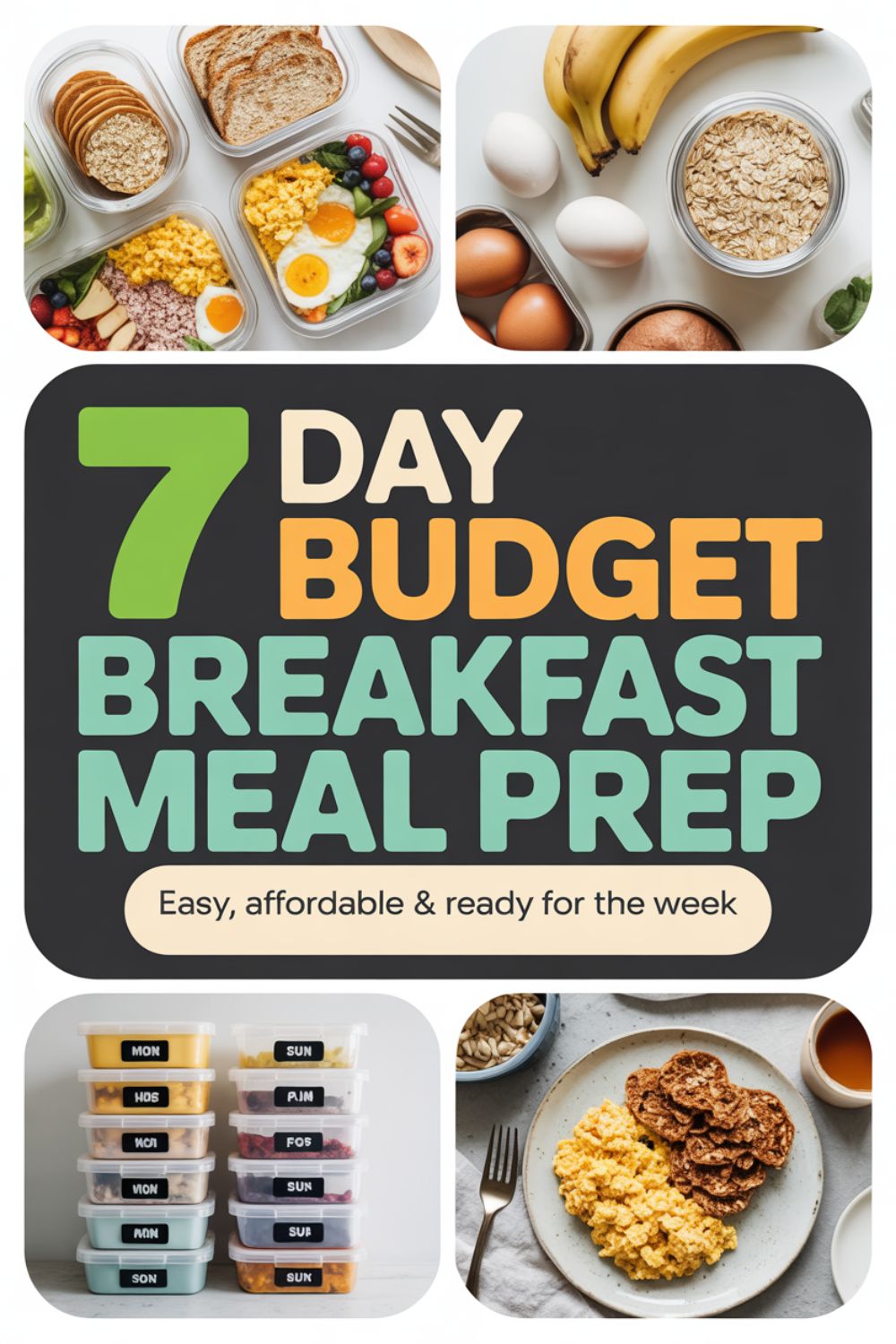
7-Day Budget Breakfast Meal Prep Anyone Can Afford
Let’s be real—mornings are chaos. You’re hitting snooze three times, scrambling to find matching socks, and suddenly breakfast becomes whatever sad granola bar you can grab on your way out. But here’s the thing: eating a decent breakfast shouldn’t cost you an arm and a leg or require you to wake up at 5 AM. I’ve been there, standing in front of my fridge at midnight on Sunday, trying to figure out how to eat well without going broke.
This seven-day meal prep strategy isn’t some Pinterest fantasy that requires seventeen specialty ingredients you’ll never use again. It’s practical, budget-friendly, and honestly? Once you get the hang of it, you’ll wonder why you ever tortured yourself with drive-through breakfast sandwiches that cost more than this entire week’s worth of food.
Why Meal Prepping Breakfast Actually Makes Sense
I used to roll my eyes at meal prep enthusiasts. Seemed like overkill, right? Then I added up what I was spending on coffee shop pastries and realized I could’ve bought a small island. The truth is, research from Mayo Clinic shows that eating a balanced breakfast improves concentration and mood throughout the day. Your brain literally functions better when you feed it properly in the morning.
But beyond the science, there’s the practical side. When you prep breakfast ahead, you’re making one smart decision that pays dividends all week. No more standing in front of the pantry wondering what’s edible. No more skipping breakfast entirely because you’re late. And definitely no more spending five bucks on a mediocre muffin.
The protein factor is huge here too. When you control what goes into your breakfast, you can make sure you’re actually getting enough protein to keep you full until lunch. According to research published in the National Institutes of Health, high-protein breakfasts help stabilize blood sugar levels throughout the entire day—not just the morning. That means fewer mid-morning crashes and way less temptation to raid the vending machine.
The Budget-Friendly Game Plan
Here’s where most meal prep advice goes off the rails—they assume you’ve got money to blow on specialty ingredients. My approach? Three core recipes that use overlapping ingredients so nothing goes to waste. We’re talking eggs, oats, bananas, peanut butter, and whatever frozen berries are on sale. That’s it.
The beauty of this system is that you’re not buying fifteen different things that’ll sit in your cabinet until they expire. You’re buying smart, using everything, and actually saving money. I’ve gotten my breakfast costs down to about two bucks per day, which is less than a single coffee at most places.
The Three Breakfast MVPs
Overnight Oats: This is the lazy person’s dream (I say that with love—I’m the lazy person). You literally dump ingredients in a jar the night before and breakfast makes itself while you sleep. Get Full Recipe for my basic overnight oats that you can customize a million ways.
Egg Muffin Cups: These little guys are like portable omelets that actually taste good cold. Make a dozen on Sunday, grab two on your way out the door all week. They’re packed with protein and whatever veggies you need to use up before they go bad.
Banana Pancake Meal Prep: Before you judge, hear me out. You can make a huge batch of protein pancakes, freeze them, and pop them in the toaster any morning. Game changer. Way better than those frozen waffles that taste like cardboard.
Speaking of easy breakfast wins, you might also love trying some high-protein breakfast ideas or this refreshing Mediterranean smoothie bowl that uses similar ingredients and keeps costs low.
Shopping Smart Without Losing Your Mind
The grocery store can be a budget-killing trap if you’re not careful. I’ve learned to shop with blinders on—stick to the list, avoid the fancy packaging, and hit up the discount produce section like it’s my job.
Here’s my actual shopping list for a week of breakfast meal prep for one person (double it if you’re feeding two):
- 18 eggs (the cheapest protein per serving, period)
- 2 cups rolled oats (buy the big canister, not the individual packets)
- 5-6 bananas (get them slightly green so they ripen throughout the week)
- 1 bag frozen mixed berries (fresh berries are great but frozen is cheaper and lasts forever)
- Peanut butter (or whatever nut butter is on sale—I’m not picky)
- Greek yogurt (plain is cheaper and healthier than flavored)
- Whatever vegetables look decent and cheap (bell peppers, spinach, and onions are my go-tos)
- Cheese (a little goes a long way in egg cups)
Total cost? Usually around fourteen to eighteen bucks, depending on what I already have at home. That breaks down to about two dollars per breakfast, sometimes less. Compare that to a drive-through breakfast sandwich at six bucks plus coffee, and you’re saving about thirty dollars a week. That’s real money.
Where to Cut Corners (And Where Not To)
Look, I’m all for saving money, but not at the expense of eating garbage. Buy the decent eggs. They don’t have to be the fancy organic free-range ones, but don’t get the cheapest of the cheap either. Same with oats—rolled oats are fine, but avoid the instant packets loaded with sugar.
Where you can absolutely save? Spices and flavoring. Generic vanilla extract works just fine. Store-brand cinnamon tastes identical to the name brand. And honestly, most “organic” labels on shelf-stable items are just marketing.
Meal Prep Essentials Used in This Plan
- Glass meal prep containers (5-pack) — I swear by these for storing everything. They don’t stain, don’t smell weird after washing, and you can actually see what’s inside.
- Silicone muffin liners — Worth every penny. Your egg muffins will pop right out and cleanup is basically nonexistent.
- Mason jars (16 oz, set of 6) — Perfect for overnight oats and chia pudding. Plus they look way cuter than random Tupperware.
- Budget Meal Planning Printables (Digital Download) — Weekly templates that actually make sense for real people
- 30 Days of No-Waste Breakfast Recipes (PDF Guide) — Every recipe uses ingredients from the core shopping list
- Meal Prep Made Simple Video Course — Step-by-step walkthrough of the whole system
Have questions about meal prep? Join our WhatsApp community where we share tips, recipe swaps, and budget hacks daily.
The Actual 7-Day Meal Prep Breakdown
Alright, here’s where theory meets reality. This is my actual weekly rotation that keeps me fed, sane, and not broke.
Sunday Prep Session (About 90 Minutes)
I know ninety minutes sounds like a lot, but trust me—it flies by when you’ve got a podcast going. Plus, you’re buying yourself seven stress-free mornings. That math works out.
Step 1: Make the Egg Muffin Cups
Preheat your oven, grab that muffin tin, and get cracking. I usually make twelve cups which gives me enough for six days (two per day) with no weird calculations. Beat your eggs, throw in diced vegetables, some cheese, salt, pepper, maybe hot sauce if you’re feeling spicy. Pour into the cups and bake for about twenty minutes.
While those are in the oven, move to step two.
Step 2: Prep Overnight Oats Jars
This is almost comically easy. In each jar: half cup oats, half cup milk (any kind works), spoonful of yogurt, spoonful of peanut butter, and whatever mix-ins you want. I usually do three jars with berries and three with banana and cinnamon. Stick them in the fridge and they’re ready to grab all week.
The base recipe for overnight oats is stupid simple, but if you want something more interesting, try these chocolate banana overnight oats or the pumpkin spice version that uses the same core ingredients with different flavorings.
Step 3: Pancake Time
Mix up a big batch of pancake batter—my go-to is mashed banana, eggs, oats, and a splash of vanilla. You can use a griddle pan or just a regular skillet. Make a ton of them, let them cool completely, then stack them with parchment paper in between and freeze.
The Weekly Schedule
Monday & Tuesday: Overnight oats (the berries one tastes better on day one). Grab a jar from the fridge, maybe top with some extra nuts if you’re feeling fancy. Done. You’re out the door in thirty seconds.
Wednesday & Thursday: Egg muffin cups (two per day) with a piece of fruit on the side. Pop them in the microwave for forty-five seconds if you want them warm, or just eat them cold—they’re good either way. I usually grab a banana or an apple to round it out.
Friday: Pancake day! Pull two from the freezer the night before, stick them in the toaster oven in the morning, and top with whatever you’ve got—peanut butter, yogurt, more fruit. FYI, this method also works great for weekend brunch when you don’t feel like cooking from scratch.
Saturday & Sunday: This is where I mix it up depending on what I’m feeling. Sometimes it’s the remaining overnight oats jars. Sometimes I make fresh scrambled eggs. Sometimes (let’s be honest) it’s leftover pizza. The point is, you’ve already eaten well five days in a row. A little flexibility on the weekend keeps you from burning out.
Making It Work When Life Gets Messy
Here’s what nobody tells you about meal prep: some weeks it works perfectly, and some weeks life throws you a curveball and suddenly it’s Wednesday and you haven’t even done your Sunday prep yet.
That’s okay. This isn’t about being perfect—it’s about having a system that works more often than it doesn’t. On weeks when I’m slammed, I focus on just the overnight oats because they require basically zero effort. That’s still better than buying breakfast every day.
The key is not to let one missed week derail you entirely. Just get back to it next Sunday. Nobody’s grading you on this.
When You’re Really Strapped for Time
Some weeks, even ninety minutes feels impossible. Here’s my emergency backup plan: the five-minute prep. Hard boil a dozen eggs (use an egg cooker if you have one—seriously life-changing), buy a container of plain yogurt, and keep bananas and peanut butter on hand.
Breakfast becomes: two hard-boiled eggs, yogurt with fruit, and you’re good. Not exciting, but it costs about a buck fifty and takes zero morning brain power. I’ve definitely done this more times than I care to admit.
Looking for more grab-and-go options? These make-ahead breakfast burritos and protein energy balls are perfect for chaotic mornings when you need something you can literally eat in the car.
Tools & Resources That Make Cooking Easier
- Handheld milk frother — Makes your homemade coffee feel fancy without the coffee shop price tag. Works great for protein shakes too.
- Portable blender bottle — For those mornings when you need to make a protein shake and run. Way easier than cleaning a full-size blender.
- Kitchen scale (digital) — Not mandatory but helpful if you’re trying to portion things out accurately. Also great for baking.
- Freezer-Friendly Breakfast Guide (Digital Download) — Everything you can make ahead and freeze, with exact reheating instructions
- Budget Grocery Shopping Template (Printable PDF) — Pre-filled with breakfast staples, just add your store’s prices
- Meal Prep Troubleshooting Handbook — Answers to every “why did this happen?” question you’ll have
Want weekly meal prep reminders and grocery lists sent to your phone? Join our free WhatsApp group for automated Sunday prep notifications.
The Protein vs. Carbs Debate (Simplified)
You’ve probably heard conflicting advice about breakfast macros. Some people swear by high-carb mornings, others are all about the protein. Here’s what I’ve learned from both research and personal experience: protein wins for most people.
When you start your day with a protein-heavy breakfast, you’re setting yourself up for stable energy. No dramatic blood sugar spike followed by a crash that makes you want to nap under your desk by 11 AM. The combination of protein and complex carbs (from oats or whole grain bread) keeps you satisfied way longer than a bagel or muffin ever could.
That said, everyone’s different. Some people do great with more carbs in the morning if they’re really active. The beauty of meal prepping is you can adjust the ratios to whatever works for your body. More eggs, less oats. More fruit, less protein powder. Whatever keeps you full and energized.
Plant-Based Protein Options
Not into eggs or dairy? No problem. You can absolutely make this work with plant-based proteins. Greek yogurt swaps out for coconut or soy yogurt pretty easily. Eggs can be replaced with tofu scramble in the muffin cups (which, honestly, tastes better than you’d think).
For the overnight oats, adding a scoop of plant-based protein powder bumps up the protein without eggs or dairy. Hemp seeds and chia seeds are also solid add-ins that increase protein and healthy fats. Peanut butter vs almond butter is mostly a personal preference thing—both work great nutritionally.
Real Talk About Food Waste
One of my favorite things about this system is how little food gets wasted. When you’re using the same ingredients across multiple recipes, everything actually gets used up. That bunch of spinach doesn’t wilt in the drawer because you throw it in the egg cups. The bananas get used in overnight oats before they turn into science experiments.
Pro move: if you’ve got vegetables that are about to go bad, just chop them up and add them to the next batch of egg muffins. Bell peppers, mushrooms, tomatoes, zucchini—pretty much anything works. You’re basically making a frittata in muffin form, which means rules don’t really apply.
For more ideas on using up ingredients efficiently, check out these vegetable-loaded breakfast recipes and this guide to meal prep with seasonal produce that helps you buy whatever’s cheapest that week.
Dealing with Picky Eaters (Kids or Adults)
If you’re meal prepping for kids or a partner who’s picky about food, the key is customization. Make the base recipes neutral, then let people add their own toppings or mix-ins.
For overnight oats, I set out bowls of berries, chocolate chips, coconut flakes, and nuts so everyone can make their jar their own. For egg muffins, I make half with just eggs and cheese (boring but universally acceptable) and half with all the vegetables I want to eat.
The pancakes are sneaky good for getting nutrition into reluctant eaters because you can blend almost anything into the batter and it mostly just tastes like pancakes. I’ve successfully hidden sweet potato, zucchini, and even beets in these things.
Scaling Up or Down
This system scales really easily whether you’re cooking for one or five. The formulas stay the same, you just multiply the quantities. A dozen eggs feeds one person for a week of egg muffins, so double that for two people, triple it for three, and so on.
The only thing that changes is storage. You’ll need more containers and more fridge space. If you’re feeding a family, consider doing a double batch of pancakes and storing half in the freezer for the following week. That way you’re not prepping every single Sunday—you’re creating a rotating system.
Frequently Asked Questions
How long do these prepped breakfasts actually last in the fridge?
Overnight oats stay good for five days, sometimes up to a week if your fridge is really cold. Egg muffins are best within five days but honestly I’ve pushed it to six or seven without issues. The pancakes should be frozen if you’re making them more than two days in advance. Just remember to check for any weird smells or texture changes—your nose knows.
Can I meal prep if I don’t have much freezer space?
Absolutely. Focus on the overnight oats and egg muffins which only need fridge space. Skip the pancakes or make a smaller batch to eat fresh within three days. You can also rotate—make pancakes one week, egg cups the next, so you’re not trying to cram everything in at once.
What if I get bored eating the same things every week?
Change up the flavors and toppings. Overnight oats alone can be done about fifty different ways—vanilla almond, chocolate peanut butter, apple cinnamon, tropical with coconut and mango. Same base recipe, completely different taste. For egg muffins, rotate your vegetable and cheese combinations. You’d be surprised how different spinach and feta tastes from peppers and cheddar.
Is meal prepping breakfast really cheaper than buying breakfast?
Way cheaper. This plan runs about fourteen to twenty dollars per week depending on where you shop. That’s roughly two dollars per breakfast. A fast food breakfast sandwich with coffee costs five to eight dollars minimum. Even a grocery store muffin and coffee is four to five bucks. The savings add up fast, especially if you’re buying breakfast daily.
Do I need special containers or will regular Tupperware work?
Regular Tupperware works fine, honestly. Glass containers are nice because they don’t absorb odors and you can microwave food in them, but plastic works too. Mason jars are perfect for overnight oats but any jar with a tight lid does the job. Don’t let not having “the right” containers stop you from starting.
Making This Work in Real Life
Look, I’m not going to pretend meal prepping breakfast is going to change your entire life or solve all your problems. But it does solve the very specific problem of “what am I going to eat for breakfast tomorrow?” seven times in a row. And that’s honestly pretty valuable.
The first few weeks might feel weird because you’re building new habits. You’ll probably forget to prep one Sunday and have to improvise. You might make a batch of something that doesn’t turn out great. That’s all normal. Keep adjusting until you find what works for your schedule, your taste buds, and your budget.
What I love most about this system is how forgiving it is. Miss a week? No big deal, start again next Sunday. Hate how the egg muffins turned out? Make pancakes instead next time. Ran out of berries? Use whatever fruit is cheap at the store. There’s no wrong way to do this as long as you’re feeding yourself real food that doesn’t break the bank.
Start small if you need to. Maybe just make the overnight oats this week. See how that goes. Add the egg muffins next week if you’re feeling ambitious. The goal isn’t perfection—it’s just having breakfast ready more often than not. Because when you’re not hungry and stressed in the morning, everything else gets a little bit easier.
Similar Posts
7-Day Cheap Meal Prep That Saves You Money
7-Day Cheap Meal Prep That Saves You Money 7-Day Cheap Meal Prep That Saves You Money Look, I get it. You’re staring at your grocery receipt like it just personally insulted your entire family tree. Food prices are ridiculous right now, and the idea of “meal prepping on a budget” sounds about as realistic as…
21 Mediterranean Spring Meal Prep Ideas That Actually Work
21 Mediterranean Spring Meal Prep Ideas That Actually Work 21 Mediterranean Spring Meal Prep Ideas That Actually Work Listen, I’m not going to pretend that meal prepping is some magical experience where you transform into a domestic goddess overnight. But here’s the thing—when you nail it with Mediterranean spring recipes, you’re basically setting yourself up…
7-Day Make-Ahead Freezer Meals for Busy Weeks
7-Day Make-Ahead Freezer Meals for Busy Weeks 7-Day Make-Ahead Freezer Meals for Busy Weeks Look, I’m not going to pretend that staring into an empty fridge at 7 PM on a Wednesday is some sort of culinary adventure. It’s exhausting. And the siren song of takeout menus gets louder every time you realize you forgot…
17 Vegetarian Spring Meal Prep Recipes That’ll Make You Forget Takeout Exists
17 Vegetarian Spring Meal Prep Recipes That’ll Make You Forget Takeout Exists 17 Vegetarian Spring Meal Prep Recipes That’ll Make You Forget Takeout Exists Spring’s here, and if you’re anything like me, you’re tired of opening the fridge to find sad leftovers and wilted greens. Let’s fix that. These 17 vegetarian spring meal prep recipes…
21-Day No-Stress Meal Prep Plan
21-Day No-Stress Meal Prep Plan: Your Complete Guide to Easy Weekly Meals 21-Day No-Stress Meal Prep Plan Look, I get it. The thought of spending your entire Sunday meal prepping for the week sounds about as appealing as doing your taxes while stuck in traffic. But here’s the thing—what if I told you that three…