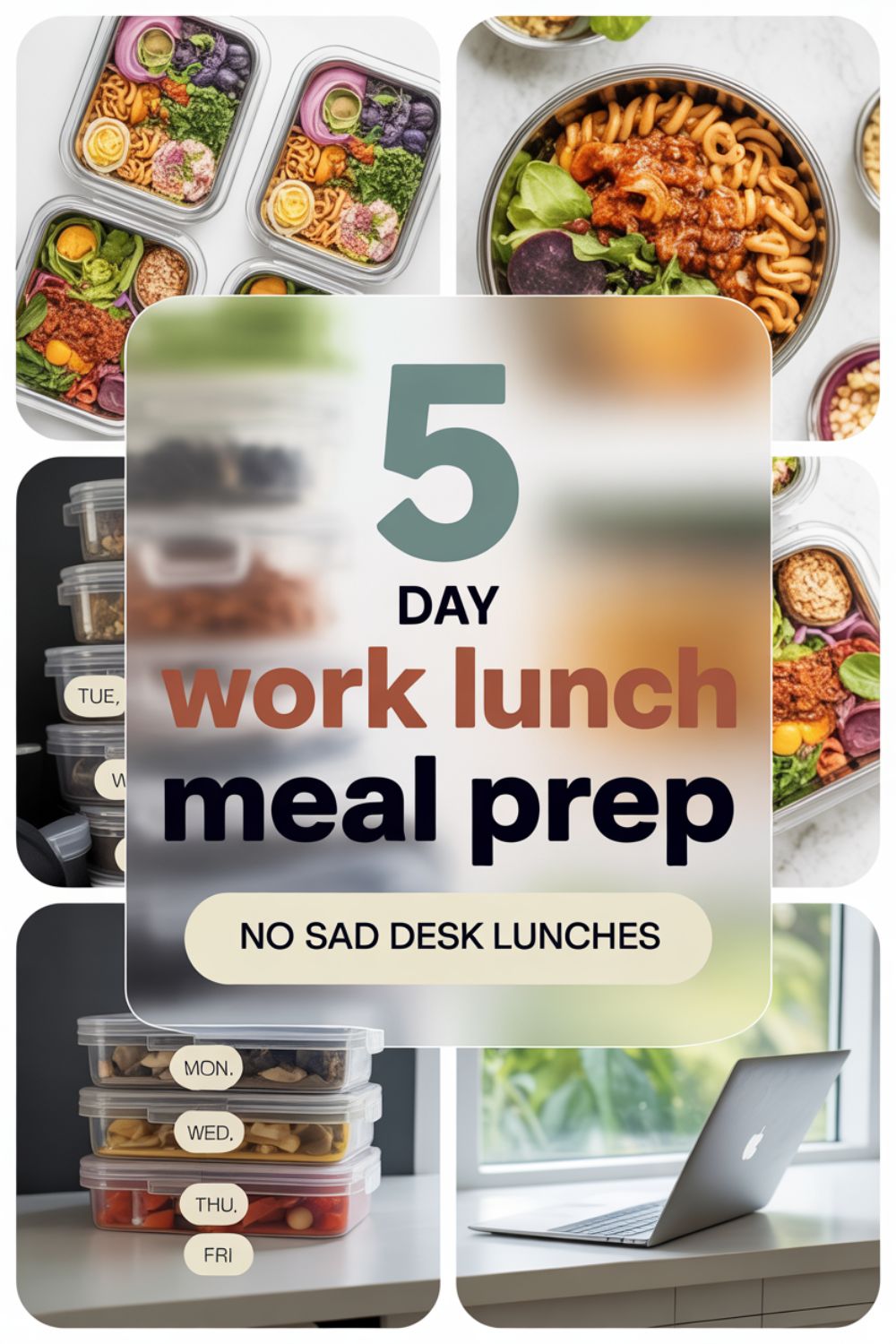
5-Day Work Lunch Meal Prep You’ll Look Forward To
Look, I get it. Meal prep sounds about as exciting as watching paint dry on a Tuesday afternoon. But hear me out—what if your lunch break actually became the highlight of your workday instead of that sad desk drawer sandwich situation you’ve got going on?
The thing about meal prep is that most people approach it like they’re training for some kind of culinary Olympics. They spend their entire Sunday cooking seventeen different dishes while simultaneously having a breakdown about portion sizes. No wonder everyone gives up after week two.
Here’s the truth: meal prep doesn’t have to be complicated, and it definitely shouldn’t make you dread your lunches. In fact, when you do it right, you’ll find yourself genuinely excited about what’s waiting in your fridge. That’s what we’re going for here—five days of lunches that actually make you want to skip the sad break room vending machine.
Why Meal Prep Actually Works (When You Don’t Overthink It)
Before we get into the actual plan, let’s talk about why this matters. According to research on meal preparation, having pre-prepared meals reduces portion sizes and helps you reach nutrition goals way more effectively than winging it every day.
Think about your typical workday lunch scenario. You’re starving by noon, everything takes forever to decide, and you end up either spending too much on takeout or eating whatever’s quickest. Neither option leaves you feeling great, and your wallet definitely isn’t happy about it.
Meal prep flips that script entirely. You make decisions once, cook efficiently, and then coast through the week with zero stress. Plus, the Harvard Nutrition Source points out that meal planning helps you maintain a balanced diet and avoid the calorie-laden takeout trap.
Prep your veggies Sunday night, thank yourself all week. Seriously, just wash, chop, and store everything in one session. Future you will be eternally grateful.
The Strategic Approach to Five Days
Here’s where most meal prep plans fall apart—they give you five completely different meals that require twenty ingredients you’ll use once. Not helpful. We’re going smarter than that.
The secret is building around a few core proteins and rotating your sides and flavors. You’re essentially creating a foundation and then remixing it so your taste buds don’t get bored. It’s like having a capsule wardrobe, but for lunch.
Monday: Mediterranean Power Bowl
Start your week strong with something that feels light but keeps you full until dinner. We’re talking quinoa as your base, grilled chicken thighs (way more forgiving than breasts), cherry tomatoes, cucumber, red onion, feta, and a killer lemon-herb dressing.
The beauty here is that everything can be prepped ahead. I use these glass meal prep containers because they don’t absorb smells and they’re dishwasher-safe. Life’s too short for stained plastic, you know?
Pro move: Keep your dressing separate until you’re ready to eat. Those tiny dressing containers are clutch for this. Nobody wants soggy lettuce at 11am when you pack your lunch.
If you’re into Mediterranean flavors, you might also love Get Full Recipe for our herb-crusted salmon variation.
Tuesday: Asian-Inspired Stir-Fry Situation
Day two switches things up completely. Same protein source if you batch-cooked chicken, but now we’re going for soy-ginger vibes. Brown rice, broccoli, snap peas, carrots, and that beautiful glossy sauce that makes everything taste like takeout.
Here’s a trick that changed my meal prep game: I roast my vegetables instead of stir-frying them when I’m prepping. Hear me out—they hold up better throughout the week, and you’re not dealing with that weird reheated stir-fry texture. Just toss everything in some avocado oil, spread it on a sheet pan, and let the oven do its thing.
The sauce goes in a separate container until lunch. Trust the process. Speaking of Asian-inspired meals, our Get Full Recipe for Korean beef bowls uses a similar approach with even bolder flavors.
Double your sauce recipes and freeze half. Next time you need flavor in a hurry, you’re already winning.
Wednesday: Taco Bowl Reality Check
By midweek, you need something that feels indulgent without derailing everything. Enter the taco bowl—basically all the good parts of tacos without the mess of shells getting soggy in your bag.
Black beans, seasoned ground turkey or beef, romaine, pico de gallo, corn, a bit of cheese, and some Greek yogurt standing in for sour cream. The whole thing comes together in about twenty minutes if you’ve got your mise en place sorted.
I season my meat with this salt-free taco seasoning because the store-bought packets are basically sodium bombs with some cumin thrown in. You’ll taste the difference, and your body will thank you.
For more Mexican-inspired lunch ideas, our Get Full Recipe for chicken burrito bowls hits similar notes with a cilantro-lime twist.
Thursday: The Grown-Up Lunchable
Sometimes you just want to graze, and Thursday is perfect for that. This isn’t actually a hot meal—it’s a protein box situation with sliced turkey, cheese cubes, whole grain crackers, cherry tomatoes, hummus, and some fruit.
The genius of this lunch is that it requires zero reheating and still feels substantial. I portion everything into divided containers so nothing gets weird together. It’s basically adult snack time, and IMO, we don’t normalize that enough.
Pack it with some whole grain crackers and you’ve got yourself a balanced meal that doesn’t need a microwave. Perfect for those days when the break room microwave is claimed by someone reheating fish. We all know that person.
Meal Prep Essentials Used in This Plan
- Glass Meal Prep Containers (5-Pack) – Leak-proof, microwave-safe, and they don’t stain like plastic. Game changer for keeping everything fresh.
- Mini Dressing Containers – Keep your salads crisp and your sauces separate until it’s time to eat. Small investment, massive payoff.
- Quality Sheet Pans – Heavy-duty pans that won’t warp in the oven. Perfect for roasting all your vegetables at once without any drama.
- Digital Recipe Collection: “30-Day Lunch Blueprint” – Complete meal prep guide with shopping lists, nutritional breakdowns, and swap options for dietary restrictions.
- Meal Prep Master Class (Digital Course) – Video tutorials showing exactly how to prep efficiently, plus troubleshooting for common mistakes.
- Weekly Planning Templates (PDF Download) – Printable grocery lists and prep schedules that actually make sense for real life, not Instagram perfection.
- Join our WhatsApp Meal Prep Community – Connect with others who are actually doing this week after week. Share wins, swap recipes, troubleshoot disasters together.
Friday: Pasta Salad Victory Lap
You made it to Friday, and you deserve something that feels celebratory. Cold pasta salad with roasted vegetables, chickpeas, feta, and a bright vinaigrette checks all the boxes.
The cool thing about pasta salad for meal prep is that it actually gets better as the week goes on. The flavors meld together, everything gets more cohesive, and by Friday you’re eating something that tastes like you put way more effort in than you actually did.
I use whole wheat rotini because it holds up better than regular pasta and adds some fiber to keep you satisfied. Cook it just shy of al dente since it’ll soften slightly in the fridge.
For another pasta-forward option that works great cold, try our Get Full Recipe for the pesto orzo salad—same concept, different flavor profile.
The Smart Shopping Strategy
Now that you know what you’re making, let’s talk about actually getting the stuff without spending three hours at the grocery store or accidentally buying ingredients for meals you’re not even making.
Here’s my approach: shop once, cook twice. That means one trip for everything, then you’re splitting your prep into two shorter sessions instead of one marathon Sunday cook-off. Way less overwhelming, and you’re not destroying your entire weekend.
The Core Shopping List
Proteins: Chicken thighs, ground turkey or beef, sliced deli turkey, canned chickpeas. Notice how we’re using chicken multiple ways? That’s the efficiency talking.
Grains: Quinoa, brown rice, whole wheat pasta, whole grain crackers. These are your bases that keep you full and satisfied.
Vegetables: Cherry tomatoes, cucumber, red onion, broccoli, snap peas, carrots, romaine lettuce, bell peppers. Buy what’s on sale and adjust accordingly. Frozen vegetables are totally fine too—actually, the nutritional difference between fresh and frozen produce is basically negligible, and frozen often has less waste.
Flavor makers: Feta cheese, hummus, Greek yogurt, avocado, lemon, fresh herbs. This is where your meals go from boring to something you’d actually pay $14 for at a lunch spot.
For organizing your shopping and keeping track of what you need versus what you already have, check out these meal planning templates that break everything down by store section.
Take a photo of your fridge before shopping. Sounds ridiculous, works brilliantly. You’ll stop buying duplicate ingredients and actually use what you have.
Prep Day Game Plan
Sunday afternoon, you’re doing the bulk of your work. But we’re being strategic about it because nobody wants to spend four hours straight in the kitchen when they could be literally doing anything else.
Phase One: Foundation (45 minutes)
Start with your grains and proteins since they take the longest. Get your quinoa and brown rice going—they can cook while you’re handling everything else. Season your chicken and get it in the oven.
While that’s happening, wash and chop all your vegetables. I mean all of them. This is where those good chef’s knives earn their keep. A sharp knife makes this go so much faster, and you’re way less likely to lose a fingertip.
Everything gets stored in containers or bags, labeled with what it is. Future Monday-morning you is not going to remember which container has the diced cucumber versus the diced onion without labels.
Phase Two: Assembly (30 minutes)
Now you’re basically playing lunchbox Tetris. Your grains are done, your protein is resting, and all your vegetables are ready to go. Start portioning everything into your containers based on the meals we planned out.
Keep your sauces and dressings separate—I cannot stress this enough. Those little containers I mentioned earlier? This is their moment to shine. Wet ingredients touching dry ingredients for five days equals sadness.
Wednesday’s taco bowl and Friday’s pasta salad can be mostly assembled now. Thursday’s protein box definitely gets assembled completely. Monday and Tuesday need their sauces kept separate until eating time.
Tools & Resources That Make Cooking Easier
- Sharp Chef’s Knife Set – Makes chopping vegetables actually enjoyable instead of a dangerous chore. Worth every penny.
- Digital Kitchen Scale – For those times when you want to actually track portions or follow a recipe precisely. Also great for baking.
- Silicone Baking Mats – Stop using parchment paper for everything. These are reusable, nothing sticks, and cleanup is a breeze.
- “Batch Cooking Mastery” eBook – Detailed guide on how to efficiently cook large quantities without feeling overwhelmed or making rookie mistakes.
- Flavor Pairing Guide (Digital) – Takes the guesswork out of what goes with what. Never make a weird flavor combination again.
- Storage & Safety Guide (PDF) – Know exactly how long everything lasts, how to store it properly, and when it’s time to toss it.
- Join our WhatsApp Meal Prep Community – Real people sharing what worked, what flopped, and troubleshooting together. Way more useful than scrolling perfect Instagram posts.
Making It Work for Your Actual Life
Let’s get real for a second. The Instagram-perfect meal prep photos are great and all, but your life probably doesn’t look like that. Maybe you’ve got dietary restrictions, a picky partner, or a schedule that makes Sunday prep impossible. That’s fine—we adapt.
The Dietary Restriction Remix
Going plant-based? Swap the chicken for tempeh or extra-firm tofu. Use the same marinades and seasonings—they work just as well. The Tuesday stir-fry especially benefits from crispy tofu if you press it properly and get it golden in the oven.
Keto or low-carb? Replace the grains with cauliflower rice or spiralized vegetables. Everything else stays basically the same. You’re getting the same flavor profiles without the carbs.
Gluten-free? You’re actually in good shape here since most of this plan naturally avoids gluten. Just check your soy sauce (use tamari instead) and swap the pasta for a gluten-free version on Friday.
For more ideas on customizing meals to fit different dietary needs, our collection of specialized meal plans covers everything from vegan to paleo to elimination diets.
When Sunday Isn’t an Option
Maybe you work weekends or Sunday is sacred family time. No problem. Split your prep into two evenings during the week—say Tuesday and Thursday nights. Prep three days’ worth each time instead of all five at once.
Or go full weeknight mode and prep everything the night before. It’s not traditional “meal prep,” but it still saves you from decision fatigue and takes way less time than cooking from scratch every day.
The “Flexible Meal Prep” digital guide actually breaks down multiple scheduling scenarios with exact timing for each. It’s been a lifesaver for people with unpredictable schedules.
The Nutritional Reality Check
Let’s talk about what you’re actually putting in your body, because that matters more than fitting into some arbitrary meal prep mold.
Each of these lunches clocks in around 400-550 calories depending on your portions and how heavy you go with things like cheese and dressing. That’s a solid lunch range that keeps you satisfied without making you need a nap at your desk.
You’re getting a good protein range (25-35g per meal), healthy fats from things like avocado and olive oil, and complex carbs that actually sustain your energy instead of spiking your blood sugar and leaving you crashed by 3pm.
The vegetable situation is also on point—you’re hitting at least 2-3 servings per lunch, which is more than most people get in an entire day. That fiber keeps things moving (if you know what I mean) and helps with satiety.
If you want to dive deeper into the nutritional science behind these choices, check out the Mayo Clinic’s research on balanced meal planning, which emphasizes this exact approach to portion control and nutrient distribution.
Add a piece of fruit or a handful of nuts to each lunch. Instant snack solved, extra nutrition added, zero extra thinking required.
When Things Go Wrong (They Will)
You’re going to mess something up. Everyone does. Here’s how to handle the most common disasters without spiraling into takeout for the rest of the week.
The Soggy Salad Syndrome
If your Monday bowl gets sad and wilted, you didn’t keep the dressing separate or you over-dressed it during prep. Next time, pack dressing on the side and add it right before eating. For leafy greens, consider packing them separately from wet ingredients entirely.
Flavor Fatigue by Wednesday
This happens when you don’t vary your seasonings enough or you’re eating the same base for too many days in a row. The fix: hot sauce, fresh herbs, lemon juice, or different toppings. Keep these at work if possible—they transform everything.
The Overcooking Disaster
Chicken thighs are forgiving, but if you nuked them in the oven too long, they’re going to be dry by midweek. Solution: slightly undercook during prep since they’ll continue cooking when reheated. Better to have them finish in the microwave than start out overcooked.
Weird Texture Issues
Some vegetables get mushy when meal prepped. Cucumbers and tomatoes hold up well. Zucchini and mushrooms? Not so much. Stick with heartier vegetables for prep-ahead meals, or add delicate ones fresh each morning.
The community in our WhatsApp group has basically seen every possible meal prep fail and can troubleshoot faster than you can Google it. Real talk—it’s worth joining just for the collective wisdom.
Scaling Up or Down
Maybe you’re prepping for two people, or just for yourself but want some dinner leftovers in the mix. The beauty of this system is how easily it scales.
Cooking for two? Double everything. Your grocery bill goes up, but you’re still doing the same amount of actual work since you’re cooking in the same number of pots and pans. Just make sure you have enough storage containers to handle the volume.
Want dinner coverage too? Triple your proteins and grains, keep your vegetables the same proportionally. You might need to split your prep into two sessions just because of oven and stovetop space, but the efficiency is still way better than cooking from scratch twice a day.
Going solo and want variety? Make half portions of everything and rotate through them. You’ll have more diversity in your week without wasting food or getting overwhelmed by quantities.
If you’re feeding a family with different preferences, our family meal prep strategies show you how to create a base everyone eats, then customize individual portions with different toppings and sides.
The Real Cost Breakdown
Let’s talk money because that’s usually the elephant in the room when people consider meal prep.
This five-day plan, buying everything new (not using anything from your pantry), runs about $45-60 depending on where you shop and what’s on sale. That’s roughly $9-12 per lunch.
Compare that to buying lunch out every day at even $10-12 per meal, and you’re saving minimum $10-15 per week. Over a year? That’s $520-780 back in your pocket. For doing something that also makes you healthier and reduces stress.
The upfront investment in good containers and a few tools might feel like a lot—maybe $50-75 if you’re starting from nothing. But you’re using these things every single week, so amortized over even three months, it’s basically nothing.
Want to cut costs further? Buy proteins when they’re on sale and freeze them. Shop seasonal produce. Use dried beans instead of canned. The flexibility is built in.
Frequently Asked Questions
How long do these prepped meals actually last in the fridge?
Most of these lunches are good for 4-5 days when stored properly in airtight containers. The protein box (Thursday’s lunch) is best eaten within 3 days since it has deli meat. If you’re prepping on Sunday, consider freezing Friday’s lunch and thawing it Thursday night. Cooked grains and proteins freeze beautifully—just keep wet ingredients separate until you’re ready to eat.
Can I prep these if I don’t have access to a microwave at work?
Absolutely. Monday’s Mediterranean bowl, Thursday’s protein box, and Friday’s pasta salad are all designed to taste great cold. For Tuesday and Wednesday’s meals, consider using a thermos food jar—heat your meal in the morning, pour it into the thermos, and it’ll stay hot until lunch. It’s a game-changer for microwave-free offices.
What if I get sick of eating the same proteins all week?
That’s why we’re using different seasonings and preparations for the same base protein. The chicken on Monday tastes completely different from Tuesday’s version. But if you’re still over it, split your protein prep—maybe chicken for the first three days and ground turkey for the last two. You’re only adding one extra cooking step, and the variety keeps things interesting.
Is meal prep worth it if I live alone?
Even more so, honestly. When you’re cooking for one, the temptation to just grab something quick (and usually less healthy) is huge. Having meals ready means you’re not wasting food on ingredients you’ll never finish, and you’re not paying the single-person surcharge on takeout. Plus, most of these recipes scale down easily if five days feels like too much.
What about food safety? How do I know if something’s gone bad?
Trust your senses—if it smells off, looks weird, or tastes funky, toss it. Generally, cooked proteins last 3-4 days in the fridge, while cooked grains and most vegetables last 4-5 days. Label everything with prep dates so you’re not guessing. When in doubt, freezing extends everything’s life significantly. If you’re new to this, the storage and safety guide breaks down exact timelines for every ingredient type.
Making Peace with Imperfection
Here’s the thing nobody tells you about meal prep: it’s not going to be perfect, and that’s completely fine. Some weeks you’ll nail it. Other weeks you’ll realize on Thursday that you forgot to pack your lunch and end up at that mediocre sandwich place again.
The goal isn’t perfection. It’s progress. It’s having more good lunch days than bad ones. It’s saving money and time while actually enjoying what you’re eating. If you prep four out of five lunches, that’s still way better than prepping zero lunches.
Start small if this whole thing feels overwhelming. Maybe just prep Monday through Wednesday your first week. See how it goes. Add Thursday and Friday when you’re ready. There’s no meal prep police coming to check if you followed the plan exactly.
The people in our meal prep community will tell you the same thing—everyone starts with grand plans and perfect containers lined up in their fridge. Real life happens. You adapt. You figure out what works for your schedule, your kitchen, and your taste preferences. That’s what makes it sustainable.
Your Week, Transformed
Imagine this: It’s Monday morning. Instead of staring blankly into your fridge wondering what you’ll do for lunch, you grab your prepared container, toss in the dressing, and head out the door. No decision fatigue. No scrambling. No sad desk lunch.
Tuesday through Friday flow the same way. You’re saving time, saving money, and actually eating food you enjoy. Your coworkers start asking what you’re having because it actually looks and smells good. You have energy through the afternoon instead of fighting the post-lunch crash.
That’s what this is really about. Not some Pinterest-perfect meal prep aesthetic, but genuine improvement in your daily life. Better food, less stress, more money in your account, and weekdays that don’t feel like such a slog.
The five-day plan we covered gives you a solid framework. You can follow it exactly, or use it as a jumping-off point to create your own rotation. Either way, you’re taking control of your lunches instead of letting them control you.
So grab those containers, make your shopping list, and give yourself permission to figure this out as you go. Your future self—the one who’s not staring sadly at another overpriced salad or mystery burrito—will thank you.