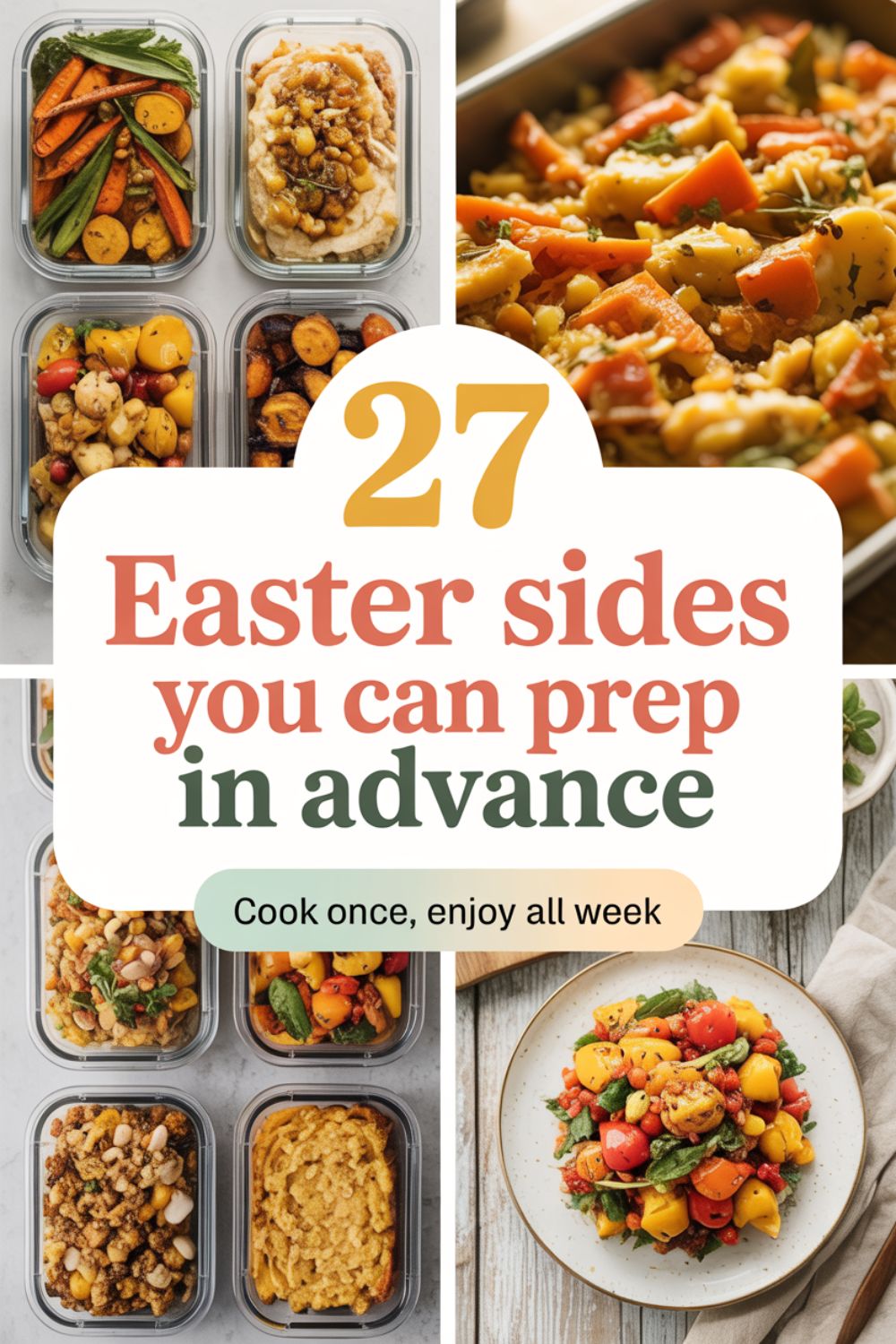
27 Easter Side Dishes You Can Prep in Advance
Let me guess—you’re already picturing Easter Sunday. The perfectly glazed ham, the table set with your good dishes, everyone gathered around. Beautiful, right? Now picture yourself scrambling in the kitchen thirty minutes before everyone arrives, trying to coordinate seven different dishes while simultaneously hunting for that serving spoon you swear you put somewhere logical.
Yeah, that’s the version nobody posts on Instagram.
Here’s the thing about Easter: it doesn’t have to be that chaotic. I’ve hosted enough Easter dinners to know that the secret isn’t having superhuman multitasking skills or waking up at 4 AM. It’s about working smarter, not harder. And by “smarter,” I mean prepping your side dishes ahead of time so you can actually enjoy the holiday instead of living in your kitchen.
I’m talking about dishes that taste even better the next day, recipes that travel well from fridge to oven, and foods that won’t make you second-guess your life choices when you’re reheating them. Because honestly, who has time for complicated the day-of? I’ve rounded up 27 Easter side dishes that you can prep in advance—some the night before, some even a week out. No stress, no last-minute panic, just good food and more time with the people you actually invited over.
Why Prepping Ahead Is Your Secret Weapon
Look, I get it. There’s something appealing about the idea of cooking everything fresh the morning of Easter. But let’s be real—that’s a fantasy that ends with you stress-eating chocolate eggs at 10 AM while something burns in the oven.
When you prep side dishes in advance, you’re not cutting corners. You’re being strategic. Some dishes genuinely taste better after sitting overnight—flavors meld, textures improve, and you get to skip the “does this need more salt?” panic while your in-laws are ringing the doorbell. Plus, your oven and stovetop real estate on Easter morning? Precious. Every dish you can make ahead is one less thing fighting for space when you’re trying to get that ham to temp.
The best part? Most people won’t even know you made these days in advance. They’ll just think you’re some kind of culinary wizard who has it all together. Let them think that. You’ll know the truth: you’re just someone who values their sanity.
The Classics That Never Disappoint
Scalloped Potatoes
These are the overachievers of the side dish world. Layer thin potato slices with cream, cheese, and garlic, then stick the whole thing in the fridge overnight. The potatoes actually absorb the cream better this way, so you get this incredible creamy texture without any of the watery disappointment that sometimes happens when you rush them.
Come Easter morning, just pop the dish in the oven while you’re getting ready. The smell alone will make you feel like you have your life together. I use this ceramic baking dish because it distributes heat evenly and looks good enough to go straight from oven to table.
Green Bean Casserole
Before you roll your eyes at this one—yes, I know it’s been done to death. But there’s a reason it shows up at every holiday dinner. It’s reliable, people actually eat it, and you can assemble the whole thing up to two days in advance.
Skip the canned cream of mushroom soup if you can. Making your own mushroom sauce takes maybe ten extra minutes and tastes infinitely better. The crispy onions on top? Add those right before baking, not before. Unless you enjoy soggy disappointment, which I’m guessing you don’t.
Honey Glazed Carrots
Carrots are weirdly forgiving when it comes to make-ahead sides. You can roast them completely, let them cool, and refrigerate for up to three days. The honey glaze actually gets better as it sits—it thickens slightly and clings to the carrots better than when it’s fresh.
Reheat them in a cast iron skillet with a tiny bit of butter, and they’ll look and taste like you just made them. According to research on carrot nutrition, they’re also packed with beta-carotene and antioxidants, so you can feel slightly virtuous while enjoying them.
For more veggie-forward ideas that work great for meal prep, check out these plant-based meal prep recipes that use similar techniques.
The Crowd-Pleasers That Travel Well
Deviled Eggs
You can prep deviled eggs up to two days ahead. The trick is storing the whites and the filling separately until you’re ready to serve. Sounds fussy, I know, but it takes five seconds to pipe the filling back in, and your eggs won’t get watery or weird-looking.
I bought this deviled egg carrier after one too many disasters transporting eggs in regular containers. Worth every penny if you’re taking these anywhere. Also, if you’re feeling fancy, a touch of smoked paprika on top never hurt anyone.
Coleslaw
Hot take: coleslaw is better when it’s not freshly made. The cabbage needs time to soften slightly and absorb the dressing. Make it the night before, and by Easter, you’ll have perfectly dressed slaw instead of that crunchy, dry situation that happens when the dressing hasn’t had time to work its magic.
Just don’t add any crunchy toppings (nuts, crispy noodles, whatever) until right before serving. You’re welcome.
Pasta Salad
Pasta salad is basically designed to be made ahead. The noodles soak up the dressing overnight, which means you’ll probably need to add a splash more dressing before serving, but that’s a feature, not a bug. It gives you control over how dressed it is.
I like using this large mixing bowl with a lid for pasta salad—makes tossing and storing infinitely easier. Add your proteins (if you’re using any) right before serving to keep them from getting mushy.
Meal Prep Essentials Used in This Plan
If you’re serious about making Easter (or any holiday, really) less stressful, these are the tools and resources that actually earn their keep in my kitchen:
Physical Products:
- Glass meal prep containers with snap lids – Game changer for storing prepped ingredients separately. They’re oven-safe, microwave-safe, and don’t stain like plastic.
- Instant-read thermometer – Takes the guesswork out of reheating casseroles and checking if that ham is actually done.
- Silicone baking mats – Zero sticking, zero cleanup, and they make roasted veggies come out perfectly every time. I use these on everything short of cereal bowls.
Digital Resources:
- 7-Day Make-Ahead Freezer Meals – If the prep-ahead approach works for you here, this plan takes it even further with full meals you can freeze.
- 30 Easy Meal Prep Recipes for the Entire Week – Solid foundation if you want to extend this strategy beyond holidays.
- 21-Day No-Stress Meal Prep Plan – Basically a masterclass in cooking once and eating multiple times without losing your mind.
The Sneaky Make-Aheads Most People Don’t Think Of
Roasted Asparagus
Here’s the thing about asparagus: you don’t want to fully roast it ahead of time because it’ll turn into sad, olive-green mush when you reheat it. But you can absolutely prep it. Trim the ends, toss with olive oil and seasonings, and arrange on a sheet pan up to a day ahead. Cover with plastic wrap and refrigerate.
On Easter, just slide it into the oven for 12-15 minutes. Done. It’ll taste fresh, look vibrant, and you didn’t have to fumble with asparagus spears while trying to time everything else. Research shows asparagus is loaded with folate and vitamins, which is a nice bonus.
Cranberry Sauce
I know, I know—cranberry sauce is more of a Thanksgiving thing. But hear me out. A lot of Easter hams pair beautifully with something tart and sweet, and cranberry sauce is shockingly easy to make from scratch. Plus, it’s one of those dishes that tastes better after sitting for a few days.
Make it up to a week ahead, store it in a jar, and forget about it until Easter. You’ll look like you put in way more effort than you actually did.
Dinner Rolls (Dough)
You can’t fully bake rolls ahead, but you can prep the dough, let it rise, shape the rolls, and then freeze them. On Easter morning, pull them out to thaw and rise again (takes about 2-3 hours), then bake fresh. The smell of fresh bread baking while everyone’s arriving? *Chef’s kiss*.
I use this dough rising bucket with measurements marked on the side. Makes it way easier to tell when your dough has actually doubled.
If you’re into this kind of strategic meal planning, you might love these sheet pan meal prep ideas that use similar batch-cooking principles.
The Wildcard Options That Impress
Gratin Dauphinois
This is basically fancy scalloped potatoes, but French. Same concept—thinly sliced potatoes baked in cream—but you use a mandoline to get them paper-thin, and there’s usually some garlic and nutmeg involved. Assemble it the day before, refrigerate, and bake day-of.
People will think you’re showing off. You’ll know you just sliced potatoes really thin and dumped cream on them. Win-win.
Roasted Brussels Sprouts with Bacon
Brussels sprouts get a bad rap, mostly from people who’ve only had them boiled into submission. Roasted with bacon? Completely different food. You can prep these by trimming and halving the sprouts and cooking the bacon ahead. Store them separately in the fridge.
On Easter, toss the sprouts with the bacon fat (yes, really), roast for 20 minutes, then toss with the crumbled bacon. The slight bitterness of the sprouts balances perfectly with the salty bacon. I use this splatter guard when cooking bacon because I value my stovetop and my sanity.
Butternut Squash Soup
Soup as a side dish might sound weird, but serve it in small cups or bowls as a starter, and suddenly you’re fancy. Butternut squash soup is one of those magical things that tastes better after a day or two in the fridge. Make it up to three days ahead, store it, and reheat gently on the stovetop.
Top with a swirl of cream and some toasted pumpkin seeds right before serving. According to nutritional data on winter squash, butternut squash is also an excellent source of vitamin A and fiber.
Sweet Potato Casserole
The one with the marshmallows on top that’s basically dessert masquerading as a side dish? Yeah, you can absolutely make this ahead. Assemble the whole thing—sweet potatoes, butter, sugar, the works—and refrigerate for up to two days. Hold off on adding the marshmallow topping until right before you bake it, unless you want pre-melted marshmallow sadness.
Bake until it’s hot and bubbly with those perfectly toasted marshmallows on top. No one needs to know you made it on Thursday.
The Salads That Actually Hold Up
Broccoli Salad
This is one of those mayonnaise-based salads that actually benefits from sitting overnight. The broccoli stays crunchy (because raw broccoli is basically indestructible), and the dressing gets all cozy with the other ingredients.
Add any nuts or seeds right before serving to keep them from getting soggy. I’m partial to sunflower seeds in this one, but almonds work great too.
Seven-Layer Salad
The Instagram-worthy one you assemble in a clear glass bowl so everyone can see all the layers? That one. Make it the night before, cover tightly with plastic wrap, and refrigerate. The layers stay distinct, and the lettuce on the bottom doesn’t wilt because the mayo-based dressing acts as a barrier.
It’s old-school, but it works. Plus, it looks impressive, which is half the battle.
Caesar Salad (Dressing)
You can’t dress a Caesar salad ahead—that’s a soggy nightmare—but you can absolutely make the dressing several days in advance. Real Caesar dressing, the kind with anchovies and raw egg yolk (or mayo if you’re skipping the raw egg), gets better as it sits.
Store it in a jar in the fridge, shake it up on Easter, and toss with fresh romaine and croutons right before serving. Mayo Clinic recommends avoiding raw eggs for certain groups, so adjust your recipe accordingly.
Speaking of salads that travel well, these healthy meal prep bowls use similar ingredient combinations that hold up great in the fridge.
The Warm Grain Sides
Wild Rice Pilaf
Rice dishes are shockingly good at being made ahead. Cook your wild rice pilaf completely, let it cool, and refrigerate for up to three days. Reheat it with a splash of chicken stock to keep it from drying out, and it’ll taste fresh.
Add any fresh herbs (parsley, chives, whatever) after reheating, not before. Herbs get sad and brown when reheated.
Quinoa Salad
Quinoa is one of those grains (okay, technically it’s a seed, but who’s counting?) that’s basically made for meal prep. It doesn’t get mushy, it absorbs dressings well, and it stays good in the fridge for days.
Mix it with roasted vegetables, feta, and a lemon vinaigrette, and you’ve got a side dish that works cold or at room temperature. Bring it to Easter already dressed, and you’re done. For more grain-based meal prep inspiration, check out these budget meal prep recipes that stretch ingredients beautifully.
Cornbread Stuffing
Stuffing isn’t just for Thanksgiving. A good cornbread stuffing with sausage and herbs pairs beautifully with Easter ham. Make the cornbread a few days ahead, let it go slightly stale (this is actually ideal for stuffing), then assemble the whole dish the day before Easter.
Bake it covered for most of the cooking time, then uncover for the last 15 minutes to get that crispy top. I use this Dutch oven for stuffing because it’s the perfect size and goes from stovetop to oven.
Tools & Resources That Make Cooking Easier
These aren’t necessarily Easter-specific, but they’re the difference between “I enjoy cooking” and “why do I keep doing this to myself?”
Physical Products:
- OXO Good Grips mandoline slicer – For those paper-thin potato slices in gratins. Comes with a safety guard so you keep all your fingertips.
- Lodge cast iron skillet set – Perfect for reheating sides and getting that nice caramelization on roasted vegetables.
- Pyrex glass storage containers – See-through so you know what’s what, stackable so your fridge doesn’t look like a disaster zone.
Digital Resources:
- 7-Day Crockpot Meal Prep with Minimal Effort – If you like the “set it and forget it” approach to cooking.
- 30 Healthy Meal Prep Recipes You Can Repeat – Great for building a rotation of reliable dishes.
- 21 Easy Meal Prep Ideas You Can Do Every Week – Because once you nail Easter, you might as well apply this strategy to regular life.
The Vegetable Medleys
Roasted Root Vegetables
Carrots, parsnips, turnips, beets—basically anything that grows underground is fair game here. Chop them all to roughly the same size (this is key for even cooking), toss with olive oil and herbs, and roast until caramelized.
These reheat beautifully. You can roast them completely up to two days ahead, refrigerate, and then reheat in a hot oven for about 10 minutes. They’ll crisp back up and taste freshly roasted.
Ratatouille
This French vegetable stew is basically designed to be made ahead. It’s one of those dishes where the flavors actually improve after sitting overnight. Plus, it looks impressive if you take the time to arrange the vegetables in a pretty pattern before baking.
Make it up to three days ahead, store it covered in the fridge, and reheat gently. Serve it hot or at room temperature—both work.
Sautéed Spinach with Garlic
Okay, this one’s a bit of a cheat because spinach doesn’t love being made way ahead. But you can wash and dry your spinach, mince your garlic, and have everything ready to go in containers in the fridge. On Easter, it takes literally five minutes to sauté.
I use this salad spinner to dry spinach because wet spinach + hot pan = steam city, and nobody wants that.
The Bread Basket Fillers
Biscuits (Unbaked)
Cut your biscuits, arrange them on a baking sheet, and freeze them solid. Once frozen, transfer to a freezer bag. On Easter morning, bake them straight from frozen—they’ll just need a few extra minutes in the oven.
Fresh-baked biscuits with basically zero day-of effort? Yes, please.
Garlic Bread
Make your garlic butter ahead (butter, minced garlic, parsley, salt), slice your bread, slather it with the butter, wrap it tightly in foil, and refrigerate for up to two days. Bake it in the foil for most of the cooking time, then unwrap and crisp it up for the last five minutes.
The smell of garlic bread baking is basically a holiday mood enhancer.
Focaccia
Focaccia dough is incredibly forgiving. You can make the dough the night before, let it do its slow rise in the fridge overnight, then bring it to room temperature and bake on Easter. The slow fermentation actually develops better flavor.
Dimple it dramatically with your fingers, drizzle with olive oil, sprinkle with flaky salt and fresh rosemary, and bake until golden. People will think you’re a bread wizard.
If you’re looking for more make-ahead breakfast or brunch options for Easter morning, these 7-day breakfast meal prep ideas might give you some inspiration.
Quick Wins: The 15-Minute Make-Aheads
Marinated Olives
Buy good olives, toss them with olive oil, citrus zest, garlic, and herbs, and let them sit in the fridge for at least a day. They get infinitely better as they marinate. Serve them at room temperature in a pretty bowl, and watch them disappear.
Pickled Vegetables
Quick pickles are ridiculously easy and add a bright, tangy element to your Easter spread. Slice cucumbers, radishes, or red onions, pour hot vinegar brine over them, let them cool, and refrigerate. They’ll keep for weeks.
Make these as far ahead as you want. The longer they sit, the more pickled they get.
Herb Butter
Mix softened butter with fresh herbs, salt, and maybe some lemon zest. Shape it into a log, wrap it in plastic wrap, and refrigerate (or freeze for longer storage). Slice it into pretty rounds on Easter and serve with your bread basket.
Looks fancy, takes five minutes, makes everything taste better. That’s basically the holy trinity of make-ahead sides.
Frequently Asked Questions
How far in advance can I really prep Easter side dishes?
It depends on the dish, but most sides can be prepped 1-3 days ahead. Dishes with dairy or cream (like gratins and casseroles) are best made 1-2 days ahead, while things like marinated vegetables, dressings, and cranberry sauce can go up to a week. Anything you’re planning to freeze (like unbaked biscuits or cookie dough) can be made weeks in advance. Just label everything with dates and reheating instructions so you’re not guessing on Easter morning.
What’s the best way to reheat make-ahead sides without drying them out?
For most casseroles and baked dishes, cover them tightly with foil and reheat at 350°F, removing the foil for the last 10-15 minutes to crisp up the top. Add a splash of stock, cream, or water before reheating if the dish looks dry. For roasted vegetables, reheat in a hot oven (425°F) uncovered to get them crispy again. Grain salads and cold sides can just come to room temperature—no reheating needed.
Can I freeze Easter side dishes instead of just refrigerating them?
Absolutely. Casseroles, unbaked rolls, soups, and most cooked grains freeze beautifully for up to 3 months. Things that don’t freeze well: mayonnaise-based salads, fresh greens, and anything with a crispy topping (add those after thawing and reheating). Always cool dishes completely before freezing, use airtight containers, and label with the date and reheating instructions. Thaw in the fridge overnight before reheating.
How do I keep dishes from getting soggy when prepping ahead?
The key is storing components separately when needed. Keep crispy toppings (fried onions, nuts, croutons) separate until right before serving. For layered salads, add dressing right before serving or use the barrier method (mayo-based dressing on bottom). Store fresh herbs separately and add after reheating. And always let hot dishes cool completely before covering—trapped steam equals soggy city.
What if I don’t have enough fridge space for all these make-ahead dishes?
Start by making a fridge inventory—you’d be surprised how much space random half-empty jars and mystery leftovers are taking up. Stack dishes strategically using sheet pans as shelves. Consider using a cooler with ice packs for drinks to free up fridge space for food. And if you have a garage or back porch that’s cold enough (35-40°F), you can use it as auxiliary fridge space for things like casseroles and salads that are well-covered.
Wrapping It Up
Here’s what I want you to take away from this: Easter doesn’t have to be an all-day cooking marathon that leaves you too exhausted to enjoy the actual holiday. With a little strategic planning and the right make-ahead dishes, you can pull off an impressive spread without spending Easter Sunday chained to your kitchen.
Start by picking 4-5 sides from this list that sound good to you—don’t try to make all 27 unless you’re feeding a small army. Map out when you’ll prep each one (I like to do a big Saturday afternoon prep session), make a shopping list, and stick to your timeline. Label everything clearly so you’re not playing guessing games on Easter morning.
And remember: nobody’s grading your performance here. If something doesn’t turn out perfect, it’s still food made with care for people you invited into your home. That counts for way more than whether your scalloped potatoes have the exact right amount of golden crust on top.
So grab your meal prep containers, pick your recipes, and start prepping. Future you on Easter morning—the one sipping coffee while casually sliding pre-prepped dishes into the oven—is going to be so grateful. And honestly? That version of you deserves to actually enjoy the holiday.