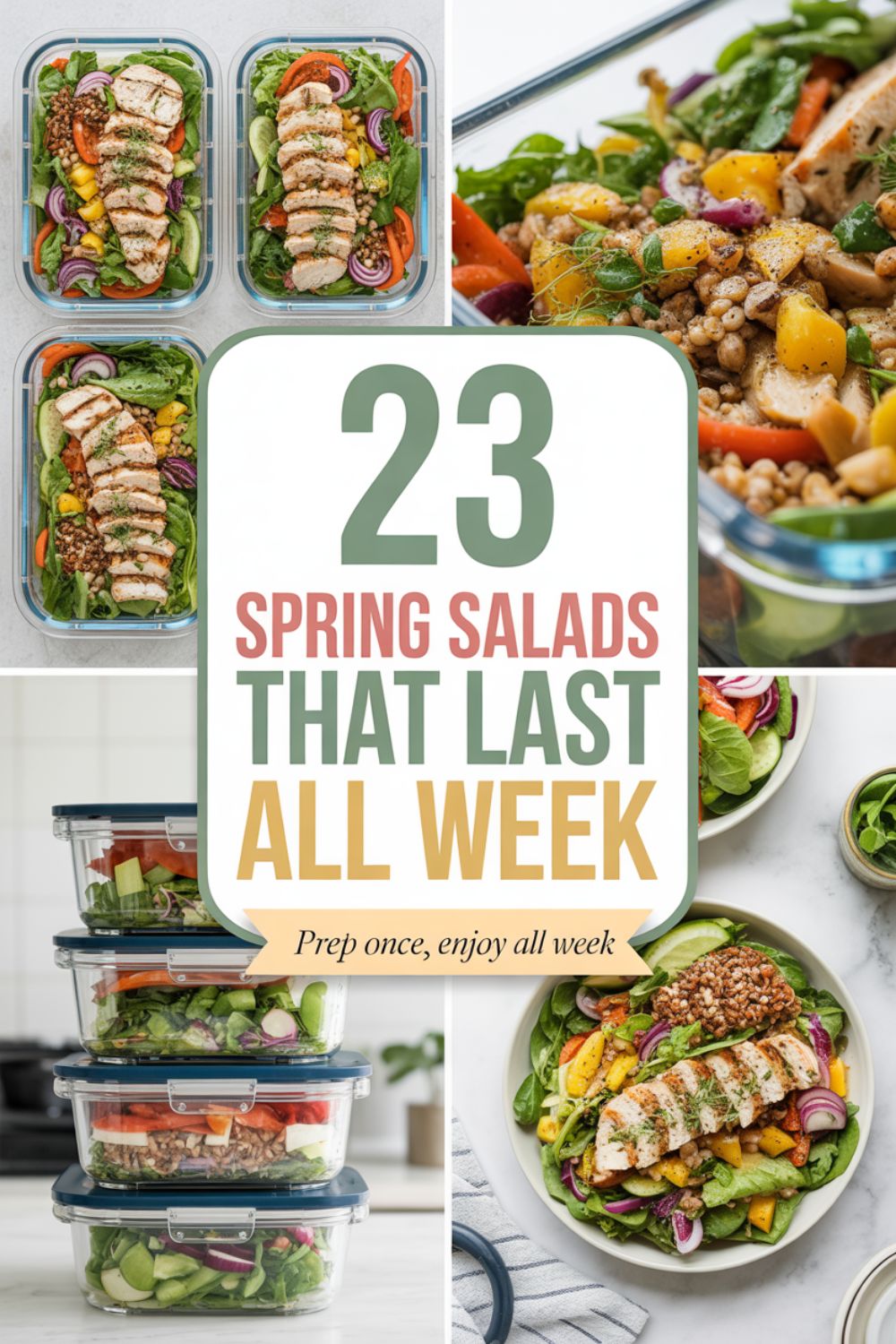
23 Spring Salads That Last All Week
You know that Sunday evening dread when you realize you have zero lunch options lined up for the week? Yeah, I’ve been there too many times. But here’s the thing about spring salads—they’re not just rabbit food in a bowl. When you build them right, these bad boys actually hold up for days without turning into a sad, wilted mess.
I’m talking about salads that stay crisp, flavors that get better as they marinate, and combinations that’ll make your coworkers jealous when you pull them out of the office fridge. No more soggy lettuce disasters or lunch regrets. Just real, satisfying meals you can prep once and enjoy all week long.
Spring gives us the perfect ingredients for this—crisp greens that haven’t been beaten down by summer heat, fresh herbs popping up everywhere, and those first tender vegetables that make you remember why you love cooking. Let’s break down how to turn these seasonal gems into a week’s worth of lunches that don’t suck.
Why Most Salads Don’t Last (And How These Do)
Let’s get real about why your typical salad turns into compost by Wednesday. Most people throw everything together, add dressing, and wonder why it’s a soggy disaster 48 hours later. The secret to week-long salads isn’t magic—it’s strategy.
First, you need to understand which greens actually have staying power. According to Harvard Health, heartier greens like kale, cabbage, and romaine hold up significantly better than delicate options like arugula or spring mix. This isn’t just about texture—these greens maintain their nutritional value longer too.
The layering technique matters more than you’d think. Dressing goes on the bottom of your container, then sturdy vegetables, grains or proteins in the middle, and delicate greens on top. When you’re ready to eat, you flip and shake. Boom—perfectly dressed salad that hasn’t been sitting in a puddle of vinaigrette for three days.
Temperature control is your friend here. Keep salads in the coldest part of your fridge (usually the back of the bottom shelf), and they’ll stay fresh way longer. I use these glass meal prep containers with snap lids because they don’t absorb odors and keep everything airtight.
The Foundation: Choosing Greens That Don’t Quit
Not all greens are created equal when it comes to meal prep. Tender spring mix might taste amazing on Sunday, but by Tuesday it’s already looking questionable. You need greens with backbone.
Kale is your MVP here. I know, I know—everyone’s obsessed with kale. But there’s a reason for it. This stuff lasts up to seven days in the fridge without losing its structure. Massage it with a tiny bit of olive oil and salt before storing, and it actually gets more tender over time. Wild, right?
Red and green cabbage are criminally underrated in salads. They add crunch, color, and fiber—plus they’re dirt cheap. Shred them thin and they’ll stay crisp for a week easy. Mix them with heartier greens for the best of both worlds.
Romaine lettuce sits in that sweet spot between tender and tough. Harvard’s Healthy Eating Plate recommends filling half your plate with vegetables, and romaine makes that goal way easier to hit when you’re meal prepping.
If you’re looking for more variety in your weekly routine, check out these 5-day healthy lunch options that use similar sturdy-green strategies.
The Wilting Test
Here’s a quick way to know if a green will survive the week: squeeze it. Seriously. If it immediately crushes into mush, it won’t last. If it springs back with some resistance, you’ve got yourself a keeper.
Spinach falls into a weird middle ground. Baby spinach? Forget it for week-long prep. But mature spinach leaves, especially the crinkly kind, can hang tough for 4-5 days if stored properly. I throw them into salad spinner containers with a paper towel to absorb excess moisture.
Building Flavor That Actually Improves Over Time
Some flavors are like fine wine—they get better with age. Others are more like opened champagne—flat and disappointing by day two. Your spring salad ingredients need to fall into that first category.
Marinated proteins are your secret weapon. Grilled chicken that’s been sitting in lemon-herb marinade? Better on Wednesday than Sunday. Same goes for shrimp, tofu, or chickpeas. The flavors penetrate deeper, making every bite more intense.
Speaking of chickpeas, roasting them with spices creates this addictive crispy-chewy texture that holds up beautifully. I make a huge batch using my rimmed baking sheet and store them separately to maintain the crunch. Toss them on the salad right before eating.
“I never thought meal prep salads could actually taste good by Thursday, but the marinated chicken trick changed everything for me. My coworkers keep asking for the recipe now.” — Sarah M., member of our meal prep community
Acid is everything. Lemon juice, vinegar, pickled vegetables—these ingredients keep flavors bright and prevent that dull, one-note taste that develops in some prepped foods. Plus, the acidity helps preserve ingredients naturally.
For complete meal planning strategies that go beyond just salads, the 21-day clean eating guide breaks down how to balance proteins, carbs, and vegetables across an entire week.
The 23 Spring Salads That Actually Work
1. Mediterranean Chickpea Power Bowl
This one’s a crowd favorite for good reason. Romaine base, crispy roasted chickpeas, cucumber, cherry tomatoes, red onion, kalamata olives, and feta. The chickpeas stay crunchy if you store them separately, and the feta actually gets tangier as it sits in the vinaigrette.
The key here is using quality olive oil for the dressing. I’m not saying you need to spend forty bucks on a bottle, but the cheap stuff genuinely tastes different after a few days.
2. Asian-Inspired Sesame Slaw
Red and green cabbage, shredded carrots, edamame, sliced almonds, and a ginger-sesame dressing. This salad literally gets better every day as the cabbage softens slightly and absorbs the dressing flavors.
Toast those almonds in a small skillet before adding them. Takes three minutes but makes a huge difference in flavor depth.
3. Southwestern Black Bean Fiesta
Chopped romaine, black beans, corn, bell peppers, red onion, avocado (added fresh), cilantro, and a lime-cumin dressing. The beans provide protein that keeps you full, and the lime juice keeps everything tasting fresh.
Pro tip: keep the avocado separate and slice it fresh each day. Even with lemon juice, it’ll brown by day three otherwise.
4. Greek Goddess Kale Salad
Massaged kale, quinoa, cucumber, tomatoes, red onion, chickpeas, and a lemon-oregano dressing. The kale actually benefits from marinating in the dressing, becoming more tender without getting soggy.
Quinoa is one of those rare grains that tastes better cold after a day or two. The flavors meld together beautifully. Get Full Recipe
5. Rainbow Veggie Crunch
Mix of red cabbage, green cabbage, shredded Brussels sprouts, carrots, bell peppers, and sunflower seeds with an apple cider vinaigrette. Every ingredient here is practically indestructible.
I shred the Brussels sprouts using my food processor with the slicing attachment. Saves so much time and they come out perfectly uniform.
6. Thai Peanut Chicken Bowl
Napa cabbage, shredded chicken, carrots, cucumber, cilantro, peanuts, and a peanut-lime dressing. The peanut butter in the dressing helps preserve the salad and adds healthy fats that keep you satisfied.
This one pairs perfectly with the protein strategies in our high-protein dinner prep plan.
7. Italian Antipasto Delight
Romaine, salami, provolone, pepperoncini, cherry tomatoes, red onion, and Italian dressing. The salami and cheese are pre-preserved, so they’re naturally meal-prep friendly.
For more Italian-inspired meal ideas, browse through these 30 healthy recipes that rotate well with this salad throughout the week.
8. Harvest Quinoa Bowl
Mixed greens, quinoa, roasted sweet potato, dried cranberries, pecans, goat cheese, and balsamic vinaigrette. The sweet potato gets even better after a couple days as it absorbs the dressing.
Roast your sweet potatoes with a little avocado oil spray instead of tossing in oil. Same flavor, way less cleanup.
9. Caesar Salad (That Lasts)
Romaine, homemade croutons, parmesan, and Caesar dressing stored separately. The trick is keeping those croutons in their own container. Soggy croutons are a crime against humanity.
Make your croutons in a cast iron skillet for maximum crispiness. They’ll stay crunchy in an airtight container for over a week. Get Full Recipe
10. Protein-Packed Tuna Niçoise
Mixed greens, canned tuna, hard-boiled eggs, green beans, cherry tomatoes, olives, and Dijon vinaigrette. This is basically a complete meal in a bowl.
The Harvard Nutrition Source specifically recommends batch-cooking proteins like eggs and storing them properly for easy meal assembly throughout the week.
11. Mexican Street Corn Salad
Romaine, charred corn, black beans, cotija cheese, red onion, cilantro, and a lime-chili dressing. The charred corn adds a smoky depth that intensifies over time.
Char your corn in a grill pan for those beautiful black marks. If you don’t have one, a regular skillet works fine—just get it screaming hot first.
12. Spring Pea and Feta Perfection
Mixed greens, fresh peas (or thawed frozen), feta, mint, radishes, and lemon vinaigrette. This screams spring in the best way possible.
Looking for breakfast options that match this fresh spring energy? These no-cook breakfast ideas use the same make-ahead philosophy.
13. Buffalo Chicken Ranch Bowl
Romaine, buffalo chicken, celery, carrots, blue cheese, and ranch dressing. For those days when you want comfort food that’s still technically healthy.
The buffalo sauce acts as a preservative (thanks, vinegar and salt), so the chicken actually stays fresh longer than plain grilled chicken. Weird but true.
14. Caprese-Inspired Salad
Mixed greens, cherry tomatoes, mozzarella balls, fresh basil, and balsamic glaze. Simple, classic, and foolproof.
Store the mozzarella in its brine until you’re ready to assemble. Keeps it from getting rubbery. Get Full Recipe
15. Moroccan Spiced Lentil Salad
Kale, cooked lentils, roasted carrots, dried apricots, almonds, and a cumin-paprika dressing. Lentils are meal prep gold—they stay perfect for days.
If you’re into budget-friendly options, the budget meal prep recipes include several lentil-based options that cost under two dollars per serving.
16. Asian Cucumber Crunch
Napa cabbage, cucumber ribbons, edamame, sesame seeds, and rice vinegar dressing. Light, refreshing, and stays crisp all week.
Use a vegetable peeler to make those cucumber ribbons. Way easier than trying to slice them thin with a knife.
17. Waldorf Reimagined
Mixed greens, chicken, apples, grapes, celery, walnuts, and Greek yogurt dressing. The yogurt dressing is way lighter than traditional mayo-based versions.
Toss the apples in lemon juice immediately after cutting to prevent browning. This works for up to five days if you’re generous with the lemon.
18. Green Goddess Power Bowl
Kale, romaine, cucumber, avocado (fresh), pumpkin seeds, and a tahini-herb dressing. The tahini adds creaminess without dairy.
Pair this with the strategies from our plant-based meal prep plan for a completely dairy-free week.
19. Taco Tuesday (Every Day) Salad
Romaine, seasoned ground turkey, black beans, corn, salsa, and a lime-cilantro dressing. All the taco flavors without the soggy shell.
Cook the turkey in a large skillet with taco seasoning and let it cool completely before storing. Warm protein + cold greens = condensation = sad, wilted salad.
20. Berry Almond Chicken Salad
Spring mix, grilled chicken, strawberries, blueberries, almonds, goat cheese, and poppy seed dressing. The berries stay fresh if you store them unwashed.
21. Middle Eastern Fattoush
Romaine, cucumber, tomatoes, radishes, crispy pita chips, and a sumac-lemon dressing. Keep those pita chips separate until serving.
Bake your pita chips in the oven with a spritz of olive oil mister. Healthier than deep-frying and they come out perfectly crispy.
22. Cobb Salad Done Right
Romaine, chicken, hard-boiled eggs, bacon, avocado (fresh), tomatoes, blue cheese, and red wine vinaigrette. It’s a classic for a reason.
Cook the bacon in the oven on a parchment-lined baking sheet. Less splatter, perfectly crispy bacon, and you can cook a pound at once. Get Full Recipe
23. Spring Herb Garden Salad
Mixed greens, cucumber, radishes, fresh dill, parsley, mint, chives, and a light lemon vinaigrette. This is what spring tastes like.
For families trying to incorporate more vegetables into their routine, the family meal prep guide has kid-friendly variations of these salad concepts.
Meal Prep Essentials Used in This Plan
Here’s what actually makes prepping these salads easier, based on stuff I use every single week:
Physical Products:
- Glass meal prep containers (set of 10) – Seriously worth the investment. They don’t stain, don’t smell, and you can see what’s inside without opening them.
- Salad spinner with storage lid – Dry greens last way longer. This one doubles as a storage container so you’re not dirtying extra dishes.
- Mandoline slicer – Uniform vegetables aren’t just pretty, they also ensure everything marinates evenly and lasts the same amount of time.
Digital Resources:
- Weekly Meal Prep Planner Template – Printable PDF that helps you organize which salads you’re making and when. Takes the guesswork out of grocery shopping.
- Salad Dressing Formula Guide – Video tutorial showing the basic ratios for any vinaigrette so you never have to follow a recipe again.
- Spring Produce Storage Guide – Digital download explaining exactly how to store each vegetable for maximum freshness.
Join the Community: We’ve got a WhatsApp group where people share their weekly salad combos, troubleshoot storage issues, and post photos of their meal prep victories. Real people, real tips, zero judgment.
Dressing Strategies That Don’t Turn Your Salad Into Soup
The dressing can make or break your week-long salad game. Too wet and you’ve got soggy greens by Tuesday. Too dry and nobody wants to eat it.
Oil-based vinaigrettes are your best bet for meal prep. They don’t separate as much as cream-based dressings, and the oil actually helps preserve the vegetables. A basic ratio of 3 parts oil to 1 part acid (vinegar or citrus) works for almost anything.
Store dressings in small 2-ounce condiment containers. Perfect portion control, no waste, and they stack nicely in the fridge.
Creamy dressings need more care. Greek yogurt-based dressings last about 5 days, while mayo-based ones can go sketchy after 3-4. When in doubt, make a fresh batch mid-week. It takes five minutes.
Emulsifying your dressings properly makes them clingier and less likely to puddle at the bottom of your container. Use a mini immersion blender or just shake the hell out of them in a jar. The latter is more fun anyway.
Storage Hacks That Actually Make a Difference
You can have the perfect salad combination, but if you store it wrong, you’re still eating garbage by Wednesday. Here’s what actually matters.
Paper towels are your friend. Line the bottom of your containers with them to absorb excess moisture. Replace them halfway through the week if they’re soggy. This one trick probably extends freshness by 2-3 days.
Layer strategically. Dressing on the bottom, hearty vegetables next, proteins and grains in the middle, delicate greens on top. When you’re ready to eat, dump it in a bowl and toss. Everything stays in its lane until serving time.
The freezer meal prep guide explains similar layering techniques for dishes that need even longer storage.
Temperature matters. Your fridge should be at 40°F or below. Any warmer and bacteria starts partying in your salad. Get one of those fridge thermometers if you’re serious about this.
Don’t wash greens until you’re ready to use them. I know it seems counterintuitive, but the extra moisture from washing causes them to deteriorate faster. Wash as you prep, dry thoroughly, then store.
“The paper towel trick alone changed my meal prep game. I used to throw out half my salads by Thursday, now they’re actually crispy on Friday.” — Marcus R., from our meal prep community
Protein Options That Stay Safe and Delicious
Protein is where people get nervous about meal prep, and rightfully so. Nobody wants food poisoning from chicken that’s been hanging out too long.
Cooked chicken is safe for 3-4 days in the fridge. That’s it. Don’t push it to day seven. If you’re prepping Sunday for Friday, consider using canned chicken or keeping fresh chicken frozen until Wednesday, then thawing and cooking mid-week.
Hard-boiled eggs last a solid week in the shell, about 5 days peeled. They’re stupid easy to prep in bulk. I use my electric egg cooker because I’m terrible at traditional boiling, but the stovetop works fine if you’re more competent than me.
Canned tuna or salmon are meal prep MVPs. They’re already preserved, packed with protein, and you can literally add them the day you’re eating the salad. Zero advance prep required.
Beans and lentils are basically indestructible. Cook a big batch on Sunday and they’ll be perfect all week. Plus they’re cheap as hell and packed with fiber that keeps you full.
For more protein-focused strategies, check out these high-protein meal prep ideas that include both animal and plant-based options.
Tofu needs to be pressed and marinated for best results. Extra-firm is your friend here. Press it in a tofu press for 30 minutes, cube it, marinate overnight, then bake or pan-fry. Stays good for 5 days easy.
Tools & Resources That Make Cooking Easier
Look, you don’t need fancy equipment to meal prep. But these things genuinely make the process less annoying:
Kitchen Tools:
- Chef’s knife (8-inch) – A good knife makes chopping vegetables actually enjoyable instead of a wrist-destroying chore.
- Cutting board set – Use different colors for vegetables, proteins, and anything that touches raw meat. Food safety matters, people.
- Kitchen scale – If you’re tracking portions or following specific meal plans, this takes out the guesswork.
Digital Downloads:
- Grocery List Generator – Excel template that creates shopping lists from your chosen recipes. Organized by store section so you’re not zigzagging like an idiot.
- Meal Prep Time Blocking Guide – Shows you how to prep multiple salads simultaneously instead of one at a time. Cuts total prep time by like 40%.
- Substitution Cheat Sheet – What to swap when you can’t find an ingredient or hate what the recipe calls for.
Community Support: Join our free WhatsApp community where members share weekly rotation ideas, sale alerts for ingredients, and moral support for when you really don’t feel like prepping on Sunday. Sometimes you just need someone to tell you to get off your butt and do it.
Making It Work With Your Actual Life
Theory is great, but let’s talk about real life where you’re tired, busy, and sometimes just want to order pizza instead of eating another salad.
Start with three salads, not seven. Don’t try to prep every meal for the entire week on your first attempt. Make lunch for Monday, Wednesday, and Friday. Fill in the gaps with whatever. Build the habit before going all-in.
Batch your tasks. Wash all greens at once. Chop all vegetables together. Cook all proteins simultaneously. This is way more efficient than making each salad individually. Research on meal preparation shows that batch cooking significantly reduces overall kitchen time while improving dietary quality.
Need more variety? The 21 easy meal prep ideas include salads plus other options so you’re not eating the same thing constantly.
Keep backup ingredients. Canned beans, jarred olives, pre-shredded cheese, rotisserie chicken from the grocery store—these are your emergency stash for when you didn’t prep or something went wrong.
Accept imperfection. Some weeks you’ll nail it. Other weeks your salad will be slightly wilted by Thursday. That’s still better than fast food or skipping lunch entirely. Progress over perfection, always.
For really hectic weeks, the quick meal prep strategies show you how to prep in 30 minutes or less.
Budget-Friendly Strategies Without Sacrificing Quality
Meal prep can save you money, but only if you’re smart about it. Here’s how to keep costs down without eating sad, boring salads.
Buy in-season produce. Spring asparagus is cheap and delicious. Winter asparagus is expensive and mediocre. Shop what’s actually in season and your grocery bill will thank you.
Skip pre-cut vegetables. You’re paying for convenience you don’t need. A head of cabbage costs two bucks and makes enough for a week. Pre-shredded cabbage? Seven bucks for half the amount. Do the math.
The budget meal prep plan breaks down exactly how to feed yourself for under 30 bucks a week using these same principles.
Proteins don’t have to be fancy. Canned tuna, dried lentils, and eggs are stupid cheap. Rotate through them instead of buying expensive grilled chicken strips every week.
Make your own dressings. A bottle of decent dressing costs four to six bucks. The same amount homemade costs maybe a dollar in ingredients. Plus you control what goes in it.
Freeze what you won’t use. That bunch of herbs getting sketchy? Chop and freeze in ice cube trays with olive oil. Fresh herbs year-round without the waste.
Troubleshooting Common Meal Prep Problems
Even with the best planning, stuff goes wrong. Here’s how to fix the most common issues.
Problem: Greens are wilting by day three.
Solution: You’re not drying them enough after washing. Use a salad spinner, then lay them on paper towels for 10 minutes before storing. Moisture is the enemy.
Problem: Dressing is pooling at the bottom.
Solution: Use less dressing than you think you need. You can always add more, but you can’t un-sog a salad. Start with 2 tablespoons max per container.
Problem: Proteins smell funky by day four.
Solution: They’re probably fine-ish, but why risk it? Cook proteins mid-week for the second half of the week. Or use shelf-stable options like canned beans.
Problem: Everything tastes the same by Wednesday.
Solution: Vary your dressings more. Same base salad, different dressing = totally different meal. Keep 3-4 dressing options in the fridge.
For more troubleshooting tips across different meal types, browse the complete recipe collection with detailed prep notes.
Scaling Up for Families or Meal Sharing
Making salads just for yourself is one thing. Feeding a family or sharing with coworkers requires different thinking.
Build-your-own salad bars work better than individual containers when feeding multiple people. Prep all components separately, store in larger containers, and everyone assembles their own. Picky eaters can skip what they hate.
Double or triple recipes instead of making new ones. The prep time barely increases. Chopping two heads of cabbage versus one takes an extra three minutes max.
Check out the family meal prep guide for strategies on feeding multiple people without losing your mind.
Invest in bigger containers. Family-sized glass storage containers make more sense than a million small ones. Less dishwashing, easier storage, same end result.
Get kids involved. Let them pick which salads to make, have them wash greens or measure dressing ingredients. They’re way more likely to eat something they helped create.
Frequently Asked Questions
How long do prepped salads actually last in the fridge?
Most properly stored salads with sturdy greens last 5-7 days. The key is keeping dressing separate, using heartier greens like kale or cabbage, and storing them in airtight containers with paper towels to absorb moisture. Delicate greens like spring mix or arugula only last 2-3 days max, which is why they’re not ideal for week-long prep.
Can I freeze prepared salads?
Nope, don’t do it. Freezing destroys the cell structure of lettuce and most raw vegetables, turning them into mushy garbage when thawed. The only exception is if you’re freezing components separately—like cooked grains or proteins—then assembling fresh salads later. But never freeze a complete, assembled salad unless you enjoy eating soggy disappointment.
What’s the best way to keep salads from getting soggy?
Layer strategically with dressing on the bottom, sturdy vegetables next, proteins and grains in the middle, and delicate greens on top. Store in airtight containers with a paper towel lining to absorb excess moisture. Keep dressing separate if you’re really particular, and never dress your salad until you’re ready to eat it. Also, make sure greens are completely dry before storing—moisture is your enemy here.
Are mason jar salads actually better than regular containers?
Mason jars look great on Pinterest but honestly, they’re kind of overrated for practical use. They work fine for the layering method, but they’re heavy, awkward to eat from, and you can’t see all the layers like you can with clear rectangular containers. Regular glass meal prep containers are more practical, easier to eat from, and stack better in the fridge. Save the mason jars for storing dressing separately.
How do I meal prep salads if I hate eating the same thing every day?
Make one big batch of base ingredients—washed greens, chopped vegetables, cooked proteins—then create different flavor combinations each day using varied dressings, toppings, and add-ins. IMO, this is way smarter than making five identical salads. You’re doing the bulk prep once but keeping things interesting throughout the week. Rotate between Asian, Mexican, Mediterranean, and Italian flavor profiles using the same core ingredients.
The Bottom Line on Spring Salad Meal Prep
Meal prepping salads that actually last all week isn’t rocket science, but it does require thinking differently about how you build and store them. Choose greens with backbone, layer strategically, keep dressings separate, and store everything properly.
Spring is genuinely the best time to start this habit. The produce is fresh, flavors are naturally vibrant, and you’re probably feeling that renewed energy that comes with longer days and warmer weather. Use that momentum.
Start small—pick three salads from this list, prep them on Sunday, and see how it goes. Don’t stress about perfection. Even mediocre meal prep beats scrambling for lunch every day or dropping twenty bucks on sad desk salads from the cafeteria.
The goal here isn’t to become some meal prep influencer with perfectly arranged containers and coordinated outfits. The goal is to feed yourself real food without it taking over your entire life. These 23 salads make that actually possible.
Now get your containers ready and pick which salads you’re making this week. Your future self on Tuesday at noon will thank you.