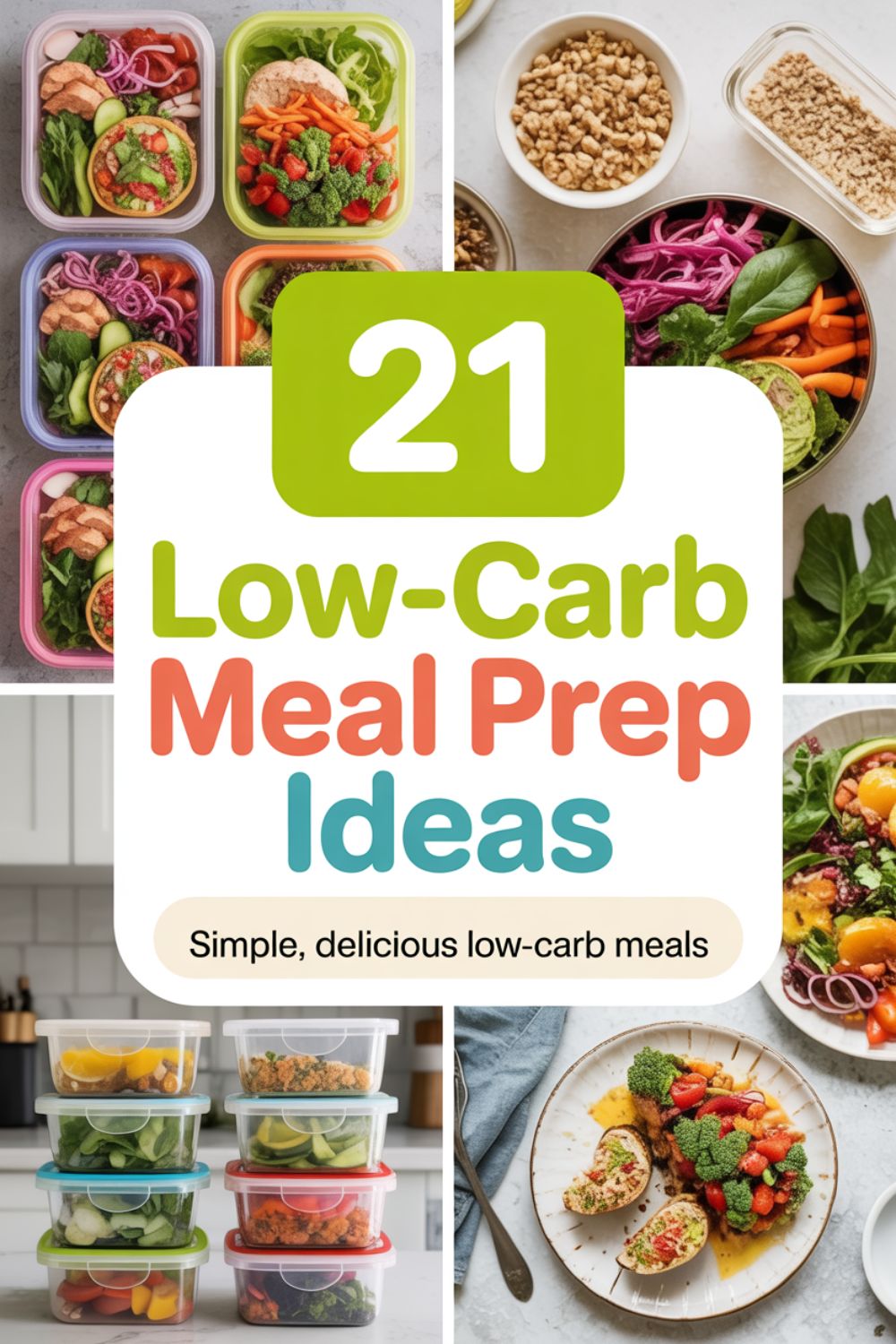
21 Low-Carb Meal Prep Ideas Without Fancy Ingredients
Look, I get it. You want to eat low-carb, but the second you start googling recipes, you’re bombarded with ingredients you can’t pronounce and grocery bills that rival a car payment. Almond flour this, coconut aminos that, and suddenly you’re wondering if eating healthy requires a culinary degree and a trust fund.
Here’s the truth nobody tells you: low-carb meal prep doesn’t need to be complicated. You don’t need specialty ingredients, and you definitely don’t need to spend three hours in the kitchen on Sunday. What you need are simple, repeatable ideas that work with regular grocery store finds.
I’ve been meal prepping low-carb for years now, and honestly, the simpler I keep it, the more likely I am to stick with it. These 21 ideas use ingredients you already know—chicken, eggs, ground beef, regular vegetables—and turn them into meals that actually keep you satisfied. No weird shopping trips required.
Why Low-Carb Meal Prep Actually Works
Before we jump into the ideas, let’s talk about why this approach makes sense. Research shows that low-carb diets can be effective for weight management and improving metabolic health, particularly when you focus on whole foods rather than processed alternatives.
The beauty of meal prepping low-carb is that you’re removing decision fatigue. When you’re hungry and tired after work, you’re not staring into the fridge wondering what’s allowed on your diet. You’ve already done the work. You just grab, heat, and eat.
And contrary to what Instagram might tell you, you don’t need fifteen different spice blends or a dehydrator to make this work. The most sustainable meal prep is boring meal prep—the kind you can replicate week after week without losing your mind.
The Foundation: Simple Proteins That Last
Rotisserie Chicken Reinvented
Can we talk about rotisserie chicken for a second? It’s the MVP of lazy meal prep. Buy two on Sunday, shred them while watching Netflix, and you’ve got protein sorted for days. I’m talking chicken salad with mayo and celery, taco bowls with cauliflower rice, or just plain chicken with whatever vegetables you didn’t burn.
The mistake most people make is thinking they need to get fancy with it. They don’t. Salt, pepper, maybe some garlic powder if you’re feeling wild. Done. If you want to level up your chicken game without actually cooking, grab one of these meat shredder claws—way faster than two forks, and you’ll feel oddly powerful.
Ground Beef: The Workhorse
Ground beef is criminally underrated in meal prep circles, probably because it’s not photogenic enough for social media. But you know what it is? Versatile, cheap, and impossible to screw up. Brown five pounds at once, season it however you want, and portion it out.
Use it for taco bowls throughout the week, mix it with sautéed peppers and onions, or just eat it with a fried egg on top. Nobody said meal prep had to be Pinterest-worthy. Actually, if you’re cooking in bulk, a large cast-iron skillet makes the job way easier—holds more, distributes heat better, and you can toss it in the oven if needed.
“I started meal prepping ground beef and eggs every Sunday, and honestly, it’s changed everything. Down 12 pounds in two months without feeling like I’m on a diet.” — Jennifer from our community
Sheet Pan Chicken Thighs
Chicken thighs are fattier than breasts, which means they stay moist in the fridge and actually taste good reheated. Throw them on a sheet pan with whatever vegetables need using up—brussels sprouts, broccoli, bell peppers, whatever. Season with salt, pepper, and olive oil. Roast at 425°F until done.
That’s it. No marinating, no fancy techniques. If you’re doing this weekly, investing in a quality rimmed baking sheet is worth it—the cheap ones warp in the oven and your food slides everywhere.
Looking for more protein-focused options? You might want to check out these high-protein breakfast ideas that complement your lunch and dinner prep perfectly.
Vegetable Strategies That Don’t Suck
Cauliflower Rice: The Non-Negotiable
I know, I know—cauliflower rice is everywhere and you’re probably sick of hearing about it. But here’s the thing: it works. It’s filling, it’s low-carb, and most grocery stores sell it pre-riced now, so you don’t even need to murder your food processor.
The key is not treating it like actual rice. It’s never going to be rice. But sauté it with butter and garlic, and it becomes a perfectly acceptable vehicle for your protein and sauce. Make a big batch, portion it out, and you’ve got your carb substitute handled.
Roasted Vegetables in Bulk
Roasting vegetables transforms them from sad diet food to something you might actually want to eat. The trick is going hot and fast—400-425°F—and not crowding the pan. Give them space, let them get some color, and they’ll develop actual flavor.
My go-to rotation: bell peppers, zucchini, mushrooms, asparagus, and green beans. Roast them all on Sunday, keep them in separate containers, and mix them throughout the week. Boring? Maybe. Effective? Absolutely.
Zoodles Without the Drama
Zucchini noodles could be amazing if people stopped overcooking them. The goal is barely cooked—like, you’re just warming them up, not boiling them into mush. I spiralize a bunch on Sunday, keep them raw in the fridge, and quickly sauté them when I’m ready to eat.
If you don’t have a spiralizer yet, this handheld one works fine and doesn’t take up half your kitchen. The expensive countertop versions are cool but completely unnecessary unless you’re feeding a small army.
For more vegetable-forward meal ideas, these vegetarian meal prep strategies offer great inspiration even if you’re not fully plant-based.
Breakfast: Because Morning You Needs Help
Egg Muffins (The Crustless Quiche)
These are just eggs, cheese, and whatever vegetables you have, baked in a muffin tin. That’s it. Beat a dozen eggs, pour them into a greased muffin tin with your mix-ins, bake at 350°F for about 20 minutes. You’ve got breakfast for the week.
I use spinach, mushrooms, and cheddar because I’m basic, but you can throw in anything that won’t make the eggs weird. Just avoid super watery vegetables unless you want soggy disappointment.
Chia Pudding Without the Hype
Mix chia seeds with unsweetened almond milk, add a tiny bit of sweetener if you need it, and let it sit overnight. In the morning, it’s pudding. Is it exciting? No. Does it keep you full until lunch? Surprisingly, yes.
The ratio is roughly 3 tablespoons chia seeds to 1 cup liquid. Make five jars on Sunday, top with berries if you have the carbs to spare, and you’re set.
Greek Yogurt Assembly Line
Full-fat Greek yogurt, a handful of nuts, maybe some seeds, and a few berries if they fit your macros. Portion it out in mason jars. Keep the nuts separate if you’re weird about texture like me.
This isn’t revolutionary, but it’s fast, filling, and you can eat it in the car if morning you is running late (which, let’s be honest, morning you probably is).
If breakfast is your weak point, you’ll definitely want to explore this complete 7-day breakfast system that takes the guesswork out of your morning routine.
Meal Prep Essentials Used in This Plan
After years of testing different approaches, here’s what actually makes meal prep easier:
- Glass meal prep containers with snap lids — Microwave-safe, don’t stain, and you can see what’s inside without playing food roulette
- Kitchen scale for portion control — Honestly game-changing if you’re tracking macros. Takes the guesswork out completely
- Silicone baking mats — Stop scrubbing pans. Just stop. These are like $15 and will save you hours of cleanup
- 21-Day Low-Carb Meal Planning Guide — Digital download with grocery lists, macro breakdowns, and substitution suggestions
- Printable Meal Prep Tracker — Keep track of what’s in your fridge and when you made it (because you WILL forget)
- Low-Carb Macro Calculator Spreadsheet — Plug in your stats, get your numbers, stop guessing
Want more support? Join our WhatsApp community where people share their weekly preps, swap recipes, and keep each other accountable.
Lunch Ideas That Travel Well
Mason Jar Salads Done Right
The key to mason jar salads is layering. Dressing on the bottom, sturdy vegetables next, then proteins, then delicate greens on top. When you’re ready to eat, shake it up. The order matters because nobody wants soggy lettuce at 1 PM.
My standard rotation: ranch or Caesar on the bottom, cucumbers and bell peppers, rotisserie chicken, topped with spinach or romaine. Make five on Sunday, grab one each morning. The jars keep everything fresh and contained, which is crucial if you’re commuting.
Burrito Bowls Without the Burrito
Cauliflower rice, seasoned ground beef, cheese, salsa, sour cream, avocado if it’s not brown yet. Layer it in your container, heat the bottom layers, and add the cold toppings fresh. It’s basically a taco salad, which is basically lunch perfection.
The beauty of this is you can batch-cook the beef and cauliflower rice, then customize each bowl based on what you’re craving or what needs using up.
Cold Chicken and Veggie Boxes
Sometimes the best lunch is the one that doesn’t need reheating. Sliced chicken breast, cherry tomatoes, cucumber slices, cheese cubes, and a little container of ranch or hummus (if you have carbs for it). Throw in some olives if you’re feeling Mediterranean.
Pack it in a divided container, keep it cold, and you’ve got a lunch that feels like a grown-up Lunchable. Which, honestly, is sometimes exactly what you need.
Need more portable lunch ideas? Check out this 5-day work lunch system that’s specifically designed for busy schedules. Get Full Recipe
Dinner Solutions for Weeknight Survival
One-Pan Sausage and Vegetables
Slice up some sausage—kielbasa, Italian, whatever sounds good. Throw it on a sheet pan with bell peppers, onions, and maybe some broccoli. Everything cooks together, minimal cleanup, maximum flavor. Season with whatever spices match your sausage choice.
The rendered fat from the sausage basically bastes the vegetables while they roast, which is a fancy way of saying everything tastes better when cooked in sausage fat.
Slow Cooker Pulled Pork
Pork shoulder, salt, pepper, maybe some paprika. Slow cooker on low for 8 hours. Shred it, portion it out, and you’ve got protein for days. Eat it plain, with sautéed cabbage, over cauliflower rice, or straight from the container when you’re too tired to assemble an actual meal.
The initial investment of time is like 5 minutes, then the slow cooker does literally everything else. If meal prep could have a mascot, it would be a slow cooker.
Baked Salmon with Asparagus
Salmon fillets, asparagus, olive oil, salt, pepper, lemon. Sheet pan. 400°F for about 12-15 minutes. You can make this fancy with herbs and butter if you want, or you can make it on Tuesday night when you’re exhausted and just need food.
Salmon reheats better than you’d think, especially if you don’t nuke it into oblivion. Medium power, short bursts, check frequently. Or eat it cold on a salad and pretend that was the plan all along.
For complete dinner planning, this 7-day dinner system pairs perfectly with these protein strategies. It includes timing guides and reheating instructions that actually work.
Snacks That Won’t Derail Everything
Boiled Eggs in Bulk
Make a dozen at once. Instant Pot if you have one (5 minutes high pressure, quick release, into ice bath). Otherwise, bring water to boil, add eggs, cover, remove from heat, wait 10 minutes, ice bath. Peel them all at once while watching TV.
Keep them in the fridge. When you’re hungry and about to eat something stupid, grab an egg. It’s boring enough that you won’t overeat them, filling enough to actually help.
Cheese and Nut Portions
Pre-portion cheese cubes and mixed nuts into small containers or bags. When hunger strikes, you’ve got a pre-portioned snack that won’t spiral into eating an entire block of cheddar (not that I’ve ever done that).
The key is portioning them ahead of time. Future you has zero portion control. Present you needs to help future you out.
Veggie Sticks with Dip
Cut up celery, bell peppers, and cucumbers on Sunday. Keep them in water in the fridge to stay crisp. Portion out ranch, guacamole, or cream cheese-based dip. It’s crunchy, it’s satisfying, and it feels like you’re eating more than you actually are.
This is also where small 2-ounce containers become your best friend. One container of dip, one container of veggies, done.
Speaking of smart strategies, these budget-friendly meal prep ideas show you how to make low-carb work without breaking the bank—because eating healthy shouldn’t require a second mortgage.
Tools & Resources That Make Cooking Easier
Look, you don’t need a ton of equipment, but these genuinely make the process less annoying:
- Instant Pot for hands-off cooking — Set it, forget it, come back to done food. Perfect for tough cuts of meat that need time
- Mandoline slicer for consistent cuts — Your vegetables will actually cook evenly. Revolutionary, I know
- Reusable silicone storage bags — Better than plastic, easier to clean, and they don’t leak in your bag
- Weekly Prep Checklist Template — Stop forgetting ingredients at the store. This template has saved my sanity multiple times
- Macro-Friendly Recipe Collection — 50+ recipes with full nutritional breakdowns, all using basic ingredients
- Meal Prep Troubleshooting Guide — Common problems and actual solutions, not just “try harder”
Plus, our private WhatsApp group is full of people doing exactly this—sharing what worked, what flopped, and keeping each other motivated when meal prep feels like a chore.
Making It Actually Sustainable
The Rotation System
Here’s what nobody tells you: you don’t need 21 different meals. You need like 5-7 that you can rotate without wanting to throw your meal prep containers out the window. Pick your favorites from this list, make them for two weeks straight, then swap in something else.
Variety is overrated. Consistency is what gets results. Research from Harvard’s nutrition department suggests that adherence to any eating pattern matters more than the specific details of the plan itself.
The 80/20 Rule
Aim to meal prep 80% of your meals. The other 20%? Life happens. You’ll eat out, you’ll have leftovers from a dinner party, you’ll order pizza because Thursday was brutal. Build that into your system instead of pretending you’re going to be perfect.
The people who succeed with meal prep aren’t the ones who never break their routine. They’re the ones who break it, shrug, and get back to their containers the next day.
Start Small, Build Up
If meal prepping five days of three meals sounds overwhelming, don’t do that. Start with just lunches. Or just dinners. Or even just prepping your proteins and figuring out sides as you go.
The point is removing decision fatigue and making healthy eating easier, not adding more stress to your Sunday. If prepping two meals a day is what you can handle, that’s what you can handle. It’s still better than winging it every day.
“I started with just prepping lunches—ground beef and veggies in containers. Three months later, I’m down 15 pounds and actually look forward to my weekly prep session. Start small, seriously.” — Mike from our community
Common Mistakes to Avoid
Trying to Make Restaurant-Quality Food
Meal prep food is not going to taste like a restaurant. It’s going to taste like meal prep. That’s okay. The goal is fuel and convenience, not culinary excellence. Lower your expectations, increase your success rate.
Prepping Foods That Don’t Reheat Well
Some foods just don’t work. Anything super crispy will get soggy. Delicate fish falls apart. Certain vegetables turn to mush. Learn what holds up in the fridge for a few days, stick to those things, and stop fighting with foods that aren’t meant for this.
Not Labeling Anything
You will forget what’s in that container. You will forget when you made it. Write the date on masking tape, stick it on the container, remove it when you wash. This is not optional unless you enjoy food poisoning.
Prepping Too Far in Advance
Most prepped food is good for 3-4 days, max. If you’re meal prepping on Sunday, you’re good through Wednesday, maybe Thursday. Friday’s meal should probably be made Wednesday night or you’re pushing into questionable territory.
FYI, this is where batch cooking and freezing comes in handy. Make double, freeze half, and you’ve got backup meals without the food safety stress.
For a complete system that addresses these common pitfalls, check out this stress-free meal prep plan that builds in flexibility and realistic expectations.
How to Scale This for Your Household
Just You
Cook once, eat 3-4 times. This is the sweet spot for solo meal preppers. You get variety without massive amounts of leftovers going bad in your fridge.
Two People
Double the recipes, or make different proteins and let everyone customize their bowls. This is where the separate components strategy really shines—you both get what you want without making twice the meals.
Family of Four or More
At this point, you’re basically running a small restaurant. Focus on big batch items like slow cooker meals, sheet pan dinners, and one-pot situations. Let family members customize toppings and sides so everyone’s happy-ish.
You might want to check out these family-focused meal prep strategies that actually consider the reality of feeding multiple humans with different preferences. Get Full Recipe
Frequently Asked Questions
How long does meal prep actually take?
For most people, 2-3 hours on Sunday covers lunches and dinners for 3-4 days. The first few times take longer because you’re figuring out your system. Once you’ve got a routine, it gets faster. If 2-3 hours sounds like too much, start with just prepping proteins and assembling meals as you go.
Can I freeze low-carb meal prep?
Absolutely. Most cooked proteins freeze great, as do most soups and stews. Things that don’t freeze well: salads, anything with mayo-based dressing, and most raw vegetables. Portion your freezer meals in single servings so you can thaw only what you need.
What if I get bored eating the same thing?
Change your sauces and seasonings, not your base ingredients. The same grilled chicken tastes different with buffalo sauce versus pesto versus taco seasoning. This is way easier than cooking completely different meals every week. Also, IMO, a little boredom is fine if it means you’re actually sticking to your plan.
Do I need to count macros for low-carb meal prep?
Not necessarily. Some people do better with specific targets, others do fine just limiting carbs and eating protein and fat until satisfied. If you’re not seeing results after a few weeks, tracking macros for a bit can help you identify where you’re off. But it’s not mandatory to start.
What’s the actual carb limit for low-carb eating?
It varies depending on who you ask, but most definitions put low-carb at under 100-130 grams per day. Very low-carb (ketogenic) is usually under 50 grams per day. Start somewhere in the middle and adjust based on how you feel and what your results look like. There’s no universal “right” number.
The Bottom Line on Low-Carb Meal Prep
Look, meal prep isn’t going to change your life overnight, and anyone who tells you otherwise is trying to sell you something. But it will make your weeks easier, your decisions simpler, and your eating more consistent—which is what actually gets results.
You don’t need fancy ingredients, expensive equipment, or a perfectly curated Instagram feed. You need proteins that last, vegetables that taste decent reheated, and a system that you’ll actually follow for more than two weeks.
Start with the basics from this list. Pick 3-4 ideas that sound tolerable. Make them this Sunday. Eat them through Wednesday. Adjust what didn’t work, keep what did, and try again next week. That’s it. That’s the whole strategy.
The people who succeed with meal prep aren’t the ones with the most elaborate recipes or the most expensive containers. They’re the ones who found a basic system that works and stuck with it long enough to see results. Be those people.
Similar Posts
30 Healthy Meal Prep Recipes You Can Repeat
30 Healthy Meal Prep Recipes You Can Repeat 30 Healthy Meal Prep Recipes You Can Repeat Look, I get it. You’ve tried meal prep before and ended up eating the same boring chicken and broccoli for five days straight until you couldn’t look at it anymore. Been there, done that, donated the tupperware. But here’s…
19 High-Protein Easter Meal Prep Meals
19 High-Protein Easter Meal Prep Meals 19 High-Protein Easter Meal Prep Meals Look, Easter doesn’t have to mean demolishing your fitness goals or spending three hours in the kitchen the day-of while your family waits. I get it—you want that beautiful spring spread, but you also want to feel good in your clothes and not…
27 Simple Spring Meal Prep for Beginners
27 Simple Spring Meal Prep for Beginners – Easy, Fresh & Delicious 27 Simple Spring Meal Prep for Beginners Look, I get it. You’ve probably scrolled past a thousand “meal prep Sunday” posts where someone’s fridge looks like it belongs in a magazine spread, and you’re sitting there thinking, “Yeah, right. Who has time for…
27 Spring Meal Prep Bowls Under 500 Calories
27 Spring Meal Prep Bowls Under 500 Calories 27 Spring Meal Prep Bowls Under 500 Calories Listen, I get it. You want to drop a few pounds before summer hits, but you’re also not trying to live on celery sticks and sadness. Here’s the thing about spring meal prep bowls—they’re basically nature’s perfect excuse to…
7-Day Budget Breakfast Meal Prep Anyone Can Afford
7-Day Budget Breakfast Meal Prep Anyone Can Afford 7-Day Budget Breakfast Meal Prep Anyone Can Afford Let’s be real—mornings are chaos. You’re hitting snooze three times, scrambling to find matching socks, and suddenly breakfast becomes whatever sad granola bar you can grab on your way out. But here’s the thing: eating a decent breakfast shouldn’t…