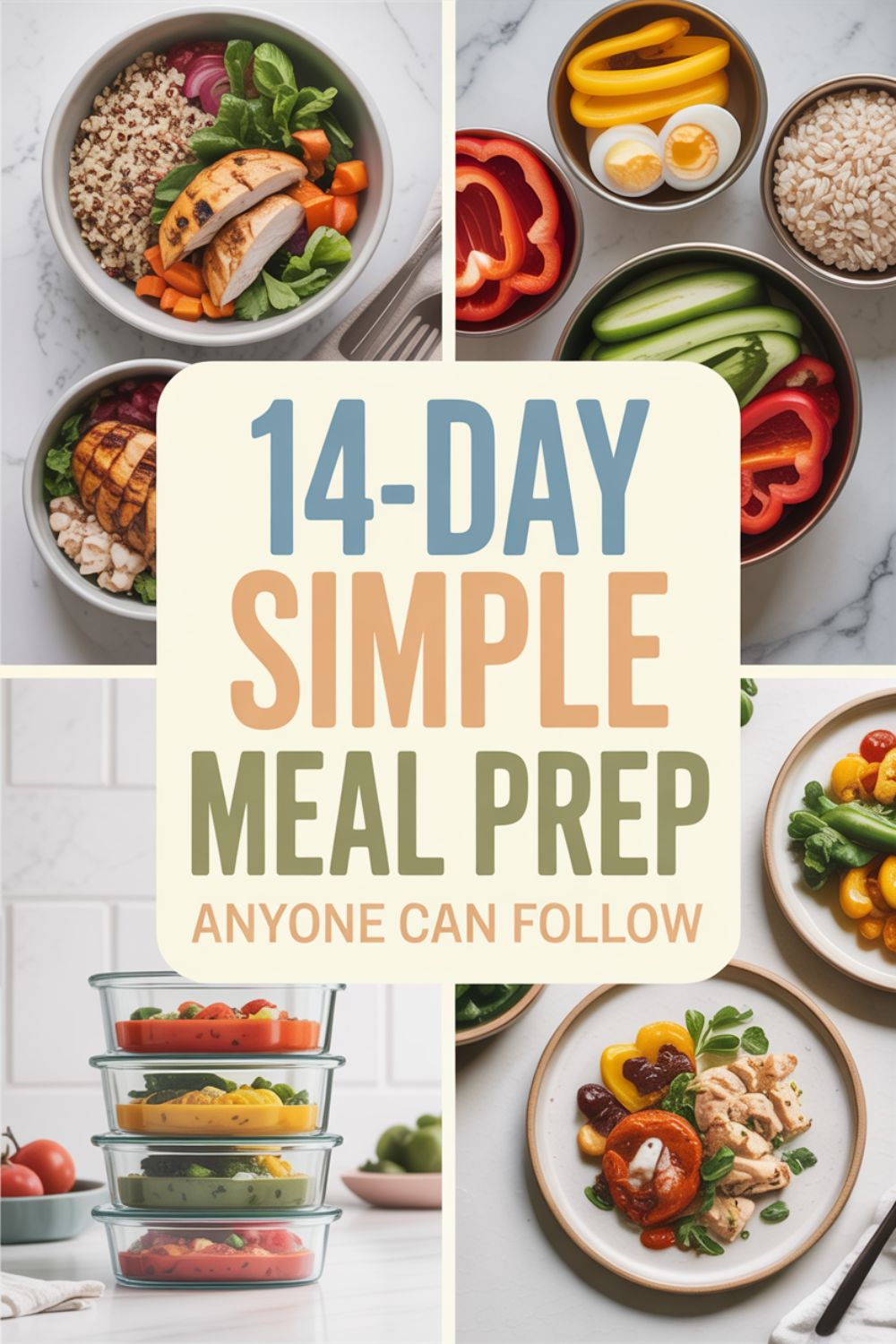
Build Your Perfect Meal Prep Plan
14-Day Simple Meal Prep Anyone Can Follow
Let me guess. You’ve tried meal prepping before, spent three hours on a Sunday chopping vegetables and cooking chicken, only to open your fridge on Wednesday and find containers you’re not even excited about anymore. I’ve been there, and it’s frustrating.
The truth is, most meal prep plans fail because they’re either too complicated, too boring, or they assume you have unlimited time and energy. But what if meal prepping could actually be simple? What if you could have two weeks of delicious, varied meals ready to go without losing your mind in the kitchen?
This 14-day meal prep plan is different. It’s designed for real people with real schedules. You’ll prep smart, not hard. You’ll eat food you actually look forward to. And you’ll save yourself hours of decision fatigue and last-minute takeout orders.
Whether you’re trying to lose weight, save money, or just stop asking yourself “what’s for dinner” every single night, this plan has you covered. Let’s dive in.

How This 14-Day Meal Prep Plan Works
This isn’t your typical meal plan where you eat the same grilled chicken and broccoli for seven days straight. Instead, we’re using a rotation system that keeps things interesting while still being incredibly efficient.
Here’s the strategy: You’ll prep twice per week, spending about 90 minutes each session. The first prep covers Monday through Thursday, and the second prep handles Friday through Sunday. This approach means your food stays fresher, you get more variety, and you’re not overwhelmed by marathon cooking sessions.
Each day includes breakfast, lunch, dinner, and a snack. Every meal is designed to be portable, reheatable (or delicious cold), and balanced with protein, healthy fats, and quality carbs. You’ll notice protein amounts listed for each meal because hitting your protein target is one of the biggest factors in feeling satisfied and seeing results.
The Prep-Ahead Philosophy
We’re focusing on components, not complete meals. Instead of assembling 14 full dishes upfront, you’ll prep ingredients that mix and match throughout the week. Cook a big batch of quinoa, roast several sheet pans of vegetables, grill multiple protein sources, and suddenly you have dozens of meal combinations.
This method gives you flexibility. If you wake up not feeling the salmon, you can swap it for chicken. If you want more veggies one day and fewer carbs another, you can adjust on the fly. You’re not locked into rigid containers that may or may not match your appetite that day.
Pro Tip
Invest in quality glass meal prep containers with compartments. They keep food fresh longer than plastic, they’re microwave-safe, and they don’t hold onto smells and stains. Plus, your meals just look better in them, which matters more than you’d think when you’re trying to stay motivated.
Your Complete 14-Day Meal Plan
Alright, here’s where the magic happens. Each day is mapped out with specific meals, protein counts, and enough variety to keep you interested. Remember, these are guidelines. If you hate mushrooms, swap them for peppers. If you’re allergic to fish, use chicken instead. Make this plan work for your life.
Week 1: Building Your Foundation
Day 1
- Breakfast: Greek Yogurt Protein Parfait with mixed berries, granola, and almond butter drizzle (26g protein)
- Lunch: Mediterranean Chicken Bowl with quinoa, cucumbers, tomatoes, feta, and lemon-herb dressing (38g protein)
- Dinner: Baked Salmon with roasted asparagus and sweet potato wedges (34g protein)
- Snack: Hard-boiled eggs with everything bagel seasoning and baby carrots (12g protein)
Day 2
- Breakfast: Overnight Oats with protein powder, chia seeds, sliced banana, and walnuts (28g protein)
- Lunch: Turkey and Avocado Wrap with whole wheat tortilla, spinach, and hummus (32g protein)
- Dinner: Chicken Stir-Fry with broccoli, bell peppers, snap peas, and brown rice (36g protein)
- Snack: Cottage cheese with cucumber slices and cherry tomatoes (14g protein)
Day 3
- Breakfast: Veggie Scramble with egg whites, spinach, mushrooms, and whole grain toast (24g protein)
- Lunch: Tuna Salad over mixed greens with chickpeas, olives, and balsamic vinaigrette (35g protein)
- Dinner: Beef and Vegetable Kebabs with tzatziki sauce and quinoa tabbouleh (40g protein)
- Snack: Protein smoothie with berries, spinach, and almond milk (22g protein)
Quick Swap Options
Not a fan of salmon? Swap for cod, tilapia, or even grilled chicken thighs. Vegetarian? Replace any meat with tempeh, extra-firm tofu, or a double portion of legumes. Low-carb preference? Cut the quinoa and rice in half, double up on the vegetables.
Day 4
- Breakfast: Protein Pancakes with Greek yogurt topping and fresh strawberries (30g protein)
- Lunch: Grilled Chicken Caesar Salad with parmesan, chickpeas, and whole grain croutons (37g protein)
- Dinner: Shrimp and Zucchini Noodles with garlic, cherry tomatoes, and white beans (33g protein)
- Snack: Apple slices with natural peanut butter (8g protein)
Speaking of chicken caesar salad, if you’re looking for more filling lunch options that travel well, check out these 14 meal prep bowls for easy weight loss. They’re packed with protein and actually taste better the next day.
Day 5
- Breakfast: Smoked Salmon and Avocado Toast on whole grain bread with arugula (25g protein)
- Lunch: Turkey Meatball Bowl with marinara, roasted vegetables, and cauliflower rice (35g protein)
- Dinner: Baked Cod with lemon-dill sauce, green beans, and wild rice (32g protein)
- Snack: Edamame with sea salt (11g protein)
Day 6
- Breakfast: Breakfast Burrito Bowl with scrambled eggs, black beans, salsa, and avocado (29g protein)
- Lunch: Asian-Inspired Chicken Lettuce Wraps with water chestnuts and hoisin sauce (34g protein)
- Dinner: Grilled Steak with chimichurri, roasted Brussels sprouts, and sweet potato (38g protein)
- Snack: Greek yogurt with a handful of almonds (16g protein)
Day 7
- Breakfast: Chocolate Protein Smoothie Bowl topped with granola, coconut flakes, and banana (27g protein)
- Lunch: Caprese Chicken with fresh mozzarella, tomatoes, basil, and balsamic glaze over arugula (36g protein)
- Dinner: Pork Tenderloin with roasted root vegetables and apple-mustard sauce (35g protein)
- Snack: Hummus with bell pepper strips and cucumber (6g protein)
Week 1 Prep Checklist
Proteins to cook: 3 lbs chicken breast, 1.5 lbs salmon, 1 lb ground turkey, 1 lb shrimp, 1 lb beef, 18 eggs
Grains to batch cook: 4 cups quinoa, 3 cups brown rice, 2 cups wild rice
Vegetables to prep: Wash and chop all salad greens, roast 3 sheet pans of mixed vegetables, spiralize zucchini
Containers needed: 21 containers (7 days × 3 meals), plus small containers for snacks
“I was skeptical about meal prepping because I thought the food would get soggy or boring, but this plan changed my mind. The variety kept me excited, and I loved not having to think about what to eat every day. Lost 6 pounds in the first week!” – Sarah M.
Week 2: Mixing It Up
Day 8
- Breakfast: Egg White Frittata with spinach, feta, sun-dried tomatoes, and whole grain English muffin (27g protein)
- Lunch: BBQ Chicken Salad with romaine, corn, black beans, tortilla strips, and ranch (35g protein)
- Dinner: Teriyaki Salmon with stir-fried bok choy and jasmine rice (33g protein)
- Snack: Protein bar and a small apple (15g protein)
Day 9
- Breakfast: Peanut Butter Banana Protein Oats with flax seeds and dark chocolate chips (26g protein)
- Lunch: Greek Turkey Burger Bowl with tzatziki, cucumber, tomato, red onion, and quinoa (39g protein)
- Dinner: Lemon-Garlic Shrimp with cauliflower rice and roasted broccoli (31g protein)
- Snack: String cheese with whole grain crackers (10g protein)
Day 10
- Breakfast: Cottage Cheese Pancakes with fresh berries and a drizzle of honey (24g protein)
- Lunch: Chicken Fajita Bowl with peppers, onions, guacamole, and brown rice (37g protein)
- Dinner: Baked Tilapia with mango salsa, asparagus, and quinoa (29g protein)
- Snack: Trail mix with almonds, walnuts, and dried cranberries (7g protein)
Quick Swap Options
Tired of chicken? Try turkey, pork loin, or even duck breast for variety. Need more fiber? Add extra beans to any bowl or swap white rice for brown rice or farro. Budget-conscious? Use canned tuna or sardines instead of fresh fish twice this week.
Day 11
- Breakfast: Breakfast Sausage and Veggie Hash with sweet potato, peppers, and poached eggs (28g protein)
- Lunch: Cobb Salad with grilled chicken, hard-boiled egg, bacon, avocado, and blue cheese (41g protein)
- Dinner: Beef Stir-Fry with snow peas, carrots, mushrooms, and rice noodles (36g protein)
- Snack: Roasted chickpeas with paprika (9g protein)
If you’re loving these high-protein meals but want even more volume without extra calories, you’ll appreciate these 30 high-volume low-calorie meals for fat loss. Perfect for those days when you’re extra hungry but still want to stay on track.
Day 12
- Breakfast: Spinach and Mushroom Egg Cups with whole grain toast and avocado (25g protein)
- Lunch: Tuna Poke Bowl with edamame, cucumber, seaweed salad, and brown rice (34g protein)
- Dinner: Herb-Crusted Pork Chops with roasted Brussels sprouts and butternut squash (37g protein)
- Snack: Greek yogurt parfait with granola (13g protein)
Day 13
- Breakfast: Protein Waffles with almond butter and sliced strawberries (29g protein)
- Lunch: Mediterranean Salmon Salad with chickpeas, olives, feta, and lemon-herb dressing (36g protein)
- Dinner: Chicken Margherita with fresh mozzarella, tomatoes, basil, and zucchini noodles (38g protein)
- Snack: Celery sticks with almond butter (5g protein)
Day 14
- Breakfast: Smoked Salmon Scramble with dill, cream cheese, capers, and whole grain toast (30g protein)
- Lunch: Southwest Chicken Bowl with black beans, corn, peppers, avocado, and cilantro-lime rice (35g protein)
- Dinner: Garlic-Butter Shrimp with zucchini ribbons, cherry tomatoes, and quinoa (32g protein)
- Snack: Protein shake with banana (24g protein)
Week 2 Prep Checklist
Proteins to cook: 3.5 lbs chicken breast, 1.5 lbs salmon, 1 lb shrimp, 1.5 lbs beef, 1 lb pork, 1 lb turkey, 16 eggs
Grains to batch cook: 4 cups quinoa, 3 cups brown rice, 2 cups cauliflower rice
Vegetables to prep: Spiralize zucchini, roast 4 sheet pans of vegetables, wash all greens
Special prep: Make tzatziki sauce, portion out snacks into small containers, marinate proteins overnight
Pro Tip
Use a label maker to mark all your containers with prep dates. The USDA recommends using cooked leftovers within 3-4 days, so this simple habit can prevent food waste and keep you safe. When meal prepping, you’re essentially creating leftovers in advance, which means the same food safety rules apply.
What You’ll Eat (High-Level Overview)
Before we get too deep into the nitty-gritty, let’s zoom out. This plan is built around whole foods, balanced macros, and real meals you’d actually want to eat. No chalky protein bars for breakfast or sad desk lunches that make your coworkers feel sorry for you.
Protein Sources You’ll Love
Chicken, salmon, shrimp, lean beef, pork tenderloin, turkey, eggs, Greek yogurt, and cottage cheese are your main players. Each meal includes 25-40 grams of protein, which keeps you full and helps preserve muscle mass. According to Harvard Health, while the basic RDA is 0.8 grams per kilogram of body weight, many people benefit from consuming more, especially if they’re active or trying to lose weight.
You’re not stuck eating plain grilled chicken all week. We’re using different cooking methods, marinades, and spices to keep things interesting. Teriyaki salmon one day, chimichurri steak the next. Variety isn’t just the spice of life; it’s what keeps you from ordering pizza on day three.
Carbs That Work For You
Quinoa, brown rice, sweet potatoes, and plenty of vegetables make up your carb sources. These aren’t empty calories. They’re providing fiber, vitamins, minerals, and sustained energy. If you’re going lower carb, you can easily reduce portions and add more vegetables without sacrificing volume or satisfaction.
For those looking to maximize fullness while staying in a calorie deficit, check out these 21 low-calorie meals that keep you full. They pair perfectly with this meal prep approach.
Healthy Fats for Satiety
Avocado, olive oil, nuts, seeds, and fatty fish provide your healthy fats. These are crucial for hormone production, nutrient absorption, and keeping you satisfied between meals. Fat doesn’t make you fat. In fact, trying to go too low-fat often backfires because you end up hungry and unsatisfied.
Meal Prep & Kitchen Setup That Makes Life Easy
Here’s where most people mess up: they think meal prepping means spending an entire Sunday in the kitchen, emerging exhausted with three weeks of identical meals. That’s not how this works. Smart meal prep is about efficiency, not endurance.
Essential Equipment You Actually Need
You don’t need a fancy kitchen to make this work, but a few key tools will make your life infinitely easier. First, invest in quality glass meal prep containers with multiple compartments. They’re microwave-safe, dishwasher-safe, and they won’t stain or smell after you’ve reheated salmon in them.
A good set of sharp knives speeds up your chopping time dramatically. If you’re struggling with a dull knife, you’re wasting time and energy. Add a couple of large cutting boards, at least one for raw meat and one for vegetables to avoid cross-contamination.
Sheet pans are your best friend for batch cooking. Get three rimmed baking sheets so you can roast multiple proteins and vegetables simultaneously. A rice cooker or Instant Pot makes cooking grains mindless. Set it and forget it.
The Two-Session Weekly Prep Strategy
Instead of one marathon session, you’ll prep twice per week. Session one happens on Sunday and covers Monday through Thursday. Session two is Thursday evening or Friday morning, and it covers Friday through Sunday. This approach keeps food fresher and gives you a natural breaking point so you’re not overwhelmed.
During each session, you’ll cook proteins, batch cook grains, roast vegetables, and prep snacks. It sounds like a lot, but with everything happening simultaneously (oven roasting while you’re using stovetop), you’re looking at 75-90 minutes max.
Pro Tip
Prep your vegetables last. Once everything else is cooking, you can wash and chop vegetables while monitoring your proteins and grains. This maximizes your time and minimizes standing around waiting for timers to go off.
Food Safety Matters More Than You Think
Let’s talk about something unsexy but important: food safety. The USDA Food Safety and Inspection Service is clear that cooked foods should be refrigerated within two hours of cooking and consumed within 3-4 days.
This is why the two-session approach works better than prepping for an entire week at once. Your Thursday meals are as fresh as possible, and you’re never eating food that’s been sitting in the fridge for seven days. Cool your cooked food quickly by dividing it into shallow containers, and always store everything at 40°F or below.
If you’re batch cooking on the weekend for an entire week, you’ll want to freeze half your meals and thaw them midweek. This keeps everything within safe timeframes while still giving you the convenience of ready-to-eat meals.
Common Mistakes That Kill Results
I’ve seen people fail at meal prep countless times, and it’s usually not because the food is bad or the plan is complicated. It’s because they make one of these avoidable mistakes.
Mistake 1: Making Everything Too Bland
Chicken breast doesn’t have to taste like cardboard. Season aggressively. Use marinades. Experiment with spices. If your meal prep food is boring, you won’t eat it, and you’ll end up ordering takeout on Wednesday night. That defeats the entire purpose.
Invest in a variety of spice blends, hot sauces, and quality marinades. These small additions turn plain protein into something you actually crave. Don’t be afraid of flavor just because you’re eating healthy.
Mistake 2: Prepping Too Much at Once
Enthusiasm is great, but preparing 21 meals in one sitting is a recipe for burnout. You’ll be exhausted, your kitchen will be a disaster, and you’ll swear off meal prepping forever. Start smaller. Even prepping just lunches for the week is a win. Build up to full meal prep as you get more comfortable with the process.
Mistake 3: Not Accounting for Texture
Some foods don’t reheat well. Crispy things get soggy. Delicate greens wilt. Pasta can get mushy. Think about texture when planning. If you want a salad for lunch, pack the greens separately from the toppings and dressing. If you want something crispy, consider packing components separately and assembling before eating.
For work lunches that don’t require reheating, these 30 no-reheat weight loss lunches are game-changers. They’re designed to taste great cold or at room temperature.
Mistake 4: Forgetting About Snacks
You can prep perfect meals and still derail your progress if you’re starving between them. Prep your snacks too. Portion out nuts, slice vegetables, boil eggs, divide cottage cheese into containers. Having grab-and-go snacks prevents you from hitting the vending machine or drive-through.
“The biggest game-changer for me was prepping snacks alongside my meals. I used to do great with my main meals but would snack on whatever was available. Now I have portioned almonds, cut veggies with hummus, and Greek yogurt ready to go. It’s made such a difference!” – Jessica R.
Customizing This Plan for Your Lifestyle
This 14-day plan is a template, not a prison sentence. You can and should adjust it based on your preferences, dietary restrictions, and goals. Here’s how to make it work for your specific situation.
If You’re Vegetarian or Vegan
Swap all animal proteins for plant-based alternatives. Tempeh, tofu, seitan, legumes, and edamame are excellent protein sources. You’ll need slightly larger portions to hit the same protein targets, but it’s absolutely doable. Add nutritional yeast for extra B vitamins and a cheesy flavor that works great on roasted vegetables.
If You’re on a Strict Budget
Focus on affordable proteins like eggs, canned tuna, chicken thighs instead of breasts, and ground turkey. Buy frozen vegetables instead of fresh—they’re just as nutritious and often cheaper. Use canned beans as a protein booster in multiple meals. Shop sales and buy proteins in bulk when they’re discounted, then freeze what you won’t use immediately.
If You’re Training Hard
Increase your portions, especially carbs and protein, to support your training. You might need 40-50 grams of protein per meal instead of 30-35. Add extra snacks around your workouts. According to the Mayo Clinic Health System, athletes and people who exercise regularly need about 1.1-1.5 grams of protein per kilogram of body weight, and those doing intense strength training may need even more.
If You’re Over 40
Consider bumping your protein intake slightly higher. As we age, we lose muscle mass more quickly, and adequate protein helps counteract this. Research suggests older adults may benefit from consuming 1.0-1.2 grams of protein per kilogram of body weight. Focus on easy-to-digest proteins and don’t skip the strength training alongside your meal prep efforts.
If you’re specifically focused on weight loss and want a structured plan, this 21-day weight loss meal prep plan extends the concepts here into a three-week framework.
Meal Prep Essentials Used in This Plan
Glass Meal Prep Containers (Set of 10)
These three-compartment containers keep foods separate and fresh. Microwave, dishwasher, and freezer safe. The snap-lock lids actually seal, unlike cheaper alternatives that leak in your bag.
View on Amazon
Digital Food Scale
If you’re tracking macros or calories, a food scale takes the guesswork out. This one measures in grams and ounces, has a tare function, and the battery lasts forever.
View on Amazon
Rimmed Baking Sheet Set (3-pack)
Heavy-duty sheets that won’t warp in high heat. Perfect for roasting multiple proteins and vegetables simultaneously. The raised edges prevent oil and juices from dripping into your oven.
View on Amazon
Meal Prep Planning Template
A printable weekly planner that helps you organize your prep sessions, shopping lists, and cooking schedule. Makes the process less overwhelming when you can see everything laid out.
Download Template
Macro Tracking Guide
Learn how to calculate your personal macro needs and adjust this meal plan accordingly. Includes food lists, portion guides, and tracking strategies that actually work.
Get the Guide
Meal Prep Recipes eBook
100+ additional meal prep recipes organized by protein source, cooking method, and dietary preference. All recipes include storage instructions and reheating tips.
Download eBook
Speaking of staying organized, if you’re juggling a busy schedule, these 7-day meal prep strategies for busy women offer time-saving hacks that complement this 14-day plan perfectly.
Tools & Resources That Make Cooking Easier
Instant Pot (6-Quart)
Pressure cook, slow cook, sauté, and steam all in one pot. Makes cooking dried beans from scratch actually convenient, and you can set it up and walk away while it does the work.
View on Amazon
Spiralizer for Veggie Noodles
Turn zucchini, sweet potatoes, and other vegetables into noodles in seconds. A handheld version works just as well as the countertop models and stores easier.
View on Amazon
Kitchen Timer (Magnetic)
When you’re cooking multiple things at once, you need more than one timer. These clip to your fridge and actually get loud enough to hear from another room.
View on Amazon
Batch Cooking Formula
A simple framework for creating your own meal prep combinations. Learn which proteins, carbs, and vegetables work well together and how to scale recipes for meal prep.
Get the Formula
Freezer Meal Guide
Learn which meals freeze well, proper freezing techniques, safe thawing methods, and how to maintain quality. Extends your meal prep window significantly.
Download Guide
Spice Blend Recipes
12 homemade spice blends that transform boring proteins into restaurant-quality meals. Save money and customize flavors to your preferences.
Get Recipes
If you prefer grab-and-go options that require minimal morning prep, these 21 grab-and-go weight loss meals fit perfectly into this meal prep framework.
Frequently Asked Questions
How long do meal prepped foods actually last in the fridge?
According to the USDA, cooked foods should be consumed within 3-4 days when stored at 40°F or below. This is why the two-session prep approach works better than making everything on Sunday. If you want meals to last longer, freeze half of them and thaw midweek. Frozen meal prep can last 2-3 months in a good freezer.
Can I meal prep if I don’t like eating the same thing multiple days in a row?
Absolutely. This plan includes 14 completely different days, so you’re never eating the same meal twice in a row. You can also prep components (like cooked chicken, roasted vegetables, and quinoa) and mix them different ways throughout the week. Monday might be a chicken bowl, Tuesday a chicken wrap, Wednesday a chicken salad—all from the same batch of cooked protein.
What if I don’t hit the protein targets every meal?
Don’t stress about hitting exactly 35 grams every single meal. The protein amounts are targets, not requirements. Focus on getting adequate protein throughout the day rather than perfection at each meal. If you’re consistently under your daily protein goal, add a protein shake, extra Greek yogurt, or an additional protein source to one meal.
Do I need to track calories and macros with this plan?
Not necessarily. The plan is designed with balanced portions that work for most people. However, if you have specific goals (like losing 20 pounds or building significant muscle), tracking can help you dial in the right amounts for your body. Start without tracking and see how you feel and what results you get. Add tracking later if needed.
Can I swap proteins or vegetables based on what’s on sale?
Yes, please do. The meal plan uses a variety of proteins and vegetables, but they’re interchangeable. If chicken thighs are on sale instead of chicken breast, buy those. If asparagus is expensive but broccoli is cheap, make the swap. The core principles stay the same regardless of which specific foods you choose.
Final Thoughts
Meal prepping doesn’t have to be complicated, time-consuming, or boring. With this 14-day plan, you have everything you need to take control of your nutrition without spending your entire weekend in the kitchen or eating the same bland meals over and over.
Start with one prep session. See how it feels. Adjust the recipes to match your preferences. Make it work for your schedule, not someone else’s. The best meal prep plan is the one you’ll actually follow, and hopefully, this one makes that easy.
Remember, every meal you prepare at home is a win. Every time you skip the drive-through because you have something ready to eat, you’re moving closer to your goals. It’s not about perfection; it’s about progress. Get started this weekend and see how much easier your week becomes.