Build Your Perfect Low-Carb Meal Prep
14-Day Low-Carb Meal Prep You Can Prep Once
You know that Sunday afternoon feeling when you realize you have zero healthy food ready for the week ahead? The one where you mentally prepare yourself for another seven days of sad desk lunches and expensive takeout?
Yeah, I’ve been there too. That’s exactly why I created this 14-day low-carb meal prep plan that you can actually prep once and coast through two full weeks. No daily cooking marathons. No decision fatigue at 6 PM when you’re starving. Just grab, heat, and eat.
This isn’t about restricting yourself or eating boring chicken and broccoli for two weeks straight. It’s about setting yourself up with delicious, satisfying meals that keep your carbs in check while giving you the energy to actually live your life. We’re talking real food that tastes good and keeps you full.
The best part? You’ll do one focused prep session and have nutritious meals waiting for you every single day. No more “what’s for dinner” panic. No more grabbing whatever’s convenient when hunger hits. Just simple, strategic eating that supports your goals without taking over your entire life.
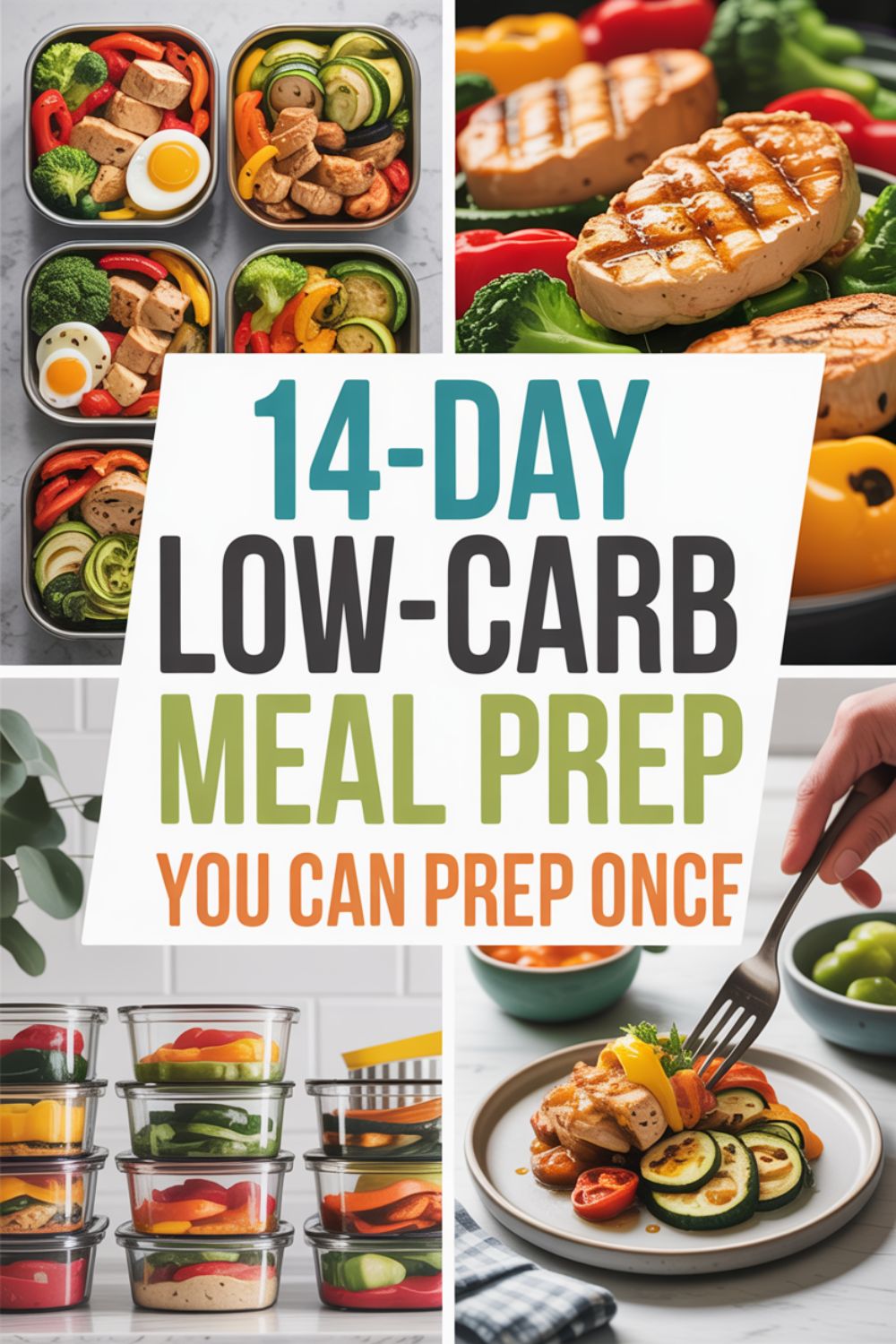
How This Low-Carb Plan Works
Let’s get one thing straight right away. Low-carb doesn’t mean no-carb. According to Healthline’s nutrition guidelines, typical low-carb diets contain fewer than 130 grams of carbs daily, which is roughly 26% of total calories on a 2,000-calorie diet. We’re targeting around 75-100 grams of net carbs per day, which gives you enough flexibility to include vegetables, some fruit, and even the occasional sweet potato without derailing your progress.
This plan focuses on three main principles. First, we prioritize protein at every meal because it keeps you full, supports muscle maintenance, and has a higher thermic effect than carbs or fats. You’ll get 25-35 grams of protein per meal, which research from the Prevention magazine nutrition team suggests is the optimal range for muscle growth and satiety.
Second, we load up on non-starchy vegetables. Think leafy greens, cruciferous vegetables, zucchini, peppers, and mushrooms. These give you volume, fiber, vitamins, and minerals without spiking your blood sugar. The American Diabetes Association emphasizes that filling half your plate with non-starchy vegetables is one of the most effective strategies for managing carb intake while maintaining nutritional balance.
Third, we include healthy fats from sources like avocado, olive oil, nuts, and fatty fish. These fats provide sustained energy, support hormone production, and make your meals actually satisfying. Nobody wants to feel deprived, and good fats prevent that hollow, still-hungry feeling an hour after eating.
The genius of this 14-day plan is the strategic meal rotation. You’ll prep core components once, then mix and match them throughout the weeks. Roasted chicken breast becomes Greek chicken salad one day and chicken veggie stir-fry the next. Those hard-boiled eggs work for breakfast, snacks, or chopped into salads. This approach minimizes your time in the kitchen while maximizing variety on your plate.
The Science Behind Low-Carb Eating
When you reduce carbohydrate intake, your body shifts from primarily burning glucose for energy to burning fat. This metabolic state offers several benefits beyond just weight loss. Your insulin levels stabilize, which can reduce hunger and cravings. Many people report improved mental clarity and sustained energy throughout the day without the usual afternoon crash.
That said, everyone’s carb tolerance is different. Some people thrive on 50 grams of carbs daily, while others feel best around 100-150 grams. This plan gives you a solid starting point, but pay attention to how you feel. Are you energized and satisfied? Great, keep going. Feeling sluggish or constantly hungry? You might need to adjust your portions or add a bit more carbohydrate.
Pro Tip: The first few days of reducing carbs, you might experience mild fatigue or headaches as your body adjusts. Stay well-hydrated, consider adding a pinch of salt to your water, and give yourself a full week before judging how you feel. Most people feel noticeably better by day 5 or 6.
Your Complete 14-Day Meal Plan
This is where the magic happens. Each day is designed to give you approximately 1,400-1,600 calories and 75-90 grams of net carbs, with plenty of protein and healthy fats to keep you satisfied. Every meal includes the protein count so you can easily track your intake.
Day 1
Day 2
Day 3
Quick Swap Options
Not a fan of salmon? Swap it for cod, halibut, or chicken breast. Prefer pork to beef? Go for it—just match the protein amounts. Can’t stand Brussels sprouts? Use broccoli, green beans, or roasted cabbage instead. The beauty of this plan is its flexibility.
Day 4
Day 5
Day 6
Day 7
Week 1 Prep Checklist
- Cook 3 pounds chicken breast and 2 pounds chicken thighs
- Bake 12 egg muffins or frittata cups
- Hard-boil 18 eggs
- Prep 4 servings salmon and 2 servings cod
- Roast mixed vegetables (broccoli, cauliflower, Brussels sprouts, asparagus)
- Make cauliflower rice (6 cups worth)
- Prep salad greens and chop raw veggies
- Mix up two salad dressings
Day 8
Day 9
Day 10
Quick Swap Options
Running low on prep time? Rotisserie chicken is your best friend. Use store-bought cauliflower rice to save 20 minutes. Pre-washed salad greens eliminate chopping. Frozen vegetables roast just as well as fresh. Don’t let perfection become the enemy of good enough.
Day 11
Day 12
Day 13
Day 14
Week 2 Prep Checklist
- Cook 2.5 pounds chicken (mix of breast and thighs)
- Prep 2 pounds ground beef for meatballs
- Bake or pan-sear 4 servings fish (salmon, cod, or tilapia)
- Hard-boil 14 more eggs
- Roast second batch of vegetables (focus on variety from week 1)
- Make fresh cauliflower rice (another 6 cups)
- Spiralize zucchini for zoodles
- Prep fresh salad components
What You’ll Eat (High-Level Overview)
If you’re wondering what exactly fills up these 14 days, here’s the breakdown. Your protein sources rotate between chicken, salmon, turkey, beef, pork, eggs, and Greek yogurt. This variety keeps things interesting and ensures you’re getting different amino acid profiles and nutrients.
Vegetables make up the bulk of your plate volume. You’ll eat tons of leafy greens like spinach, romaine, and arugula. Cruciferous vegetables like broccoli, cauliflower, and Brussels sprouts appear frequently because they’re nutrient-dense and low in net carbs. Zucchini, bell peppers, mushrooms, asparagus, and green beans round out your veggie rotation.
Healthy fats come from avocado, olive oil, nuts, seeds, fatty fish, cheese, and Greek yogurt. These aren’t just thrown in randomly—they serve specific purposes. Avocado adds creaminess and satisfaction to salads. Olive oil makes roasted vegetables actually taste good. Nuts and seeds provide crunch and sustained energy for snacks.
The carbs you do eat come from vegetables, some berries, Greek yogurt, and the occasional higher-carb vegetable like tomatoes or bell peppers. You won’t find bread, pasta, rice, or potatoes here, but you honestly won’t miss them when your meals are this satisfying.
Speaking of satisfaction, if you’re looking for more meal inspiration that keeps portions generous while calories stay reasonable, check out these 30 high-volume low-calorie meals for fat loss. The principles overlap beautifully with low-carb eating.
The Macro Breakdown
Each day typically hits around 40% protein, 35% fat, and 25% carbs by calories. In grams, that’s roughly 140g protein, 60g fat, and 90g total carbs (around 75g net carbs when you subtract fiber). These aren’t strict rules—some days you’ll be a bit higher in fat, others higher in protein. The important thing is the overall pattern across the two weeks.
This macro split works well for most people because it provides enough protein to preserve muscle mass while losing fat, enough fat to keep hormones balanced and hunger at bay, and enough carbs to fuel your workouts and daily activities without causing blood sugar spikes.
Pro Tip: Don’t get obsessive about hitting exact macros every single day. Your body doesn’t reset at midnight. Look at your averages over 3-4 days instead of stressing about daily perfection. This approach is way more sustainable long-term.
Meal Prep & Kitchen Setup That Makes Life Easy
The secret to actually sticking with this plan isn’t willpower—it’s having the right systems in place. You need proper storage containers, efficient cooking methods, and a realistic prep schedule. Let’s break down exactly what makes this work.
Your Prep Day Game Plan
Pick one day each week for your main prep session. Most people choose Sunday, but Wednesday works great too if you prefer splitting your week. Block out 2-3 hours. I know that sounds like a lot, but you’re buying yourself back 10+ hours during the week by not cooking every single night.
Start with your proteins since they take the longest. Get your chicken in the oven first—you can roast 3-4 pounds at once. While that’s cooking, boil your eggs and prep your fish. Season everything simply with salt, pepper, garlic powder, and maybe some herbs. You’ll add specific flavors when you assemble each meal.
Next, tackle your vegetables. I use a large rimmed baking sheet (#) to roast multiple types at once—Brussels sprouts on one side, broccoli on the other. Roast at 425°F until they’re just tender with some crispy edges. Don’t overcook them since you’ll be reheating later.
Make your cauliflower rice in batches using a food processor (#). You can pulse raw cauliflower into rice-sized pieces, then either cook it all at once or store it raw to cook fresh throughout the week. I prefer cooking half and leaving half raw for maximum freshness.
Finally, prep your grab-and-go items. Wash and chop all your salad vegetables. Mix up two different salad dressings in mason jars (#). Portion out your snacks into small containers so you’re not standing at the fridge with a bag of almonds at 9 PM wondering where half of them went.
Storage That Actually Works
This is where most meal prep plans fall apart. You need containers that seal properly, stack efficiently, and don’t make your food taste like plastic by day 5. Invest in quality glass meal prep containers (#) with snap-lock lids. Glass maintains food quality better than plastic and you can reheat directly in them.
I use a mix of sizes. Large containers (around 3 cups) work perfect for main meals. Medium containers (2 cups) hold proteins and larger vegetable portions. Small containers (1 cup) are ideal for dressings, sauces, and snacks. Having different sizes prevents the “everything swimming in a giant container” problem.
Label everything with masking tape and a marker. Write the contents and the day you prepped it. This seems excessive until you’re staring at three identical containers of chicken wondering which one is the lemon herb and which is the buffalo.
Store your salad components separately from dressings. Nothing saddens me more than a soggy salad that could have been crispy if the dressing had stayed in its own container. Mix them right before eating for maximum crunch.
Meal Prep Essentials Used in This Plan
Glass Meal Prep Containers (Set of 10)
BPA-free glass containers with airtight snap lids. These are game-changers for keeping food fresh all week. I’ve had mine for three years and they still look brand new.
Check current price (#)
Digital Food Scale
Accuracy matters when you’re tracking portions. This scale measures in grams and ounces, has a tare function, and fits easily in a drawer. Way more reliable than eyeballing your protein portions.
View on Amazon (#)
Spiralizer for Zucchini Noodles
Turns zucchini into noodles in about 30 seconds. So much faster and easier than using a regular vegetable peeler. The handheld version works fine—you don’t need the big countertop model.
See options (#)
My Custom Meal Planner Template
Printable PDF planner designed specifically for low-carb meal prep. Includes shopping lists, macro trackers, and weekly planning pages. Makes staying organized actually simple.
Download template (#)
Low-Carb Recipe Collection eBook
85 tried-and-tested low-carb recipes with full nutritional information. Organized by meal type and prep difficulty. Perfect companion to this 14-day plan.
Get the eBook (#)
Macro Tracking Guide for Beginners
Simple, no-nonsense guide to understanding macros without the overwhelm. Includes portion size guides and visual references that make tracking easy.
Download guide (#)
The Batch Cooking Method
Here’s what changes everything: cook your base ingredients simply, then add specific flavors when you assemble each meal. You’re not making 14 complete meals on Sunday. You’re creating versatile components that transform into different dishes throughout the week.
That plain roasted chicken breast becomes Greek chicken salad with feta and olives on Monday, buffalo chicken wraps on Wednesday, and Asian chicken with sesame dressing on Friday. Same protein, completely different meals. This approach saves time while preventing food boredom.
Keep your sauces and seasonings separate until serving time. Make a batch of tahini dressing, a batch of ranch, maybe some pesto and marinara. Store them in small jars and add them right before eating. This keeps everything fresh and lets you customize flavors based on what you’re craving that day.
For more strategies on staying organized with your weekly prep, the 7-day meal prep plan for busy women has some really practical tips on streamlining your kitchen workflow.
Common Mistakes That Kill Results
I’ve watched people derail their low-carb plans in the same predictable ways over and over again. Let’s talk about the mistakes that’ll sabotage your progress so you can actually avoid them.
Not Eating Enough Protein
This is the number one issue. People cut carbs but don’t replace those calories with adequate protein. Then they’re starving all the time, lose muscle mass, and quit after a week. You need 25-35 grams of protein per meal, minimum. That’s not optional if you want to feel good and see results.
A palm-sized piece of chicken is roughly 3-4 ounces, which gives you about 25 grams of protein. Two eggs get you 12 grams. A cup of Greek yogurt delivers around 15-20 grams depending on the brand. Get a digital food scale (#) and actually measure your portions for the first week until you can eyeball them accurately.
Forgetting About Fiber
Low-carb doesn’t mean low-fiber. You still need 25-30 grams of fiber daily for digestive health, blood sugar control, and satiety. This comes from your vegetables, chia seeds, flax seeds, and nuts. If you’re eating mostly meat and cheese while skimping on vegetables, you’re going to feel terrible.
Every meal should have at least one serving of fibrous vegetables. That’s not a suggestion—it’s essential. Spinach, broccoli, cauliflower, Brussels sprouts, asparagus, and leafy greens are your fiber MVPs on a low-carb plan.
Overthinking Snacks
Snacking is where people accidentally blow their carb budget. They grab a “low-carb” protein bar that has 15 grams of net carbs and artificial sweeteners that trigger cravings. Or they mindlessly eat nuts straight from the container and consume 400 calories without realizing it.
Keep snacks simple and pre-portioned. Hard-boiled eggs, string cheese, measured portions of nuts, vegetables with hummus, or Greek yogurt. That’s it. You don’t need fancy packaged snacks. The simpler, the better.
Not Planning for Real Life
You’re going to have days when meal prep doesn’t happen. Someone gets sick, you work late, life happens. Have a backup plan that doesn’t involve the drive-through. Keep canned tuna (#), rotisserie chicken (#), frozen vegetables, and eggs on hand. These ingredients can become a decent meal in 10 minutes.
Restaurant meals are fine too—just make smart choices. Grilled protein with vegetables and swap the rice for extra vegetables. Salads with protein and olive oil dressing. Lettuce-wrapped burgers. Fajitas without the tortillas. It’s not complicated if you stick to the basic formula: protein, vegetables, healthy fats.
The 21 grab-and-go weight loss meals article has some brilliant ideas for those chaotic days when cooking feels impossible.
Pro Tip: Keep a list of your three easiest emergency meals on your phone. Mine are: scrambled eggs with whatever vegetables are in the fridge, rotisserie chicken with bagged salad, and a protein smoothie with spinach and almond butter. Having these ready to go prevents bad decisions when you’re tired and hungry.
Customizing This Plan for Your Lifestyle
This plan is a starting point, not a rigid prescription. Your life, preferences, and goals are unique, so let’s talk about how to modify this to work for you specifically.
Adjusting for Your Calorie Needs
The base plan provides around 1,400-1,600 calories daily, which works well for most women looking to lose weight or maintain. If you’re more active, taller, or male, you’ll probably need more. The fix is simple: increase your protein portions and add more healthy fats.
Add an extra 2-3 ounces of protein to your lunch and dinner. That’s an additional 200-300 calories from quality sources that support muscle maintenance. Include a tablespoon of olive oil on your salads or an extra half avocado. These additions push you to 1,800-2,000 calories without increasing carbs much at all.
If you need fewer calories, reduce your portions slightly rather than cutting entire meals. Going too low backfires—you’ll be miserable and your metabolism will slow down. Better to lose weight a bit slower while actually enjoying the process.
Making It Work for Vegetarians
Low-carb vegetarian eating is absolutely possible, you just need to be more intentional about protein sources. Replace the meat proteins with eggs, Greek yogurt, cottage cheese, tofu, tempeh, and cheese. Include protein powder in your smoothies.
Your vegetables stay exactly the same. Add more nuts and seeds for healthy fats and protein. Consider adding some higher-protein legumes in small amounts if your carb tolerance allows—things like edamame, chickpeas, or black soybeans (which are surprisingly low in net carbs).
The macro split shifts slightly—you’ll probably land around 30% protein, 40% fat, and 30% carbs. That’s fine as long as you’re staying within your carb target and getting adequate protein throughout the day.
Fitting in Your Workouts
If you’re doing intense workouts, especially strength training or high-intensity interval training, you might need to add strategic carbs around your training sessions. This isn’t cheating—it’s smart fueling. Consider adding 15-25 grams of carbs before or after your hardest workouts.
Good pre-workout options include a small apple with almond butter, a half cup of oatmeal with protein powder, or a banana if you tolerate it. Post-workout, try a protein shake with a small sweet potato or some berries. These targeted carbs support performance and recovery without derailing your overall low-carb approach.
For lighter activity like walking or yoga, the base plan works perfectly as-is. You don’t need extra carbs for moderate daily movement.
Adapting for Families
You don’t need to make separate meals for yourself and your family. Make the proteins and vegetables from this plan, then add a carb side for other family members. Rice, potatoes, or pasta take 15-20 minutes and give non-low-carb eaters their preferred option.
Or better yet, present everything deconstructed. Make taco bowls and let everyone build their own—you skip the tortilla and rice, they include them. Same with stir-fries, salad bowls, and breakfast scrambles. Everyone eats together, minimal extra work for you.
Many people find that once the family tries cauliflower rice or zucchini noodles prepared well, they don’t even miss the regular versions. Kids especially don’t care much about the “rice” in a taco bowl if the flavors are good.
Looking for Portion-Controlled Meal Ideas?
The 14 meal prep bowls for easy weight loss are perfect for customizing portions while keeping everyone in the family happy. Each person can adjust their bowl to their needs.
Tools & Resources That Make Cooking Easier
Beyond the basic meal prep containers, a few key tools make low-carb cooking actually enjoyable instead of feeling like a chore. You don’t need a kitchen full of gadgets, but these specific items earn their counter space.
Kitchen Tools for These Recipes
Cast Iron Skillet
Perfect for searing proteins and getting that restaurant-quality crust on chicken and steak. Holds heat beautifully and goes from stovetop to oven. Mine’s 12 inches and handles most jobs.
View options (#)
Instant-Read Thermometer
Takes the guesswork out of cooking proteins. No more dry chicken breast or undercooked fish. Chicken is done at 165°F, pork at 145°F, and fish at 145°F. Simple as that.
Check price (#)
Good Quality Chef’s Knife
Chopping vegetables becomes way less tedious with a sharp knife. You don’t need a $200 knife, but invest in something decent that holds an edge. A sharp 8-inch chef’s knife handles 90% of your cutting tasks.
See recommendations (#)
Macro Tracking App Subscription
MyFitnessPal Premium or Cronometer gives you detailed nutritional breakdowns and makes logging meals painless. The barcode scanner alone is worth it. Track for at least two weeks to really understand your intake patterns.
Compare apps (#)
Low-Carb Meal Prep Video Course
Step-by-step video tutorials showing exactly how to prep these meals efficiently. Covers knife skills, batch cooking techniques, and food safety basics. Makes the learning curve way less steep.
Watch preview (#)
14-Day Accountability Challenge
Join a supportive community doing this exact meal plan together. Daily check-ins, recipe swaps, and troubleshooting help. Makes sticking with it way easier when you’re not doing it alone.
Join challenge (#)
Pantry Staples Worth Keeping Stocked
A well-stocked pantry means you can always throw together a decent meal. These ingredients have long shelf lives and appear constantly in low-carb cooking. Keep them on hand and you’re never truly stuck.
Oils and fats: olive oil for cooking and dressings, avocado oil for high-heat cooking, coconut oil for certain recipes. Don’t buy the cheap stuff—quality fats make a huge difference in flavor.
Seasonings: salt, pepper, garlic powder, onion powder, Italian seasoning, chili powder, cumin, paprika, and everything bagel seasoning. These transform plain proteins into actual meals. I also keep low-sodium soy sauce or coconut aminos for Asian-flavored dishes.
Canned goods: tuna, salmon, chicken breast (for emergencies), diced tomatoes, and tomato sauce. Also keep chicken broth or bone broth for making quick soups when you need something warm and comforting.
Nuts and seeds: almonds, walnuts, pecans, chia seeds, flax seeds, hemp hearts, and pumpkin seeds. Store them in the fridge after opening to prevent them from going rancid. Pre-portion them into snack-size bags during your prep session.
Don’t forget quality sea salt (#) and fresh ground pepper (#). These two ingredients alone can completely change how your food tastes. Regular table salt doesn’t compare to good mineral-rich sea salt.
Real Talk: What People Actually Experience
I’ve heard from hundreds of people who’ve followed this exact plan, and their experiences tend to follow similar patterns. Understanding what’s normal helps you push through the adjustment period instead of quitting prematurely.
The First Three Days
Most people feel a bit off during the initial carb reduction. You might get mild headaches, feel more tired than usual, or experience some brain fog. This is your body adjusting from primarily burning glucose to burning fat more efficiently. It’s temporary and usually resolves by day 4 or 5.
Stay well-hydrated and consider adding a bit more salt to your food. When you reduce carbs, your body excretes more water and sodium, which causes those headachy feelings. A cup of broth or adding a quarter teaspoon of salt to your water can make a huge difference.
Week One Results
By the end of week one, most people report feeling noticeably better. Energy levels stabilize and often improve. That afternoon crash around 2 or 3 PM often disappears. Mental clarity sharpens. Cravings decrease significantly.
Weight-wise, you’ll probably see a quick drop of 3-6 pounds in the first week. Don’t get too excited—much of this is water weight. When you reduce carbs and insulin levels drop, your body releases stored water. The real fat loss happens more gradually after this initial whoosh.
Sarah, who tried this plan last month, mentioned: “I was skeptical about the whole low-carb thing, but by day 6 I actually had energy to go to the gym after work. That never happens. And I’m not constantly thinking about my next snack anymore.”
Week Two Progress
Week two is when the magic really happens. Your body has adapted to using fat for fuel. Energy feels consistent throughout the day. You start noticing your clothes fitting differently. Your face looks less puffy. Digestion usually improves too.
This is also when people report the most satisfaction with the meal prep system itself. You’ve got the routine down. You know which containers hold which meals. The whole process feels less overwhelming and more like a sustainable habit.
Weight loss during week two is usually steadier—around 1-2 pounds, which is actually the healthy, sustainable pace you want. If you’re losing faster than that consistently, you might need to add a bit more food. Extreme deficits aren’t necessary and usually backfire.
Pro Tip: Take progress photos and measurements, not just scale weight. The scale doesn’t tell the whole story. You might be losing fat and retaining or building muscle, which means the scale moves slowly while your body composition dramatically improves. Measure your waist, hips, and thighs weekly.
Beyond the Two Weeks
So you’ve completed 14 days of low-carb meal prep. Now what? This plan was designed to teach you a sustainable approach that extends well beyond two weeks.
You can repeat these exact two weeks again if you loved them. Or use the same meal components but switch up the seasonings and combinations. That batch of roasted chicken works just as well with buffalo sauce as it does with teriyaki or lemon herb.
Many people find they naturally want to stick with lower carbs because they genuinely feel better. Others prefer to add back some healthy carbs like sweet potatoes, quinoa, or oatmeal while maintaining the meal prep structure. Both approaches work—listen to your body and your results.
The meal prep skills you’ve developed here translate to any eating style. The batch cooking method, the component-based approach, the strategic storage—these principles work whether you’re low-carb, moderate-carb, or anything else. You’ve learned a system, not just a two-week diet.
For more ideas on extending your meal prep success, the 21-day weight loss meal prep plan uses similar strategies with different recipes, which is perfect for keeping things fresh.
If you found the controlled portions helpful, the 7-day 1200-calorie meal plan takes a different approach but with the same emphasis on satisfying, sustainable eating.
Frequently Asked Questions
Can I drink coffee on this low-carb plan?
Absolutely. Black coffee has zero carbs and can actually support fat burning. Add a splash of unsweetened almond milk or heavy cream if you prefer. Just skip the sugar and flavored syrups—try stevia or monk fruit sweetener instead if you need sweetness.
What if I don’t have time for a big prep session?
Split it up. Do proteins on Sunday, vegetables on Wednesday. Or prep just 3-4 days at a time instead of the full week. You can also buy rotisserie chicken, pre-cut vegetables, and pre-made cauliflower rice to cut your prep time in half. The 30 no-reheat weight loss lunches for work might be helpful if you prefer minimal cooking.
Will I lose muscle on a low-carb diet?
Not if you’re eating adequate protein like this plan provides. At 25-35 grams per meal, you’re getting plenty of protein to maintain muscle. If you’re strength training, you might even build muscle while losing fat, especially if you’re new to lifting or returning after a break.
Can I eat out while following this plan?
Sure. Stick to grilled or baked proteins, vegetables, and salads. Ask for dressings on the side and skip the bread basket. Most restaurants are happy to substitute extra vegetables for rice or potatoes. It’s honestly easier to eat low-carb at restaurants than you’d think.
What happens if I have a high-carb day accidentally?
Nothing catastrophic. You might retain some water and feel a bit sluggish the next day, but you didn’t ruin anything. Just get back to your regular plan the following day. One day doesn’t define your progress—consistency over time does. Don’t use one slip-up as an excuse to abandon the whole plan.
Your Next Two Weeks Start Now
You’ve got the complete plan, the shopping lists, the prep strategies, and the mindset shifts you need to make this work. The only thing left is to actually start.
Pick your prep day. Block out those few hours. Get your containers ready. Make your grocery list from the meals you’ve chosen. Then commit to showing up for yourself for the next 14 days.
This isn’t about perfection. Some days will go smoothly and you’ll feel like a meal prep genius. Other days you’ll grab the wrong container and end up eating dinner for breakfast. That’s completely fine. The goal is progress and consistency, not flawless execution.
Two weeks from now, you’ll have a completely different relationship with food. You’ll know what it feels like to have healthy meals waiting for you. You’ll understand how your body responds to lower carb intake. And most importantly, you’ll have proven to yourself that you can plan, prepare, and follow through on something that genuinely supports your health.
That’s worth way more than any number on a scale.